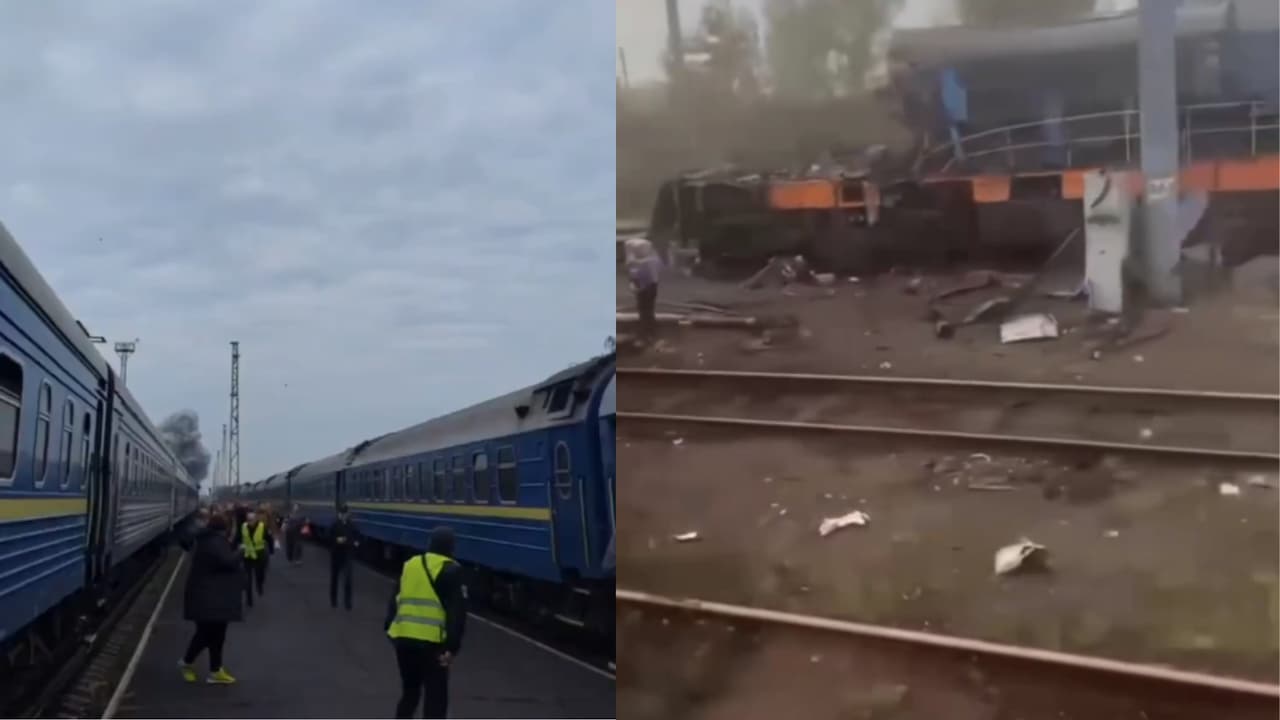
The convergence of high-profile foreign dignitaries and a precision aerial strike on Ukrainian transport infrastructure highlights a chilling logistical reality. When former British Prime Minister Boris Johnson, former CIA Director David Petraeus, and other senior European figures visited the Yagodyn station near the Polish border, they stepped into a zone where civilian transit lines double as high-value military arteries. Minutes after diplomatic delegations cleared the terminal, a Russian drone struck a passenger train on the exact same route.
This incident is far more than a close call for visiting statesmen. It exposes the fragile architecture governing VIP security in an active war theater where railway networks serve as the primary lifeline for both humanitarian evacuation and geopolitical diplomacy. Learn more on a connected issue: this related article.
The Logistics of High-Risk Diplomacy
Moving political heavyweights through a country under constant aerial bombardment requires an intricate choreography of deception, rapid scheduling changes, and operational security. Ukraine's state railway operator, Ukrzaliztsia, manages a system that remains enemy target number one. Every locomotive wheel turning on those tracks carries strategic weight.
When international figures arrive to attend summits or confer with local ministries, their movements intersect with a daily routine of missile alerts and counter-drone operations. The Yagodyn incident unfolded because the margin between safe transit and catastrophic interception has shrunk to minutes. Authorities ordered an emergency evacuation of the station shortly before the impact, preventing what could have been an unprecedented international disaster. Yet, the timing raises hard questions about intelligence leaks, real-time tracking capabilities, and the sheer predictability of fixed infrastructure. Further analysis by USA Today highlights comparable views on this issue.
Targeting the Veins of the State
Railways are the backbone of modern territorial defense. Without steel tracks moving grain, munitions, and leadership across borders, the administrative center in Kyiv becomes isolated. Moscow understands this dynamic intimately. By consistently striking transport nodes, logistics hubs, and rolling stock, opposing forces attempt to choke the nation's operational capacity.
When those strikes occur in terrifying proximity to Western leaders, the messaging shifts from tactical interdiction to psychological intimidation. Observers note that these hits are designed to signal vulnerability, reminding foreign backers that no zone is entirely insulated from the theater of war. The presence of figures like Carl Bildt or German Chancellor advisers transforms a routine transit corridor into a high-stakes geopolitical chessboard.
The Intelligence Gap
How enemy spotters pinpoint high-value movements remains a central anxiety for security details. Modern reconnaissance relies on a mix of commercial satellite imagery, signals intelligence, and local human networks operating within border zones. Even with encrypted communications and randomized timetables, mass transit hubs have fixed geographical footprints. Trains must use specific switches, clear customs checkpoints, and halt at designated platforms.
This structural rigidity makes complete operational obscurity nearly impossible. When a diplomatic train departs ahead of schedule due to whispered threat assessments, it underscores a reactive security apparatus constantly playing catch-up with faster drone response times. Chance played a role in averting tragedy at Yagodyn, but institutional luck is a poor substitute for airtight counter-intelligence.
The rails running toward the Polish border will continue to carry the weight of an alliance under fire. Every journey undertaken by foreign dignitaries now carries an unstated premium of risk, testing the resolve of capitals thousands of miles away against the unyielding reality of airborne munitions on the ground.
Russia hits Ukrainian train station shortly after Boris Johnson passed through
This video provides additional context and visual reporting regarding the security incident at the Ukrainian railway station involving high-profile international visitors.


