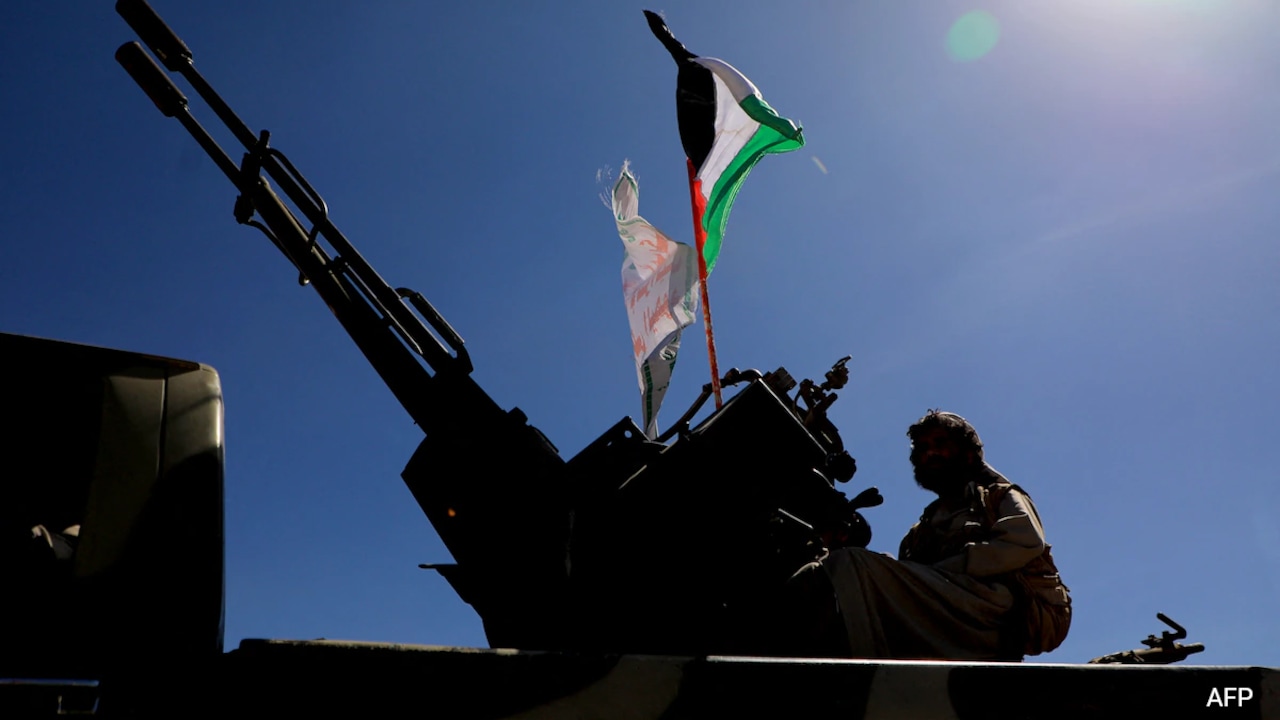
When Houthi military spokesmen announced they had scored a direct hit on a Saudi defense ministry facility in Riyadh using a ballistic missile, the claim did far more than rattle regional markets. It exposed the wide, murky gap between asymmetric warfare propaganda and verified battlefield reality. In conflicts across the Arabian Peninsula, claims of pinpoint ballistic accuracy rarely align with independent satellite intelligence or physical wreckage. Yet the announcement achieved its primary strategic goal within minutes of hitting social media wires, forcing Saudi air defense networks onto the defensive in the court of global public opinion.
Understanding this incident requires looking past the immediate explosions and press releases. For years, the cross-border conflict between the Iran-aligned Houthi movement in Yemen and the Saudi-led coalition has operated on two distinct battlefields. One is physical, fought with intercepted projectiles, drone swarms, and Patriot batteries. The other is psychological, where a single unverified claim of penetrating a capital city's inner sanctum carries the weight of a major military victory.
The Anatomy of a Long-Range Claim
Ballistic missiles are blunt instruments unless paired with sophisticated terminal guidance systems. When a group operating out of northern Yemen launches a liquid-fueled or solid-propellant rocket toward Riyadh, the projectile must travel roughly 800 to 1,000 kilometers across rugged desert terrain. At those distances, even minor atmospheric variations or manufacturing flaws in the airframe can push a warhead miles off its intended target.
Historically, the Houthi arsenal has relied heavily on modified Soviet-era Scud variants, such as the Burkan series, alongside newer systems bearing strong design similarities to Iranian Qiam and Zolfaghar missiles. These weapons follow a predictable parabolic arc. Once the booster burns out, the warhead separates and falls toward earth at hypersonic speeds, subject to gravity, wind shear, and aerodynamic drag.
Achieving a genuine direct hit on a specific ministry building in a dense metropolitan area requires more than a rough compass bearing. It demands active radar homing, optical scene matching, or precision satellite navigation resistant to electronic jamming. Independent weapons inspectors from the United Nations and independent defense think tanks have repeatedly examined debris recovered from Riyadh strikes. Time and again, the wreckage reveals improvised welding, commercial-grade electronics, and stripped-down guidance packages incapable of surgical accuracy at extreme ranges.
So why claim a direct hit on a heavily fortified government compound? The answer lies in the mechanics of strategic deterrence. If an adversary believes your missiles can strike a specific office building in their capital, they must spread their air defense assets thin to protect every critical node.
Why Air Defense Math Favors the Attacker
The economics of modern missile defense are brutal. A single MIM-104 Patriot interceptor missile costs roughly three to four million dollars, depending on the variant and contract terms. By contrast, a crude long-range ballistic missile assembled in a clandestine workshop costs a tiny fraction of that sum.
Every time sirens wail over Riyadh, Saudi air defense crews face a split-second calculation. Radar operators must track incoming targets moving at several times the speed of sound, distinguish between intact warheads and tumbling debris from broken-up fuel tanks, and fire multiple interceptors to guarantee a kill. Standard military doctrine often dictates firing two interceptors at a single incoming ballistic threat to maximize the probability of destruction.
This creates a massive cost-exchange asymmetry. Even when Saudi Patriot batteries successfully destroy an incoming projectile miles above the city, the falling fragments still rain down on residential neighborhoods and commercial districts. To a civilian on the ground hearing a massive mid-air detonation, or to an international observer watching shaky smartphone footage of smoke trails in the night sky, an interception looks remarkably similar to a successful strike.
Propaganda teams understand this visual ambiguity. They exploit the chaos of mid-air interceptions to declare victory before forensic teams can even sweep the streets for serial numbers.
The Physics of Debris and Perception
When a Patriot interceptor strikes an incoming warhead, the kinetic impact shatters both objects into thousands of high-velocity pieces. If the warhead's high-explosive filler detonates during the intercept, the resulting flash illuminates the sky across the entire city. If it fails to detonate, the heavy steel casing and unspent propellant tanks still plummet to the earth at terminal velocity.
In several documented incidents over Riyadh, heavy engine components landed kilometers away from the point of interception. Local authorities routinely display these mangled metal tubes to prove their defenses worked. Meanwhile, Houthi media outlets broadcast the exact same impact craters as proof their weapons bypassed Western-supplied shields. Both sides use the same physical evidence to tell opposite stories.
The Intelligence Blind Spot
Journalists covering Middle Eastern missile exchanges face a severe verification bottleneck. Unlike conflicts in Europe where commercial satellite imagery becomes available within hours and independent ground researchers document every crater, operational security in Saudi Arabia tightly restricts access to strike zones.
When a ministry building or military headquarters is named as a target, state security forces immediately cordon off the perimeter. Photography is banned. Local media repeats official statements from the coalition command, which almost universally report that all incoming threats were intercepted and destroyed.
To see how this plays out in practice, consider a hypothetical example. Imagine an incoming missile breaks apart in the upper atmosphere due to structural stress, a common flaw in stretched Scud airframes. One piece lands in an empty lot two miles from a government ministry, while a Patriot battery destroys the nose cone overhead. Without independent access to the empty lot or commercial synthetic aperture radar data showing the rooftop of the ministry, outside analysts cannot definitively prove whether the building suffered minor shrapnel damage or escaped completely unscathed.
In that vacuum of verified imagery, bold claims thrive. Intelligence agencies rely on overhead infrared sensors to detect launch plumes and impact flashes, yet those governments rarely declassify raw telemetry just to settle a media dispute. The public is left weighing the word of a militant group known for inflating battlefield successes against a state apparatus committed to projecting absolute security.
Evolution of the Asymmetric Arsenal
Dismissing Houthi missile claims entirely would be a grave analytical mistake. While specific boasts about hitting individual buildings often collapse under scrutiny, the broader trajectory of their weapons program shows steady, dangerous adaptation.
Over the past decade, the technical sophistication of long-range strikes originating from Yemen has shifted dramatically. Early launches relied on dwindling stockpiles of legacy Yemeni army Scuds. Once those supplies ran low, modular components began flowing through maritime smuggling routes along the Arabian Sea and overland through Oman.
Weapons investigators have tracked clear upgrades across three distinct areas:
- Airframe Lightening: Replacing heavy steel fuselages with lighter aluminum alloys allows missiles to carry warheads deeper into Saudi territory without increasing fuel capacity.
- Separating Warheads: Newer designs detach the explosive nose cone from the bulky booster stage during flight, presenting a much smaller radar cross-section to defending Patriot batteries.
- Coordinated Saturation: Rather than firing a single ballistic missile in isolation, operators increasingly pair ballistic launches with low-flying cruise missiles and one-way attack drones to overwhelm radar tracking sectors from multiple altitudes simultaneously.
This multi-layered approach forces defenders to look up at space-bound trajectories while simultaneously scanning the horizon for terrain-hugging drones. Even if a ballistic missile misses its target by half a mile, the sheer psychological disruption of forcing a capital city into bomb shelters achieves a measurable political effect.
What Sovereign Risk Markets Actually Watch
Financial analysts and energy traders have grown remarkably numb to routine missile announcements, yet specific target claims still trigger algorithmic tremors. When a claim involves a government ministry in Riyadh rather than a remote border outpost, risk algorithms immediately cross-reference the news against Saudi Aramco infrastructure maps.
The global oil market learned a permanent lesson in September 2019, when a coordinated swarm of drones and cruise missiles struck the Abqaiq and Khurais oil processing facilities, temporarily knocking out roughly half of Saudi Arabia's crude production. That attack proved that critical infrastructure could be hit with devastating precision, permanently altering how insurers price geopolitical risk in the Persian Gulf.
Since then, defense contractors and sovereign wealth advisors evaluate every Riyadh strike claim through a cold, operational lens:
- Did commercial flight tracking data show sudden diversions away from King Khalid International Airport?
- Did seismic sensors or localized power grid fluctuations register an unusual ground shock?
- Did diplomatic missions issue emergency shelter-in-place warnings to expatriate staff?
When none of those secondary indicators fire, seasoned analysts quietly downgrade the "direct hit" narrative to routine information warfare. Markets barely flinch. The real vulnerability isn't a single unguided ballistic rocket hitting a concrete ministry wall, but the slow erosion of perceived invulnerability that keeps foreign capital nervous.
The Strategic Trap of Escalation
Every ballistic missile fired toward a major population center carries the risk of catastrophic miscalculation. A missile with a circular error probable of two kilometers aimed at a military headquarters in downtown Riyadh has a mathematically high chance of hitting a hospital, a school, or a diplomatic compound instead.
For the Houthi leadership, claiming a precise strike on a legitimate military target like a defense ministry serves a dual purpose. Internally, it rallies supporters by projecting strength against a wealthier, technologically superior neighbor. Externally, it attempts to frame their operations within the rules of conventional warfare, signaling to international observers that they are targeting military command structures rather than civilians.
Yet physics does not care about press releases. Relying on marginally guided ballistic weapons over densely populated cities means every launch is a gamble with indiscriminate destruction. Meanwhile, Saudi planners remain locked in an exhausting defensive posture, spending billions to maintain an aerial shield that can never guarantee 100 percent perfection against low-cost threats.
Until verifiable, real-time battlefield transparency replaces state secrecy and militant bravado, every siren over Riyadh will continue to trigger two entirely different wars—one fought with supersonic interceptors in the clouds, and another fought with unverified headlines on your screen.