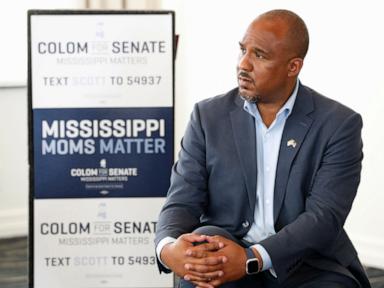
Mississippi has not sent a Democrat to the United States Senate since John C. Stennis retired in 1989. Yet Scott Colom, the district attorney for the state’s 16th Circuit Court District, is mounting an aggressive campaign to unseat Republican incumbent Cindy Hyde-Smith in the 2026 midterm cycle.
The math looks brutal on paper. Donald Trump carried Mississippi by roughly 23 percentage points in 2024, and statewide Democratic candidates routinely struggle to break 42 percent of the vote. Colom’s strategy hinges on a localized, law-and-order message designed to peel off moderate suburbanites and rural independents while mobilizing the state’s massive—and historically under-engaged—Black electorate. Whether this formula can overcome decades of partisan entrenchment in the Magnolia State is the central question testing national Democratic strategists. Meanwhile, you can find other developments here: What Gretchen Whitmer Actually Means When She Says Republicans Have No Plan to Lower Costs.
The Prosecutor Profile in a Tough-on-Crime State
Most Democratic challengers in the Deep South fail before they ever print a yard sign because national Republicans successfully paint them as out-of-touch liberals. Colom presents a much harder target. Elected in 2015 as the first Black district attorney in the history of the 16th Circuit—a sprawling, largely rural region encompassing Lowndes, Oktibbeha, Clay, and Noxubee counties—he has spent a decade prosecuting violent crime in a conservative part of the state.
He won re-election in 2019 and 2023 without serious opposition in the general election. That local durability matters. Voters in Columbus and Starkville know his name not from cable news soundbites, but from courtroom verdicts and community initiatives. To explore the complete picture, check out the recent analysis by NPR.
National Republicans have long relied on a simple playbook against Southern Democrats. Tie the candidate to national party figures, hammer them on social issues, and watch the partisan gravity pull rural white voters back into the GOP column. Colom’s background complicates that attack. When a candidate has spent ten years putting violent offenders behind bars, calling him "soft on crime" rings hollow to voters who live in his jurisdiction.
The 2023 Judicial Blockade
Colom’s profile is already well-known to Senate Republicans for a very specific reason. In 2022, President Joe Biden nominated him to serve as a federal judge on the U.S. District Court for the Northern District of Mississippi. Colom had the backing of the American Bar Association, local law enforcement, and even quiet support from several prominent Mississippi conservatives.
Then the political machinery ground to a halt.
Republican Senator Cindy Hyde-Smith—the very incumbent Colom is now challenging—refused to return her "blue slip," the Senate Judiciary Committee’s traditional mechanism allowing home-state senators to veto judicial nominees. Hyde-Smith cited concerns over Colom’s past campaign contributions from a political action committee linked to George Soros during his 2015 district attorney race. Her blockade effectively killed his nomination in 2023, despite Senator Roger Wicker declining to actively oppose it.
That episode did two things. First, it handed Republicans their primary opposition research file on a silver platter. Second, it gave Colom a personal, high-profile grievance against Hyde-Smith that elevates his campaign above a standard sacrificial lamb run. He isn't just running for a seat; he is running against the person who derailed his lifetime judicial appointment.
Decoding the Mississippi Electoral Math
To understand if Scott Colom has a realistic path to victory, you have to look past the top-line presidential margins and examine the underlying demographics of Mississippi.
Mississippi has the highest percentage of Black residents of any state in the nation, sitting at roughly 38 percent of the total population. In theory, a coalition built on overwhelming Black turnout combined with a modest slice of white voters should make the state competitive. In practice, that coalition rarely materializes at the ballot box.
Turnout disparities remain severe. In midterm elections, drop-off among younger and lower-income voters routinely hands Republicans comfortable double-digit victories. Consider the 2018 special election, where Republican Cindy Hyde-Smith faced Democrat Mike Espy, a former U.S. Secretary of Agriculture and congressman. Espy ran a disciplined, well-funded campaign in a favorable national environment for Democrats. He still lost by nearly seven points, pulling 46.4 percent of the vote to Hyde-Smith's 53.6 percent. Two years later, in a rematch during a presidential cycle, Hyde-Smith widened her margin to ten points.
For Colom to clear the 50 percent threshold, three distinct variables must align simultaneously:
- Historic Black Turnout: Democratic turnout in the Mississippi Delta, the Jackson metro area, and the Golden Triangle must match or exceed presidential-year levels, reversing decades of midterm apathy.
- White Crossover Erosion: Colom needs to capture at least 22 to 25 percent of the white vote—a benchmark no statewide Mississippi Democrat has hit in modern memory—by targeting college-educated voters in DeSoto County, Madison County, and university towns like Oxford and Starkville.
- Midterm Headwinds for the Incumbent Party: Historically, the party holding the White House suffers significant losses in the midterm elections. With Republicans controlling Washington in 2026, voter frustration over inflation, healthcare costs, or federal spending cuts could depress GOP enthusiasm just enough to narrow the gap.
The Structural Barriers Facing Any Mississippi Democrat
Campaign strategy only goes so far when structural barriers block the road. Mississippi’s political infrastructure overwhelmingly favors incumbents and the Republican Party.
Start with fundraising. Running a competitive statewide Senate race requires tens of millions of dollars for television advertising, digital outreach, and field operations. While national Democratic donors occasionally pour money into long-shot Southern races—as they did with Jamie Harrison in South Carolina or Amy McGrath in Kentucky—institutional groups like the Democratic Senatorial Campaign Committee (DSCC) triage their resources ruthlessly. With tighter battleground maps in states like Georgia, Michigan, and North Carolina, national party leaders will hesitate to bankroll a race in a state Trump won by over twenty points unless early polling shows a statistical tie.
Then there is the media market problem. Mississippi is carved up into multiple expensive media markets, including Memphis, Tennessee, and Baton Rouge and New Orleans, Louisiana. Reaching voters in DeSoto County—the fastest-growing suburban hub in the state—requires buying airtime on Memphis television stations, where roughly 70 percent of the audience cannot even vote in a Mississippi election. That makes every television ad drastically less cost-effective than in states with centralized media hubs.
Voting Laws and Ballot Access
Mississippi also maintains some of the strictest voting regulations in the country. It is one of the few states that does not offer traditional no-excuse early voting. Voters must cast their ballots in person on Election Day unless they meet narrow statutory criteria for an absentee ballot, such as being over age 65, having a temporary or permanent physical disability, or working outside the county on Election Day.
For a campaign reliant on mobilizing working-class voters with inflexible hourly schedules, the absence of a two-week early voting window creates a massive logistical bottleneck. Every rainy Tuesday in November or long precinct line in Hinds County directly threatens Democratic vote totals.
Where Cindy Hyde-Smith Is Vulnerable
Despite the state’s deep-red lean, Cindy Hyde-Smith is not an invincible political juggernaut. Appointed in 2018 to replace the retiring Thad Cochran, she has never been known as a prolific fundraiser or a charismatic retail politician.
Her tenure has been marked by occasional unforced errors. During her 2018 campaign, video surfaced of her praising a supporter at a rally in Tupelo by saying, "If he invited me to a public hanging, I’d be on the front row." The remark triggered national outrage, cost her corporate campaign donations, and forced her into a defensive posture for the remainder of the race. While she survived the backlash, the incident cemented her image among Black Mississippians as deeply insensitive to the state's painful racial history.
More recently, economic anxieties in rural Mississippi have created openings for a populist challenger. Rural hospitals across the state are teetering on the brink of financial collapse. Mississippi remains one of the few states that has refused to expand Medicaid under the Affordable Care Act, a policy stance backed by state Republicans that hospital administrators argue is starving rural healthcare facilities of hundreds of millions of federal dollars.
Colom can hammer this issue relentlessly. When a local hospital closes in a rural county, the fallout is immediate and nonpartisan. Jobs disappear, emergency room wait times spike, and pregnant women have to drive an hour or more to deliver a baby. Framing the Senate race around rural hospital closures and kitchen-table economics allows Colom to sidestep national culture wars and attack Hyde-Smith on tangible failures affecting her own base.
The Rural Healthcare and Infrastructure Wedge
If Colom tries to debate Hyde-Smith on national cable news talking points, he loses. If he forces the debate onto local infrastructure, agricultural subsidies, and healthcare access, the dynamic shifts.
Mississippi’s economy relies heavily on agriculture, manufacturing, and federal investment. Colom’s campaign messaging focuses heavily on pragmatism—arguing that Mississippi gets shortchanged in Washington because its senior leadership prioritizes ideological purity over bringing federal resources home.
Consider how voters in the Delta or the Pine Belt view federal infrastructure dollars. Roads, bridges, broadband internet access, and water systems in towns like Jackson and Greenville are visibly crumbling. Colom can point to his own record managing public budgets and working across party lines in a mixed-partisan judicial district as proof that he knows how to deliver results rather than partisan speeches.
Yet a critical tension remains at the heart of his candidacy. To win over moderate white voters in the suburbs of Jackson and Memphis, Colom must project fiscal restraint and law-and-order credentials. To fire up the Democratic base in the Delta and urban centers, he must champion voting rights, criminal justice reform, and aggressive federal investment in underserved communities. Balancing those two competing imperatives without alienating either wing of his potential coalition is the tightrope every Southern Democrat has to walk—and almost all of them eventually fall off.
What a Competitive Race Actually Looks Like
Even if Colom falls short on Election Day, his candidacy carries significant downstream consequences for Mississippi politics. For years, the Mississippi Democratic Party suffered from severe organizational decay, failing to field credible candidates for down-ballot offices and conceding entire swaths of the state without a fight.
A well-run, aggressive Senate campaign forces the party to rebuild its voter files, train field organizers, and register new voters across all 82 counties. When Brandon Presley ran a surprisingly competitive gubernatorial race against incumbent Republican Tate Reeves in 2023—losing by just over three percentage points—he proved that a disciplined Southern Democrat with a populist economic message could break through the partisan ceiling.
Colom is attempting to replicate that blueprint on a federal level, where partisan polarization is even more rigid. Gubernatorial races allow candidates to distance themselves from the national party more easily than Senate races, where every vote directly determines control of the chamber and the confirmation of federal judges. Voters who split their tickets for a moderate governor often snap back to their partisan defaults when casting a ballot for the U.S. Senate.
Republicans know this, and their counter-strategy is already taking shape. They will spend millions tying Colom to national Democratic leadership, resurrecting the 2015 PAC contributions that sank his judicial nomination, and framing a vote for Colom as a vote to hand Senate control to progressive lawmakers in Washington. Against that onslaught, Colom has only one viable counterpunch: convincing enough Mississippians that their state is dead last in too many economic and health metrics to keep sending the exact same leadership back to Washington.