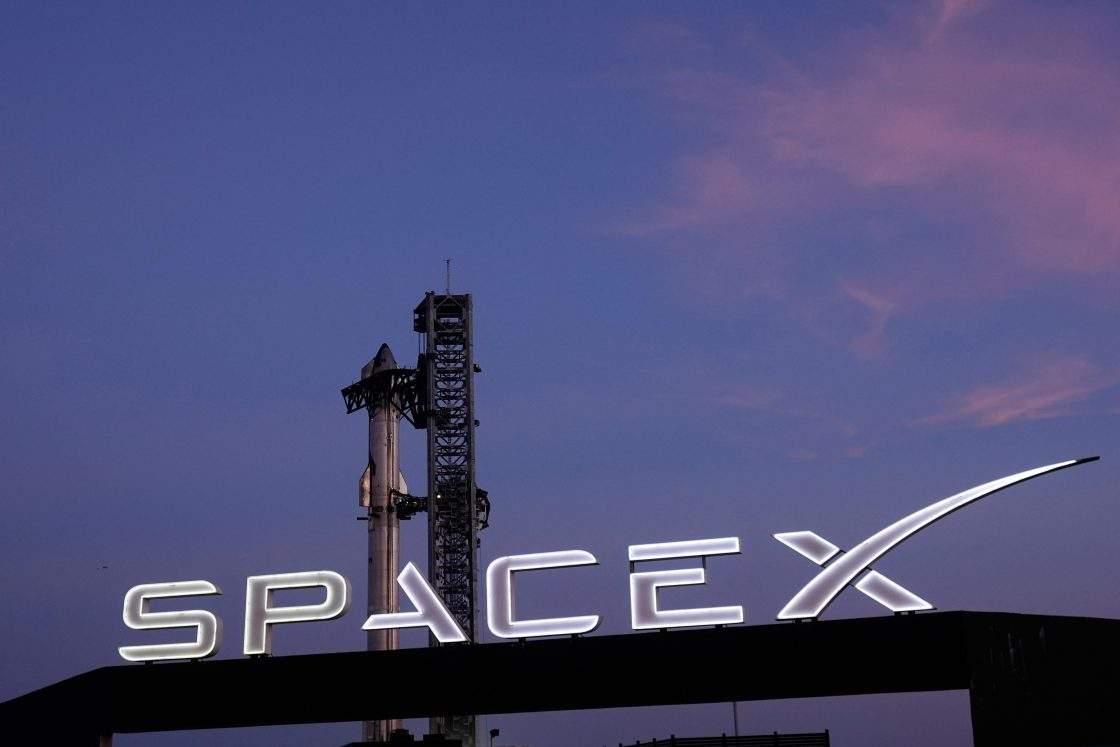
SpaceX shares sank following its inaugural public earnings report as an unprecedented wave of artificial intelligence spending overshadowed record quarterly revenue. When a market darling transitions from private obscurity to public scrutiny, the collision is rarely gentle. For years, the aerospace titan functioned on private timelines, fueled by venture capital rounds and the singular tolerance for risk commanded by Elon Musk. That era ended abruptly when the company revealed that quarterly capital expenditures ballooned to $18.4 billion, driven by a massive, compute-heavy infrastructure buildout.
Out of that staggering total, nearly $15.8 billion was funneled directly into artificial intelligence initiatives during a single quarter. Wall Street expected growth; Wall Street did not expect a cash burn of this magnitude to materialize overnight.
The Anatomy of a Trillion-Dollar Bet
To understand why the market reacted with acute anxiety, one must look past the headline revenue figures. SpaceX reported $7.81 billion in second-quarter revenue, representing a 92 percent year-over-year surge that comfortably beat analyst expectations. The engine behind this top-line explosion remains Starlink, the low-Earth-orbit satellite internet provider that doubled its subscriber base to 12 million and generated $4.3 billion.
Yet, instead of celebrating a profitable connectivity cash cow, investors fixated on the bleeding edge of the balance sheet. The company is aggressively transforming itself into an alternative cloud provider, leasing out heavy computing capacity powered by specialized microchips. Giants like Google and Anthropic have signed multi-billion dollar contracts for this compute infrastructure, pushing quarterly AI revenue up to $2.6 billion.
Building the physical foundations for global machine learning operations is an extraordinarily expensive endeavor. Data centers require vast electrical substations, advanced liquid-cooling systems, and dense clusters of expensive silicon. Management defended the spending spree by pointing to a rapid payback window, claiming new capital deployments for compute yield returns in under a year. Traditional enterprise data centers often take four to five years to break even on equivalent hardware outlays. If those internal metrics hold true, the corporate strategy represents a masterclass in capital velocity. If they slip, the burn rate threatens to overwhelm the core enterprise.
The Starlink Subsidy Model
For over a decade, the core financial architecture of SpaceX relied on a simple formula: rocket launch savings and Starlink subscription fees funded ambitious, long-term research like Starship development. Today, that architecture has expanded to support an entirely new industrial division.
Starlink is generating massive operating income, acting as the sole profitable anchor while the artificial intelligence segment still operates at a net loss. Executives are effectively using orbital broadband proceeds to bankroll a terrestrial compute empire. This creates a high-stakes dependency loop. Any deceleration in subscriber growth for satellite internet removes the primary cushion protecting the firm's broader financial standing.
Consider a hypothetical example to illustrate the mechanism. If a firm generates ten dollars of pure profit from an established subscription service and immediately channels twelve dollars into unproven server clusters, free cash flow turns negative even while total revenue climbs. That is the exact mathematical reality facing the organization today. The top-line growth masks an underlying vulnerability that public market analysts are unaccustomed to pricing into aerospace equities.
Execution Risk and Public Market Realities
Public shareholders operate on shorter horizons than private venture backers. Private markets tolerate speculative horizons stretching deep into the next decade because private shares lack daily liquidity. Public markets demand transparency, predictable cash flows, and adherence to near-term guidance.
Chief Financial Officer Bret Johnsen signaled that capital expenditures will remain elevated near second-quarter levels for the remainder of the fiscal year. That guidance directly challenges the assumptions of institutional managers who anticipated a peak in infrastructure spending following the initial public offering. When a company lists its shares at a premium valuation, the margin for operational error evaporates.
Furthermore, upcoming supply pressures compound the sentiment shift. The expiration of post-IPO lock-up provisions threatens to release hundreds of millions of insider and early-investor shares into active circulation. Doubling the accessible float while free cash flow remains heavily negative creates a difficult environment for price stabilization.
Management remains unfazed, pushing forward with ambitions to scale annual revenue toward a trillion-dollar target by the end of the decade. Whether the market will continue funding this vision depends entirely on whether those high-density server clusters begin generating net cash before the patience of institutional investors runs out entirely.