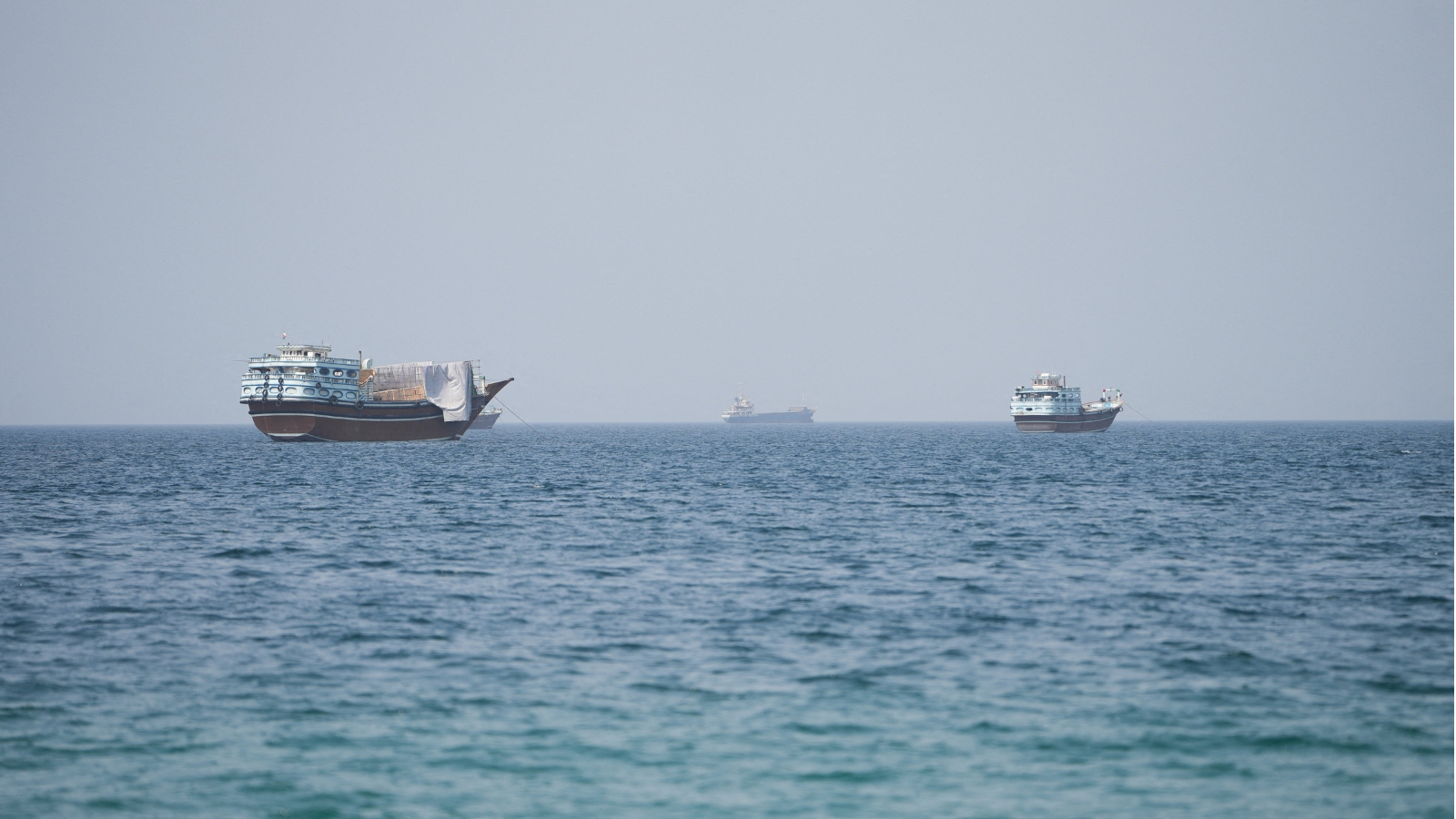
Two state-owned oil tankers operated by the Abu Dhabi National Oil Company were struck by drones while transiting the Strait of Hormuz, reducing traffic through the critical global energy chokepoint to a near-total standstill. This escalation arrives as the United States doubles down on an indefinite naval blockade against Iran, effectively turning one of the planet's most vital commercial corridors into an active theater of economic warfare.
The security architecture of the Persian Gulf is fracturing in real-time. What began as a localized naval standoff has morphed into a systemic disruption of global crude and liquefied natural gas flows. Insurance rates have skyrocketed. Shipowners are turning off transponders or refusing transit entirely. For a deeper dive into similar topics, we suggest: this related article.
The Mechanics of Maritime Coercion
The Strait of Hormuz handles roughly a fifth of global petroleum liquids. When traffic drops from a pre-war baseline of over one hundred thirty vessels daily to single-digit crossings, the shockwaves travel far beyond the Middle East.
Iran's Islamic Revolutionary Guard Corps understands this arithmetic intimately. By weaponizing drone technology against commercial shipping, Tehran creates maximum leverage through minimal resource expenditure. A few low-cost aerial drones are enough to paralyze multi-billion-dollar supply chains. For additional information on this issue, in-depth analysis is available on Al Jazeera.
Abu Dhabi has labeled these strikes acts of piracy. Yet diplomatic condemnation does little to clear a waterway littered with naval mines and patrolled by hostile shore batteries.
Washington Digs In
The response from Washington relies entirely on maximum economic and military friction. Defense Secretary Pete Hegseth announced that the United States Navy possesses the logistical capacity to maintain its regional blockade indefinitely through routine vessel rotations. Meanwhile, Treasury Secretary Scott Bessent signaled that upcoming financial sanctions will impose historic levels of isolation on the Iranian economy.
This strategy assumes that financial strangulation will eventually force Tehran to back down. Historical precedent suggests otherwise. Sanctions often harden regime resolve rather than prompt capitulation, leaving commercial operators caught in the crossfire.
The Ripple Effects Across Global Supply Chains
Energy importers are scrambling for alternatives. Asian economies heavily reliant on Qatari liquefied natural gas shipments face mounting deficits as force majeure declarations disrupt standard delivery schedules. Importers are forced to source replacement cargoes from the United States, Oman, and West Africa, driving up spot prices and transportation overhead.
For commercial shipping lines, the risk calculus has fundamentally shifted. Operating a tanker through the Strait of Hormuz now requires balancing razor-thin profit margins against the very real possibility of kinetic attack. Many carriers are simply choosing to idle their vessels offshore rather than gamble on safe passage.
The standoff has exposed the vulnerability of single-point energy transit routes. Alternative pipelines crossing the Arabian Peninsula offer limited relief, but they cannot fully compensate for the massive volume traditionally carried by tankers through the strait.
As long as Washington maintains its blockade and Tehran enforces its own retaliatory permit system for the waterway, commercial navigation remains hostage to a geopolitical stalemate with no resolution in sight.
ADNOC Oil Tankers Attacked in Strait of Hormuz
This video provides visual context and coverage of the recent drone attacks on ADNOC oil tankers in the Strait of Hormuz amid escalating regional tensions.


