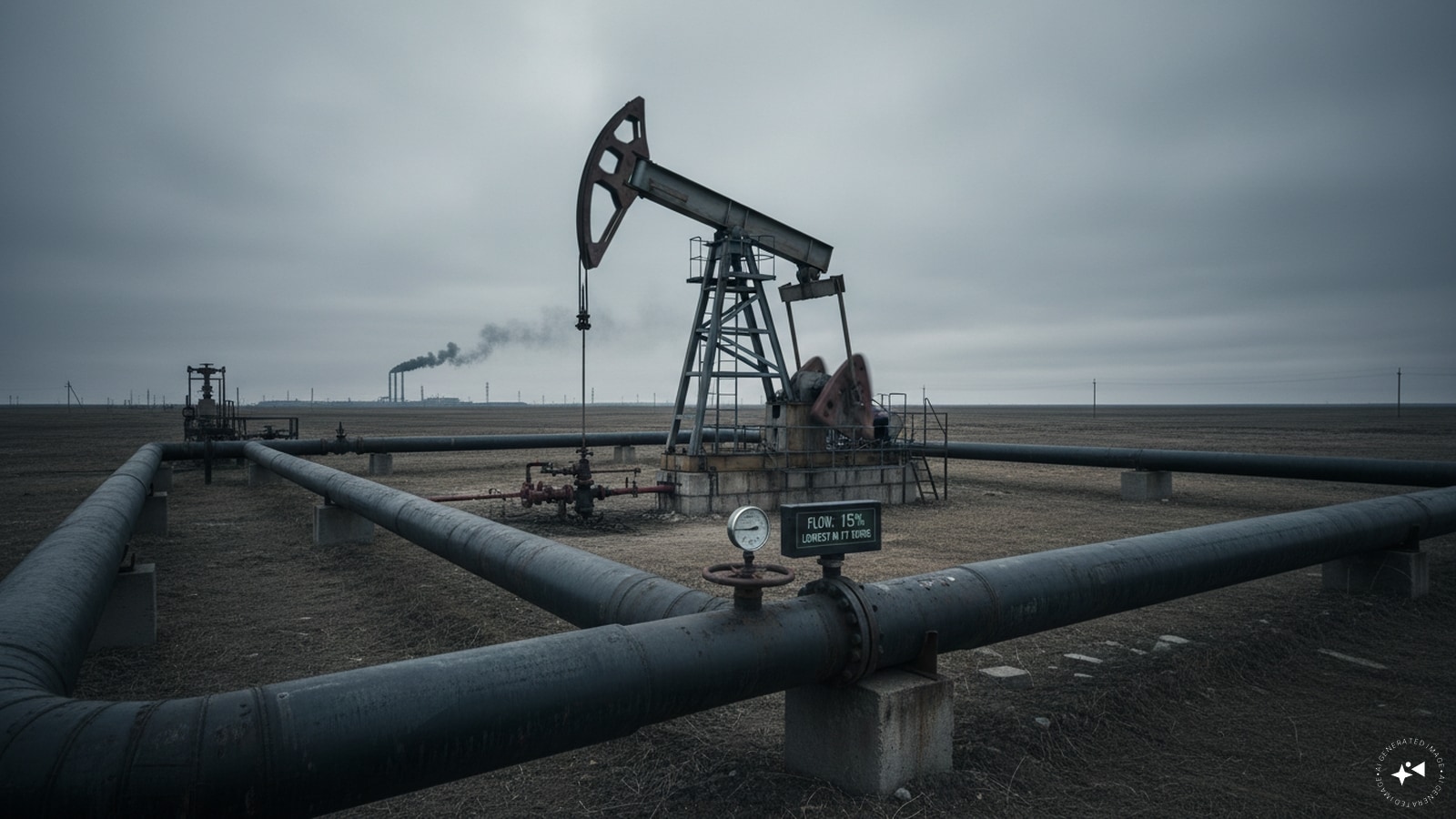
The recent declaration by Washington regarding total dominance over the Strait of Hormuz masks a fragile operational reality where physical control of a narrow maritime chokepoint remains fundamentally distinct from secure commercial transit.
When United States Central Command forces completed their latest wave of airstrikes against Islamic Revolutionary Guard Corps targets, the immediate strategic objective was straightforward. Air defense installations, radar nodes, and suspected mine-laying infrastructure along the southern Iranian coast were pummeled. White House statements quickly followed, insisting that American positioning had secured the vital waterway. Yet, global energy markets reacted with immediate anxiety, pushing crude prices upward as insurance premiums for Persian Gulf shipping spiked.
The Geography of Vulnerability
Controlling a map is not the same as controlling the water.
The Strait of Hormuz is barely twenty-one miles wide at its narrowest point, with inbound and outbound shipping lanes only two miles wide each. This geographic bottleneck forces nearly a fifth of the world’s petroleum consumption past a coastline honeycombed with anti-ship missile batteries, fast attack craft, and mobile drone units.
When a superpower targets fixed radar sites and static coastal defenses, it eliminates the hardware visible on satellite imagery. It does not erase the asymmetric threat architecture perfected by Tehran over decades. Mobile missile launchers hidden inside mountain tunnels or truck beds can relocate within minutes of firing.
Consider a hypothetical example to illustrate the tactical hurdle. If an actor hides a crate of anti-ship cruise missiles in a commercial warehouse or a dry creek bed, traditional aerial reconnaissance cannot differentiate it from harmless cargo until the moment of launch. Eradicating fixed installations provides temporary breathing room, but it leaves the underlying hazard intact.
The Economics of Chokepoints
The White House asserts that economic pressure is doing the heavy lifting. With Iran facing severe financial contraction, administration officials argue that Tehran lacks the long-term stamina to sustain a prolonged maritime confrontation.
History suggests otherwise. Resource-constrained nations often double down on asymmetric disruption when pushed to the financial brink. Closing or heavily restricting the strait does not require a massive blue-water navy. It requires only the credible threat of destruction.
Commercial shipping companies operate on thin margins and strict risk tolerances. If maritime insurers decide that the Persian Gulf is an active combat zone, they simply stop underwriting voyages. Premiums skyrocket to prohibitive levels. Tankers anchor off the coast of Fujairah rather than risk transit. The physical water may be monitored by American destroyers, but commercial cargo stays frozen.
Retaliation Chains and Regional Spillovers
The kinetic exchange has already moved far beyond the narrow waters of the Gulf.
Reports from regional monitoring groups and official state agencies indicate that secondary ripples hit multiple points across the Middle East following the American strikes. Ballistic missile activity targeting air bases in Jordan and drone incursions near Bahrain demonstrate that Iran’s response capacity relies on a distributed network of regional proxies and missile arsenals.
Containment is an illusion in modern asymmetric warfare. A strike on coastal radar installations in Hormuz triggers a missile launch from an inland plateau, which in turn prompts air defense activations across neighboring sovereign airspace. Each escalation forces allies to adjust their posture, turning a localized maritime dispute into a regional security crisis.
The friction between political rhetoric and maritime reality will define energy security for the foreseeable future. Declaring dominance satisfies domestic political imperatives, but tankers navigating the corridor must still calculate the cost of a hidden mine or a sudden salvo from an unlocated battery.
US Launches New Iran Strikes After Attacks in Strait of Hormuz
This video provides live coverage and contextual analysis regarding the military escalation and retaliatory strikes unfolding across the Strait of Hormuz.
http://googleusercontent.com/youtube_content/1