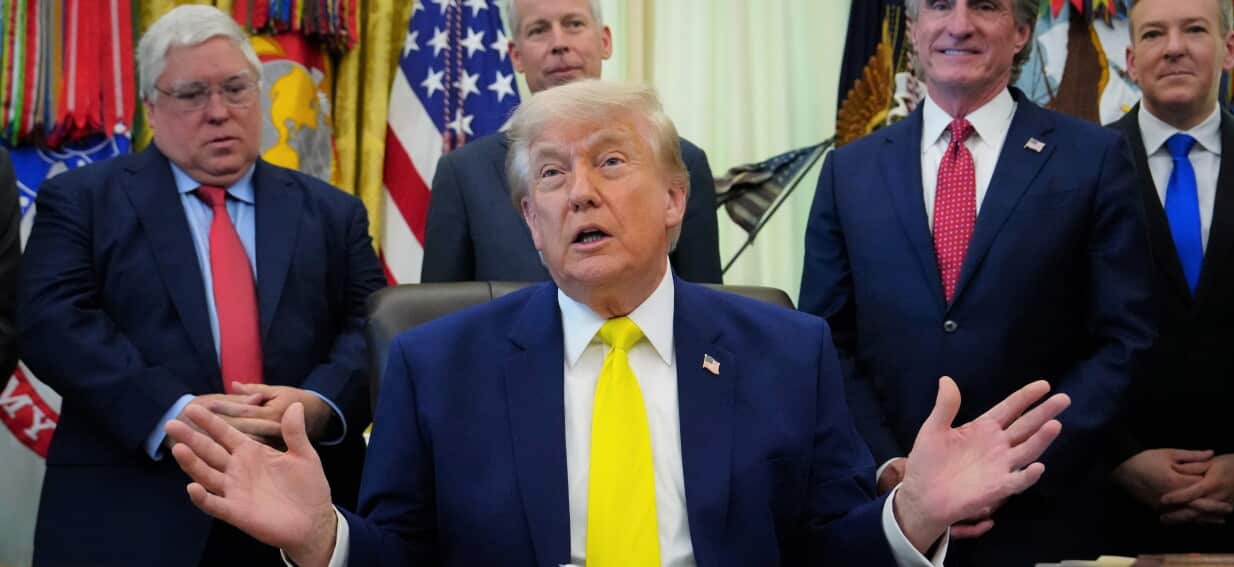
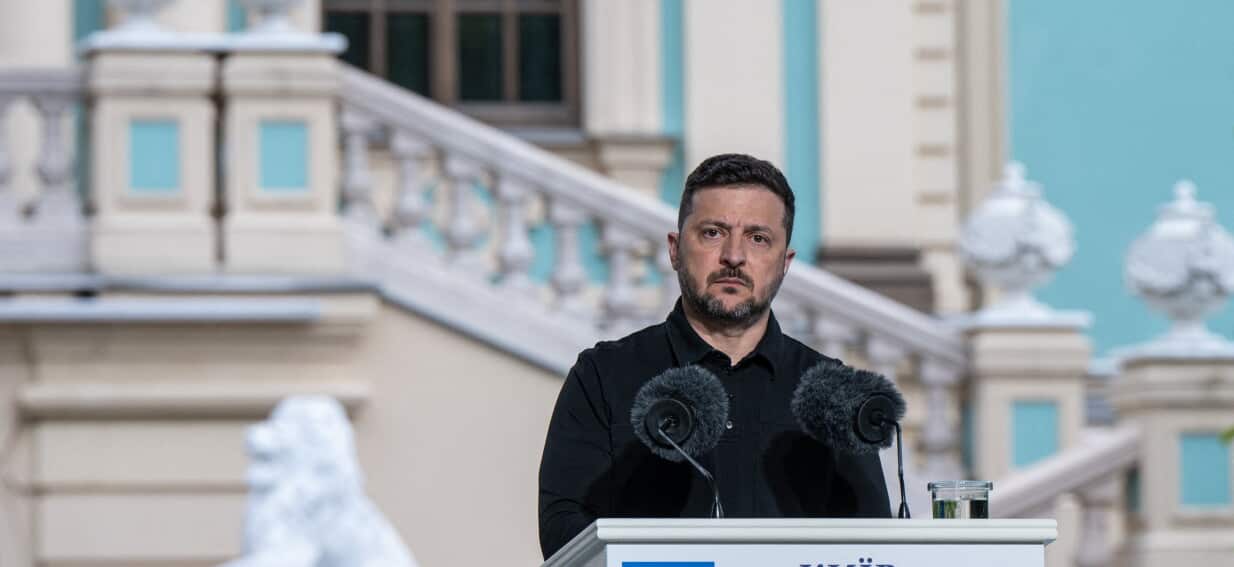
The United States Senate narrowly defeated a Democratic amendment on Thursday that aimed to permanently dismantle Donald Trump’s controversial $1.8 billion anti-weaponization fund. The 49-50 party-line vote preserved the cash pool for now, embedding the fight deeply into a broader $70 billion immigration enforcement package designed to fund the administration's mass deportation initiatives. While Senate Majority Leader John Thune managed to keep his caucus mostly unified to prevent a piece of must-pass immigration legislation from being derailed, the legislative maneuvering exposed a severe rift within the Republican party regarding executive overreach and the control of taxpayer dollars.
Understanding this vote requires looking past the simple party-line tally. The defeat of Senate Minority Leader Chuck Schumer's amendment was not an endorsement of the fund. It was a tactical, high-stakes delay.
The Price of Dropping a Lawsuit
The origins of this $1.776 billion pool of money have little to do with traditional government appropriations. The fund was conceived as part of a settlement agreement reached by the Justice Department to resolve a personal lawsuit brought by Donald Trump and his sons against the Internal Revenue Service over the unauthorized leak of his tax returns.
In exchange for dropping their personal claims against the federal government, the administration established a massive financial repository managed by the executive branch. Officially, the fund is designated to pay out financial settlements to citizens who claim they have been targeted or wronged by federal agencies.
Unofficially, lawmakers on both sides of the aisle view it as an unprecedented executive branch slush fund. Critics argue the framework is custom-built to financially compensate political allies, including individuals prosecuted in connection with the January 6, 2021, Capitol riot.
The mechanism avoids standard oversight. By structuring the fund through a legal settlement within the Executive Branch, the administration bypassed the traditional congressional appropriations process entirely.
This maneuver triggered immediate resistance from constitutional institutionalists. Republican Senator Bill Cassidy recently joined Democratic Senator Cory Booker to file an amicus brief in a federal court case challenging the pool of money. Their argument was clear and grounded in historical precedent: the executive branch cannot spend the public's money without an explicit appropriation from Congress.
Three Hours of Standing Still
The vote on the Senate floor on Thursday morning revealed the deep discomfort rank-and-file Republicans feel over this arrangement. For more than three hours, official Senate business ground to a complete halt.
Groups of Republican senators huddled in intense discussions on the chamber floor, calculating the political fallout of their choices. Schumer’s amendment was designed to force a clean, uncomfortable referendum. It presented a stark choice: support a multi-billion-dollar executive payout system or vote to protect the federal treasury.
To protect the underlying immigration bill, GOP leadership had to keep their members from defecting. They ultimately succeeded by the narrowest of margins, but three swing-state Republicans broke ranks to vote with the Democrats:
- Susan Collins of Maine
- Jon Husted of Ohio
- Dan Sullivan of Alaska
All three face difficult re-election campaigns this November. For them, voting to preserve a nearly $2 billion fund intended for political allies was a liability their campaigns could not absorb.
Senate Amendment Vote to Ban the Fund:
=========================================
Democrats / Independents:  46  (YES)  0 (NO)
Republicans:                3  (YES) 50 (NO)
-----------------------------------------
Total:                     49  (YES) 50 (NO)
* Result: Amendment Fails
The Executive Backpedal and the Legislative Trap
The Senate showdown occurred just days after the administration attempted to quietly defuse the situation. On Tuesday, Acting Attorney General Todd Blanche testified under oath that the Justice Department was not moving forward with the payout plan.
That testimony was prompted by a mix of bipartisan anger and a federal court ruling that temporarily blocked any disbursements from the fund. Yet, Blanche repeatedly refused to put that commitment in writing.
Compounding the confusion, Donald Trump publicly contradicted his own acting attorney general the very next day. Speaking to reporters on Wednesday, the president stated he did not know if the fund was dead or alive, openly describing the $1.8 billion pool as "a beautiful thing."
This contradiction created a trust deficit on Capitol Hill. While Leader Thune urged his colleagues to rely on Blanche’s sworn testimony and reject "corrosive" amendments, skeptical lawmakers wanted permanent legislative guardrails.
Immediately after the Democratic amendment failed, retiring Republican Senator Thom Tillis introduced a counter-proposal. The Tillis amendment sought to bar the executive branch from using federal money for the anti-weaponization fund, but it diverted the $1.7 billion into the Justice Department's fraud division.
Democrats quickly killed the Tillis alternative, with Senator Jeff Merkley warning that moving the money into a different pocket of the Justice Department simply created a new, unaccountable fund under a different name. The maneuver showed how difficult it has become to find a middle ground when the dispute involves core spending powers.
The Unresolved Constitutional Fight
The fight now shifts to a parallel track in the federal court system, where the constitutional questions will be litigated out of reach of Senate floor tactics. By utilizing a legal settlement to erect an independent financial apparatus, the administration has tested the outer boundaries of executive authority.
Congress retains the power of the purse. When an administration finds a way to self-fund an agenda using multi-billion-dollar legal settlements, that foundational legislative power begins to erode.
The immediate legislative hurdle for the White House has been cleared, and the $70 billion immigration enforcement package remains on track for a final vote. Security funding for a planned White House ballroom has already been stripped from the package due to earlier Republican resistance, proving that party unity has clear limits.
The anti-weaponization fund survived its first major legislative challenge because party leaders successfully framed the vote as a test of loyalty to the broader immigration agenda. But the fundamental dispute over who controls the money remains completely unresolved.
The true test of the fund's survival will occur when the federal courts rule on the amicus brief brought by the unusual alliance of Cassidy and Booker. If the courts agree that this settlement structure violates the Appropriations Clause of the Constitution, no amount of Senate floor maneuvering will change the outcome.
Executive agencies cannot spend money that Congress has not legally authorized, no matter how beautiful the president thinks the fund is.