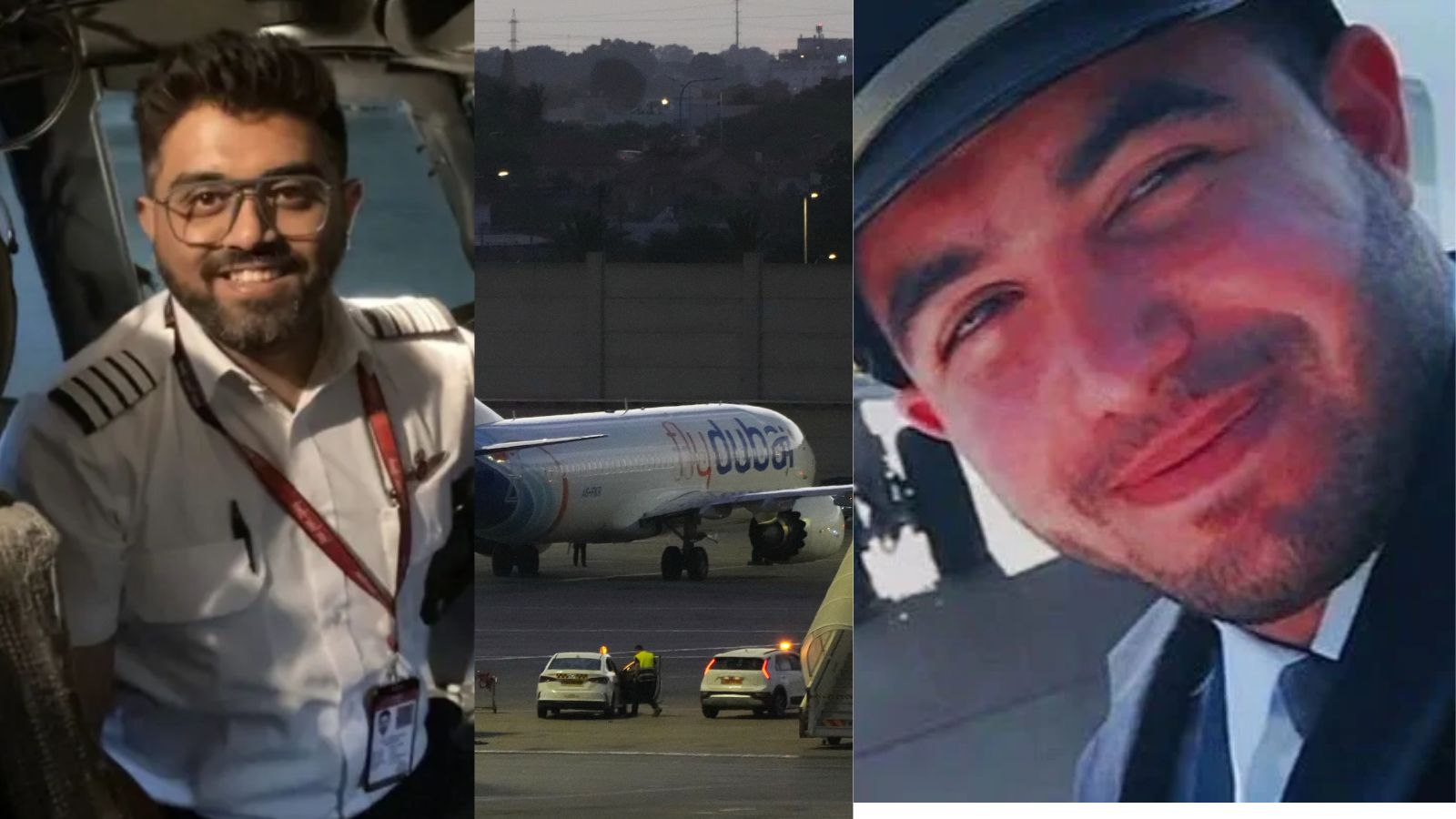
Commercial aviation relies entirely on an invisible baseline of trust. You strap yourself into a metal tube, push away from the gate, and assume the two people up front share the exact same objective: landing safely. But that fragile boundary shattered in the skies above the Middle East during a terrifying incident aboard Flydubai Flight 1073.
When reports emerged detailing how an Omani co-pilot allegedly tried to execute a catastrophic crash after his initial plan unraveled, the aviation industry was forced to confront a nightmare scenario many security experts thought impossible.
The Anatomy of a Cockpit Betrayal
The flight was bound from Dubai International Airport toward Ben Gurion Airport near Tel Aviv. Inside the cockpit of the Boeing 737 MAX 8, First Officer Hammam al-Hammami initiated a violent assault on Flight Captain Smit Machchhar. Using the aircraft's emergency crash axe, al-Hammami attacked the captain from behind, hoping to incapacitate him instantly.
Intelligence reports later revealed that al-Hammami had studied previous flights on the same route to familiarize himself with airspace layouts and security protocols. His original design reportedly involved neutralizing the captain, seizing full control, and steering the jet directly into a Tel Aviv skyscraper or the airport itself.
The attack caught the flight deck completely off guard. Captain Machchhar sustained severe head and arm injuries, yet managed a heroic defense that kept the cockpit door from staying shut, ultimately alerting passengers and off-duty crew members traveling in the cabin.
Plunging 16,000 Feet and the Engine Mystery
When the primary plan to reach Israeli airspace failed due to the active resistance inside the flight deck, the situation degenerated into pure chaos. According to intelligence breakdowns published in international reports, al-Hammami realized his hijacking window was closing. He disconnected the autopilot and violently pushed the control column forward.
The Boeing 737 dropped roughly 16,000 feet in a harrowing 30-second window. Cabin emergency lighting flickered on, a sign that the aircraft had lost primary electrical power and shifted onto battery backups. Investigators subsequently focused heavily on whether the co-pilot had flipped the engine fuel switches from run to cutoff position, effectively starving the turbines of fuel to induce a dead-stick dive.
The descent was so steep and rapid that the aircraft crossed speeds exceeding 970 kilometers per hour, causing structural stress and damage to the tail rudder. Passengers rushed the flight deck, physically overpowering the co-pilot and pulling the controls back up to stabilize the aircraft from an unrecoverable plunge. Off-duty pilots deadheading on the flight then stepped in, resetting parameters and coordinating with Saudi air traffic control to divert safely into Tabuk.
Why Screening Protocols Failed
The incident immediately triggered intense diplomatic scrutiny and security audits across airlines flying into Israel. Aviation regulators are asking hard questions about how an individual with suspected radical leanings slipped past background checks.
Intelligence summaries noted that al-Hammami had previously drawn scrutiny regarding online activity, leading to a transition out of active line flying at his previous employer before he joined Flydubai. Critics point out that information-sharing gaps between regional intelligence services create blind spots that commercial carriers cannot catch on their own.
Airlines run extensive background checks, but they rely heavily on what national databases clear. When a pilot holds commercial credentials and clean local records, internal cockpit security becomes the final, fragile line of defense.
The Shaking Foundation of Cockpit Culture
Commercial aviation has spent decades fortifying cockpit doors against external threats, a direct legacy of the 2001 attacks. Yet little structural protection exists against an insider threat sitting in the right-hand seat.
Carriers are now re-evaluating psychological screening frequencies, real-time background monitoring, and two-person cockpit occupancy rules that require a flight attendant to step inside whenever one pilot leaves. The Flydubai episode proves that the traditional assumption of mutual professional accountability between two pilots can no longer be taken for granted. Security teams must account for the rare, devastating possibility that the person trying to destroy the plane is wearing a captain's uniform.


