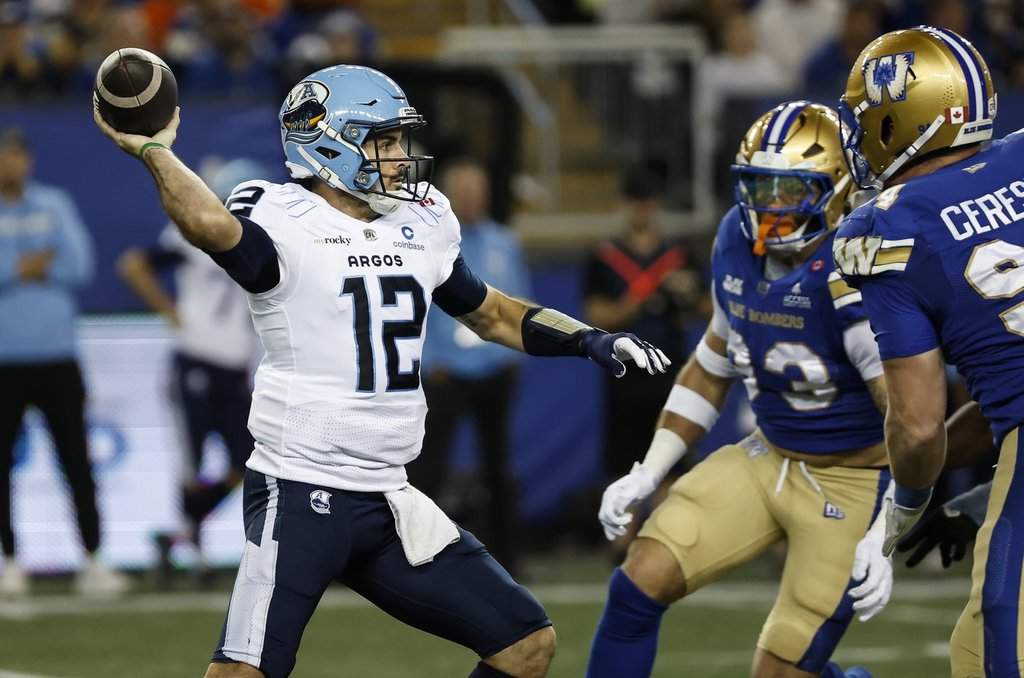
Football matches are rarely lost in a single chaotic quarter, yet the Canadian Football League clash between the Toronto Argonauts and the Winnipeg Blue Bombers at Princess Auto Stadium offered a masterclass in a late collapse. When the clock hit triple zeros and Lirim Hajrullahu split the uprights for a 36-yard field goal with twenty-seven seconds remaining, the scoreboard read 30-28 for the visitors.
Yet that final score disguised a deeper narrative about two franchises heading in starkly different directions as the autumn chill settles over the league calendar.
The anatomy of Toronto's 30-28 victory rests entirely on a tale of two halves that laid bare Winnipeg's inability to protect a lead. For the first thirty minutes, the Blue Bombers controlled the line of scrimmage with a suffocating ground game led by Brady Oliveira, who churned up yards with characteristic ferocity. Dru Brown, filling in for the injured Zach Collaros, operated an efficient offense that built a 21-14 halftime cushion. The home side amassed fifteen first downs and nearly two hundred seventy yards of total offense before intermission, starving Toronto of possession.
Then the script flipped with terrifying speed.
Winnipeg mustered a meager five first downs and one hundred fifteen yards of offense after the break. The execution errors piled up like uncollected cordwood. Penalties mounted, drives stalled, and Chad Kelly found the breathing room he needed to launch his trademark downfield strikes. Kelly, despite throwing interceptions that would haunt a less resilient gunslinger, connected on deep balls that stretched the Winnipeg secondary to its breaking point. Damonte Coxie hauled in passes that dismantled the zone coverage, finishing with a game-high one hundred forty-nine receiving yards.
The defining moment of the evening, however, was not just an offensive conversion, but a catastrophic sequence on special teams that changed the momentum permanently. Janarion Grant, the dynamic returner who spent years terrorizing opponents in Winnipeg uniform colors, took a missed Sergio Castillo field goal and manufactured a staggering return touchdown that served as an emotional dagger for the home crowd. When special teams units break down in such a spectacular fashion, it signals a systemic lapse in discipline that coaching staffs spend weeks trying to purge.
Winnipeg head coach Mike O'Shea did not mince words after the final whistle. The team had opportunities to put the game out of reach, particularly after a surprise 76-yard touchdown run on a quarterback sneak by Bryce Perkins that briefly restored life to the Winnipeg sideline. But championship-caliber habits require sixty minutes of clean football. Committing costly penalties in the second half handed Toronto free yardage and kept drives alive when the defense desperately needed a quick stop.
For Toronto, this gritty road win validates their status as an East Division powerhouse capable of stealing victories even when their execution is far from pristine. Chad Kelly finished completing 22 of 31 attempts for 290 yards, balancing two touchdowns against two interceptions. It was a chaotic performance, yet he delivered precisely when the margin for error evaporated. When the Argonauts needed to move the chains in the dying minutes, Makai Polk came up with a clutch reception on a long second-down conversion that set up the game-winning kick.
Meanwhile, Winnipeg sinks to a 7-7 record, leaving the locker room searching for uncomfortable truths. The cushion they once enjoyed has eroded, and the margin for error vanished beneath a mountain of self-inflicted wounds.
The standings do not care about first-half dominance or yards gained in a losing effort. They record only who executed when the pressure reached its peak, and on this night, the Argonauts proved they knew how to seize the moment while the Bombers watched it slip away


