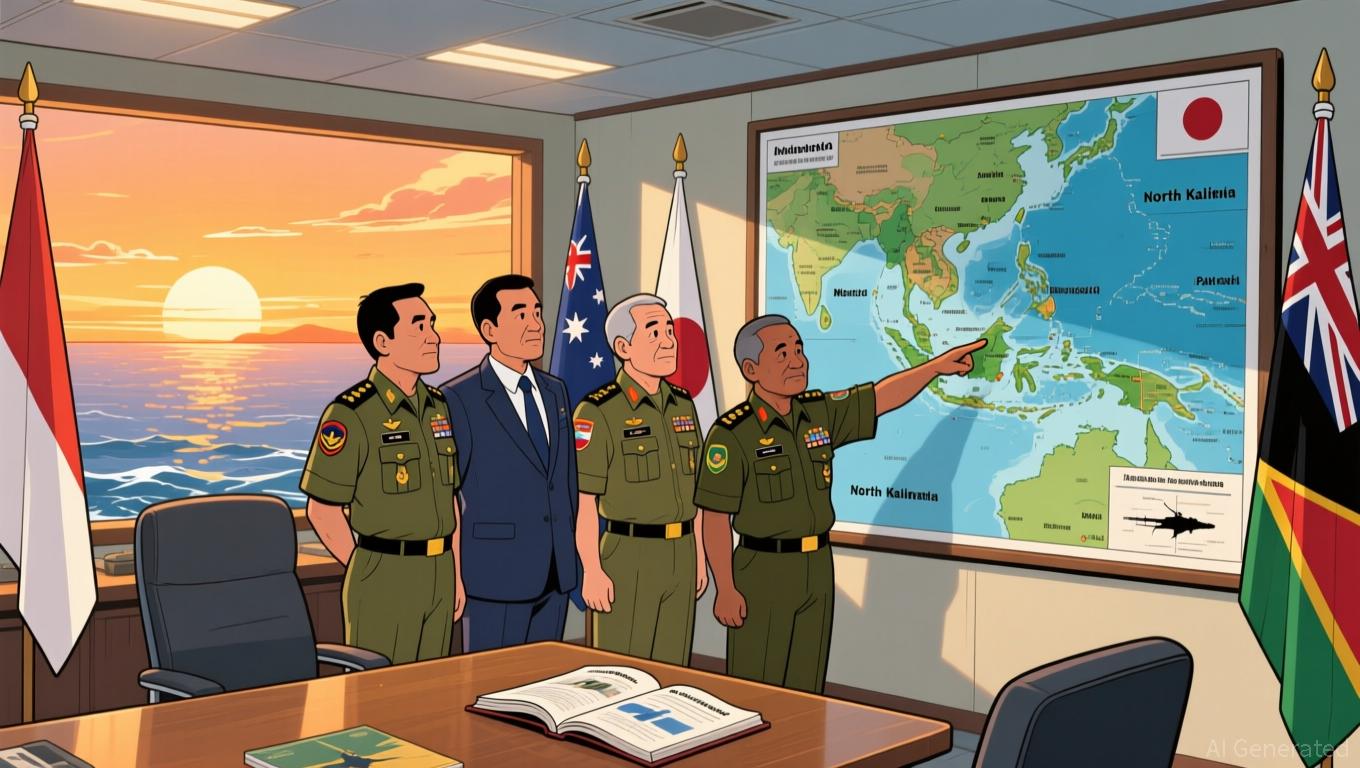
The signing of the Mecca Joint Defence Agreement between Saudi Arabia, Turkey, and Pakistan has altered the strategic landscape of the Middle East and South Asia. US President Donald Trump recently welcomed the trilateral security arrangement on social media, describing the development as a significant step toward regional self-reliance amid the ongoing conflict involving Iran. Formally executed by Saudi Crown Prince Mohammed bin Salman, Turkish President Recep Tayyip Erdogan, and Pakistani Prime Minister Shehbaz Sharif, the pact establishes a mutual defense framework stipulating that an armed attack against any single member is an attack against all three.
For decades, foreign policy observers treated Western security guarantees as the permanent bedrock of Gulf stability. That assumption is now fracturing. The convergence of Riyadh's financial weight, Ankara's advanced military-industrial capabilities, and Islamabad's strategic deterrence creates an indigenous security architecture that bypasses traditional Western oversight. Trump’s public endorsement of this alignment reflects a broader shift in Washington, where leaders increasingly expect regional partners to shoulder their own defense burdens rather than draining American military resources.
Anatomy of an Unprecedented Alliance
The mechanisms driving this trilateral accord are distinct from standard bilateral defense pacts. Negotiated quietly over the course of a year, the agreement pairs Turkey's NATO-tested military infrastructure with Pakistan's vast standing army and nuclear deterrent, all anchored by Saudi capital and strategic depth.
Public statements from Ankara have drawn explicit parallels to collective defense doctrines, invoking comparisons to foundational mutual defense clauses. Yet, treating this arrangement as an immediate equivalent to Western military alliances ignores institutional realities. The agreement currently lacks a centralized command structure, standardized logistics pipelines, or decades of integrated joint exercises.
Instead, the framework functions as a political and strategic signal. It offers participating capitals diplomatic maneuvering room as regional volatility escalates. By formalizing intelligence-sharing and joint military readiness protocols, the three nations are institutionalizing cooperation that was previously ad hoc.
The Regional Calculus and the Iran Factor
The timing of the agreement is tied directly to the persistent security crises stretching from the Persian Gulf to the Levant. Critical infrastructure in Saudi Arabia has repeatedly faced asymmetric threats, forcing Riyadh to diversify its strategic partnerships beyond traditional Western channels. Simultaneously, Turkey has navigated compounding tensions with regional adversaries while maintaining an independent defense posture.
Iran has offered muted initial reactions to the pact, with foreign ministry officials suggesting Tehran sees little reason for immediate alarm while monitoring how the alignment alters regional power balances. Intriguingly, the signatories have woven a diplomatic dimension into the security framework, committing to support initiatives aimed at lowering tensions between Washington and Tehran. This dual approach allows the alliance to project military deterrence while positioning its members as indispensable diplomatic intermediaries.
External capitals are already calculating the long-term fallout. New Delhi's foreign ministry announced it is actively examining the strategic implications of the Mecca pact on national security and regional stability. Meanwhile, Turkish leadership has already signaled that the trilateral framework is designed to be expandable, pointing to potential future inclusion for regional states like Egypt.
The Limits of Self-Reliance
Despite the enthusiastic rhetoric emanating from Washington and participating capitals, structural vulnerabilities remain unaddressed. Building a cohesive defense posture out of three disparate military cultures requires overcoming significant logistical, doctrinal, and political hurdles. Pakistan faces domestic economic pressures that complicate long-term military modernization, while Turkey's foreign policy ambitions frequently run counter to broader Western interests.
The durability of the Mecca Joint Defence Agreement will depend on whether its signatories can transition from symbolic declarations of solidarity to operational military integration. For now, the arrangement signals an irreversible pivot toward regional autonomy, marking the end of an era where Middle Eastern security was exclusively managed from the outside.

:max_bytes(150000):strip_icc()/lake-mead-173940030-5c25228846e0fb00014e8584.jpg)
