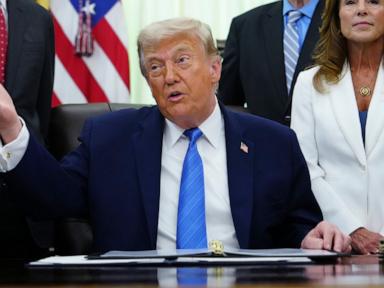
The white-hot economic pressure cooker pushed President Donald Trump into a rhetorical corner this week, forcing a bizarre pivot that redefines the White House spin machine. Confronted by reporters in the Oval Office about a stinging Bureau of Labor Statistics report showing annual inflation jumping to 4.2 percent in May, Trump brushed off the warning signs with a stunning declaration.
"I love the inflation," Trump said. He claimed the spiking numbers are actually a sign of American dominance, tying the high cost of living directly to a clandestine military operation in the Middle East.
Political opponents quickly seized on the footage, broadcasting the clip as proof of economic detachment. However, the reality behind the soundbite is far more complex than simple political gaffe. It exposes a high-stakes gamble by an administration attempting to weaponize a grinding geopolitical conflict to mask deep-seated domestic economic fractures. With midterm elections looming and consumer confidence hitting a dismal floor, the administration is betting everything on a swift victory abroad to fix the balance sheets at home.
The Secret Armada and the $90 Barrel
The core of the administration’s new narrative rests entirely on the volatile waters of the Strait of Hormuz. Ever since conflict erupted with Iran in February, the critical chokepoint—which historically handles 20 percent of the world’s petroleum supply—has been effectively gridlocked.
Trump used his Oval Office briefing to declassify what he termed a highly sensitive military initiative. According to the president, the U.S. military executed stealth operations to escort commercial tankers through the blocked waterway under the cover of darkness.
"We've been taking out millions of barrels of oil," Trump asserted, claiming the Navy guided more than 200 commercial vessels out of the hazard zone. He credited this unverified operation with preventing a catastrophic spike to $250 per barrel, holding global benchmark Brent crude near the $94 mark instead.
Strait of Hormuz Petroleum Flow
Pre-War Average:  20 Million Barrels / Day
Trump Claimed Escort Total: 100 Million Barrels (Cumulative)
Energy analysts are deeply skeptical of the math. A cumulative 100 million barrels over several months breaks down to roughly five days of normal, pre-war global supply flowing through the strait. While the naval operations may have temporarily calmed panic on Wall Street, they act as a temporary bandage rather than a cure. The basic underlying fundamentals of the energy market remain broken.
The True Driver of the May Spike
Despite the administration's optimistic rhetoric, the hard data from the Bureau of Labor Statistics presents a grim picture for working households. The month-over-month consumer price index accelerated by 0.5 percent in May, driven almost entirely by the compounding costs of energy.
- Gasoline prices have surged 41 percent over the past 12 months, pinning the national average at a painful $4.15 per gallon.
- Fuel oil costs have skyrocketed 59 percent, hitting home-heating budgets with unprecedented force.
- The broader energy index climbed 3.9 percent in May alone, filtering down into shipping, logistics, and retail goods.
When these energy costs are measured against real wage growth, the metrics reveal a steady erosion of working-class purchasing power. Even though minor categories like used vehicles and prescription drugs saw slight price drops last month, the essential expenses required to run a household continue to outpace weekly paychecks.
The Gravity of Coming Down Like a Rock
The political survival of the current congressional majority hinges entirely on a single economic thesis championed by the Oval Office. "When the war is over? It's going to come down like a rock," Trump promised, referring to the consumer price index.
This prediction assumes that inflation is strictly a temporary symptom of foreign conflict. It implies that signing a peace treaty or securing a diplomatic breakthrough with Tehran will instantly reset grocery and fuel bills back to their early 2026 baselines.
This outlook ignores the entrenched structural changes inside the domestic economy. Major supply disruptions rarely reverse symmetrically. When transportation fleets, agricultural producers, and industrial manufacturers adjust their baseline pricing upward to absorb a six-month energy crisis, those prices tend to stick. Companies become highly reluctant to lower retail prices even after their input costs drop, a phenomenon economists call price stickiness.
Furthermore, independent federal forecasts are already breaking away from the optimistic White House projections. The U.S. Energy Information Administration updated its long-term outlook, expecting retail gasoline to average $3.64 per gallon well into next year. This is a significant jump from the sub-$3 projections issued before the outbreak of hostilities. The data indicates that high costs are locking into the system for the foreseeable future.
Corporate Profitability in the Age of Volatility
The administration's sudden pivot to "loving" the inflation numbers highlights a quiet reality within corporate boardrooms. High inflation paired with global chaos creates a highly effective smokescreen for corporate margin expansion.
During periods of economic stability, sharp price hikes by major corporations attract immediate consumer backlash and antitrust scrutiny. In a wartime economy dominated by chaotic news cycles and genuine supply chain shocks, businesses gain immense pricing power. Consumers expect things to be expensive, making them far more likely to accept higher costs without changing their buying habits.
This dynamic has allowed specific sectors to post record-breaking financial results even as everyday households burn through their personal savings. The corporate strategy relies on maintaining elevated prices long after the initial logistical bottlenecks are cleared. The White House's vocal focus on military victories and geopolitical standoffs provides perfect political cover for this corporate behavior. It shifts public anger away from domestic balance sheets and redirects it toward foreign adversaries.
The Midterm Reckoning
The immediate danger for the administration is the rapidly closing window before the November midterm elections. Affordability and the overall cost of living remain the single most important issue for nearly two-thirds of the electorate.
Recent polling data shows a sharp decline in public trust regarding economic stewardship. An Economist/YouGov poll revealed that 63 percent of Americans now disapprove of the administration's handling of the economy. This represents a massive political shift for a president who won reelection largely on the back of promises to immediately lower costs for working families.
| Economic Metric (May) | Current Level | Pre-War Baseline (Jan) |
|---|---|---|
| Annual Inflation Rate | 4.2% | 2.4% |
| National Gas Average | $4.15 / gal | $3.12 / gal |
| Public Disapproval Rate | 63% | 41% |
House Speaker Mike Johnson and other congressional leaders spent the aftermath of the Oval Office briefing trying to clean up the messaging. They argued the president’s statements were taken out of context by political opponents, claiming Trump was actually looking forward to comparing today's peak numbers against future drops once the Middle East conflict is resolved.
This defense does little to alter the immediate reality on the ground. Voters do not experience the economy through abstract future comparisons or unverified midnight naval operations. They experience it at the supermarket checkout lane and the gas pump.
The administration’s gamble to embrace inflation as a sign of wartime strength is a high-risk political strategy born out of necessity. If the conflict dragging down the global energy supply does not end abruptly, this attempts to redefine inflation could backfire spectacularly at the ballot box.