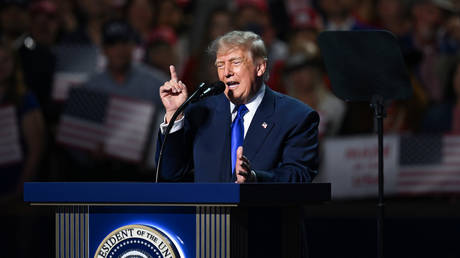
The rhetoric echoing from the West Wing regarding Tehran has long relied on hyperbole, but recent statements from Washington have shifted from routine diplomatic pressure into territory that demands severe analytical scrutiny. When President Donald Trump explicitly floated the notion of either cutting a diplomatic accord or completely "blowing up" Iran, foreign policy observers immediately parsed the phrase for strategic meaning. Yet, examining this standoff through the lens of ordinary diplomatic posturing misses the profound structural shift occurring in American statecraft.
At the core of the current crisis is a fundamental deadlock over economic strangulation and regional containment. Tehran’s domestic vulnerabilities are well-documented by international financial monitors: a collapsed currency, decimated oil revenues, and an internal leadership structure visibly grappling for absolute control. Successive American administrations have attempted to exploit these systemic fractures through maximum pressure campaigns. However, the modern iteration under the current administration has bypassed traditional bureaucratic channels of slow escalation, opting instead for compressed timelines and stark ultimatums.
The dilemma facing military planners is not merely theoretical. While political surrogates hint at absolute military solutions, the logistics of dismantling a sovereign nation's entire state apparatus carry catastrophic second and third-order effects. Analysts tracking military readiness point out that tactical strikes against fortified installations—such as deeply buried nuclear infrastructure—require precision capabilities that risk triggering broader regional conflagrations. The Strait of Hormuz remains a critical chokepoint where a localized naval skirmish can instantly globalize energy supply shocks.
Diplomatic channels, meanwhile, operate under the shadow of these constant threats. Backchannels persist, staffed by intermediaries attempting to salvage a framework that prevents Tehran from crossing the nuclear threshold. Yet, the tolerance for prolonged negotiations has evaporated. The administration's preference for binary choices—total capitulation via a comprehensive deal or total military annihilation—leaves very little room for traditional diplomatic ambiguity.
History suggests that absolute ultimatums often corner regional actors into unpredictable defensive postures. As intelligence assessments continue to evaluate the actual state of Iran's remaining military capabilities, the administration's public declarations serve a dual purpose: signaling domestic resolve ahead of midterm political cycles while attempting to force an abrupt fracture within Iran's ruling apparatus. Whether this high-stakes brinkmanship yields a reluctant concession or accelerates an irreversible military collision remains the defining question of contemporary geopolitics.
The clock on the current negotiating window continues to tick down, leaving both capitals locked in a volatile equilibrium where a single miscalculation could transform rhetorical threats into permanent reality.