The Department of Homeland Security confirmed that Immigration and Customs Enforcement agents will deploy to the 2026 FIFA Men’s World Cup under the guise of general event security. This integration of deportation officers into the tournament's safety perimeter has triggered an immediate crisis, threatening to disrupt matches through high-stakes labor strikes and vendor boycotts. UNITE HERE Local 11, representing thousands of stadium food service workers, threatened strikes at Los Angeles’ SoFi Stadium if federal immigration agents participate in operations. The unfolding conflict pits federal enforcement mandates against the multi-billion-dollar logistics of global sports entertainment.
The federal government views the deployment as routine. For decades, major domestic sporting events like the Super Bowl or the Kentucky Derby have utilized personnel from various DHS sub-agencies to fortify perimeters and manage massive crowds.
The political environment of 2026 alters the math completely. Under direct orders from the Trump administration, ICE personnel have expanded their operational footprint into highly visible domestic spaces, including airport security lines and military graduation ceremonies. The World Cup is merely the next logical step in this aggressive public enforcement strategy.
While DHS spokespeople assure the public that international visitors traveling legally have nothing to fear, internal agency realities tell a more complicated story. Field officers assigned to perimeter security will not actively screen spectators or stadium employees for visas. However, federal officials explicitly confirmed that ICE personnel are not barred from executing administrative warrants or making targeted arrests within host cities during the month-long tournament.
The distinction between passive crowd control and active immigration enforcement remains dangerously thin.
The Invisible Engine of Stadium Commerce
A World Cup stadium does not run on executive planning alone. It functions because of an expansive, low-wage workforce composed of concession cooks, dishwashers, janitors, and subcontracted street vendors handling the overflow outside the gates. In major metropolitan host hubs like Los Angeles, New York, Miami, and Houston, this workforce relies heavily on immigrant labor, including mixed-status families and workers operating under temporary protective designations.
Introducing ICE agents into this delicate ecosystem destroys the labor stability required to pull off a global tournament. Labor unions are leveraging their immense structural power in response. The AFL-CIO joined local chapters in demanding that FIFA secure an official, written moratorium on immigration enforcement within a one-mile radius of all tournament venues.
The economic threat of a strike is catastrophic for FIFA sponsors and concessionaires. If 2,000 food service workers walk out of SoFi Stadium hours before a match, the stadium's internal commerce grinds to a halt. Corporate hospitality suites go unserved, public concourses become logistical bottlenecks, and the operational timeline of a broadcast viewed by hundreds of millions of people fractures.
The Vendor Dilemma Outside the Gates
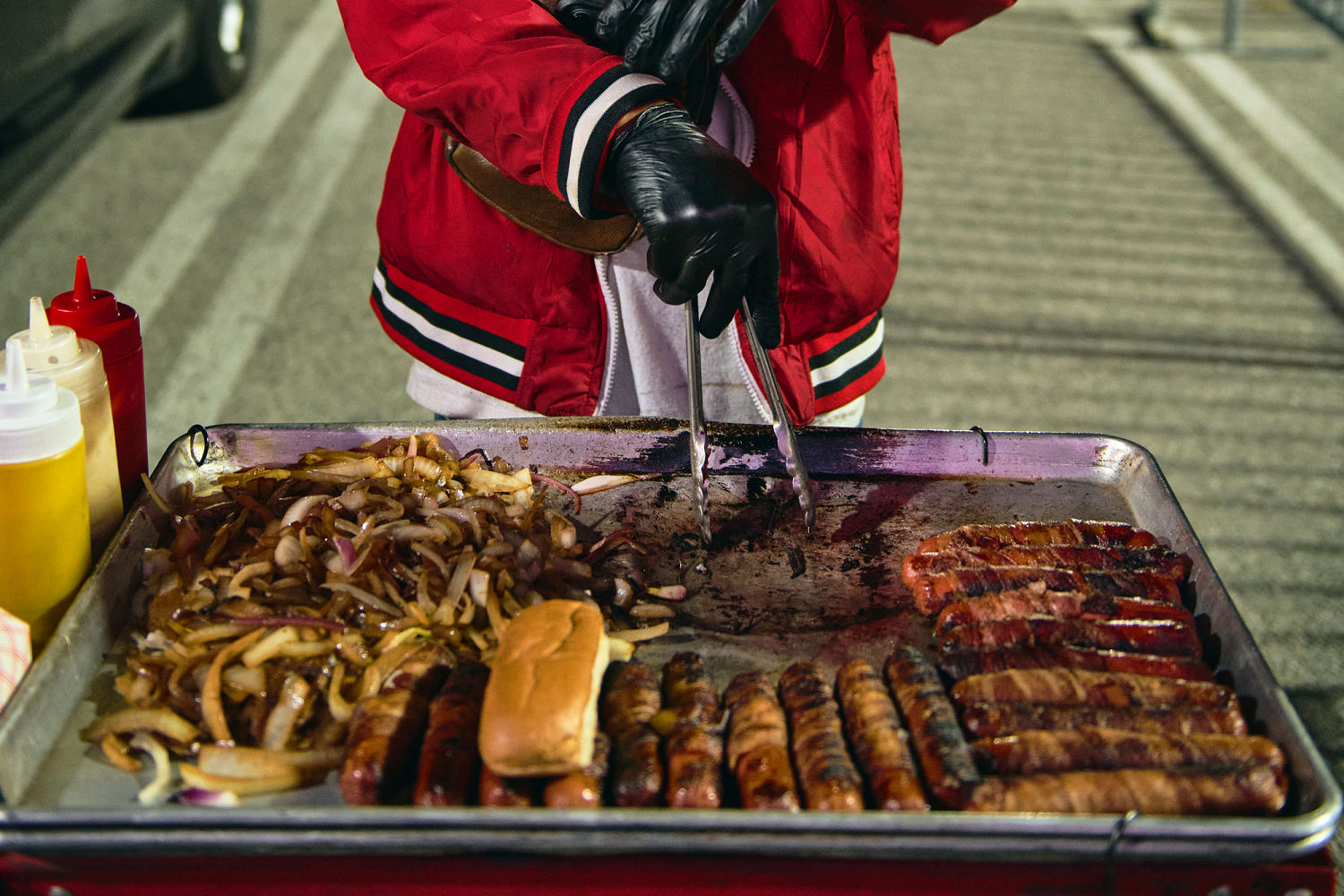
Outside the official stadium security perimeter lies a secondary economy governed by micro-entrepreneurs. These independent food vendors, merchandise sellers, and local hustlers look at the World Cup as a once-in-a-generation financial windfall. They invested thousands of dollars upfront for inventory, local permits, and specialized equipment to cash in on the global influx of football fans.
The presence of federal immigration teams forces these entrepreneurs into an impossible cost-benefit analysis. They must choose between maximizing their livelihood or protecting their personal safety.
- The Financial Sunk Cost: Vendors frequently take out predatory short-term loans or drain personal savings to secure inventory for an event of this magnitude. Skipping the tournament means financial ruin.
- The Surveillance Risk: Heightened security means biometric scanning, localized data-sharing networks, and pervasive local police coordination with federal intelligence databases.
- The Legal Gray Area: Even permitted, legal immigrant vendors face risks in states like Florida or Texas, where local police cooperation with federal immigration mandates is legally enforced, eliminating local sanctuary protections.
This environment creates a stark divide among host cities. While local leadership in New York or San Francisco attempts to minimize collaboration between municipal police and ICE, cities like Miami and Houston offer no such municipal buffers. Congressional attempts to pass the Save the World Cup Act, which sought to legally mandate enforcement-free zones around venues, stalled completely. The federal enforcement apparatus retains full jurisdiction to operate wherever local police departments accept their operational assistance.
A Systemic Threat to Ticket Sales and Tourism
The chilling effect extends beyond the workforce and into the grandstands. International tourism projections for the 2026 games are already showing signs of strain. Extended visa wait times, stringent new social media vetting protocols, and broader geopolitical conflicts had already dampened ticket distributions in several key markets. The confirmed presence of ICE inside the security architecture serves as another major deterrent.
Soccer culture is deeply rooted in working-class immigrant communities across the United States. For millions of domestic fans, attending a match in their home city is now a high-risk gamble. Families holding mixed legal status are quietly selling their tickets on secondary markets rather than risking interaction with federal agents at stadium checkpoints or transit hubs.
The resulting visual of empty seats at a premier global event would be an embarrassment for FIFA, an organization that aggressively promotes its human rights framework while relying on host nations to handle the heavy-handed security logistics.
The Fragmented Security Reality
A central component of the crisis is the absolute lack of uniform policy across the tournament's vast geographical footprint. Security protocols are fundamentally decentralized.
| Host Venue City | Municipal Sanctuary Protections | Local Police/ICE Cooperation | Risk Profile for Vulnerable Labor |
|---|---|---|---|
| Los Angeles (SoFi Stadium) | High | Restricted by Local Ordinance | Moderate (Standoff via Union Friction) |
| Miami (Hard Rock Stadium) | Low | Mandated by State Law | Severe (Direct Local/Federal Integration) |
| New York/NJ (MetLife Stadium) | High | Restricted at Municipal Level | Moderate (Federal Buffer Zones Requested) |
| Houston (NRG Stadium) | None | High State-Level Enforcement | Severe (Active Border Patrol Overlay) |
This fragmentation means a vendor or stadium worker operating under a specific set of safety expectations in California faces a completely different legal environment if reassigned to a match in Florida or Texas. The national coalition Dignity 2026 warned that federal agencies are actively compiling regional datasets during pre-tournament planning, using local stadium security audits to map vulnerability points within immigrant communities.
FIFA remains notably silent, hiding behind the assertion that security decisions fall under the purview of host-nation law enforcement. This silence exposes the core contradiction of modern mega-event hosting. Global sports bodies demand absolute tax exemptions, brand protection laws, and infrastructure subsidies from local governments, yet they claim complete powerlessness when those same governments deploy heavy-handed domestic enforcement teams inside the tournament footprint.
The 2026 World Cup will not fail because of empty stadiums or canceled broadcasts. It will struggle under the weight of an invisible, highly efficient logistical breakdown. When the opening whistle blows, the real story will not just be the athletes on the grass, but the empty concession stands, the missing street vendors, and the federal agents watching the gates.