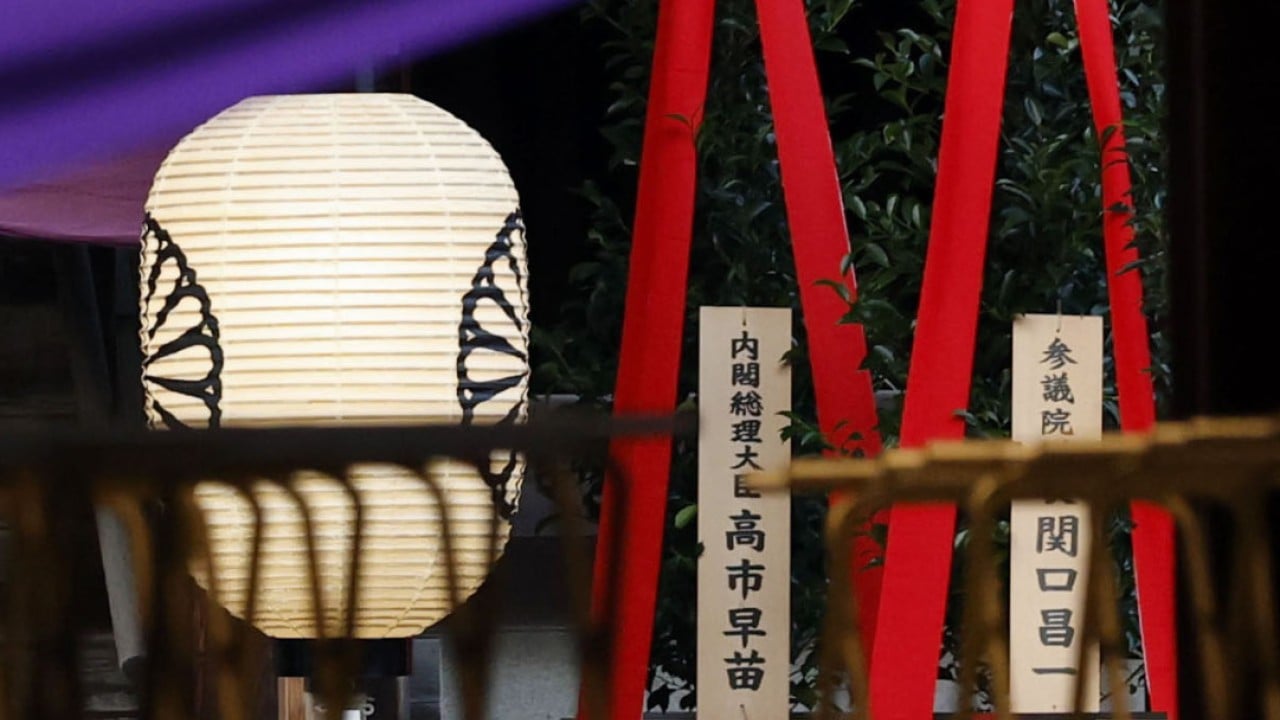
When Japanese Prime Minister Sanae Takaichi sent a ritual masakaki tree stand offering to Tokyo's Yasukuni Shrine during its October 2026 autumn festival rather than walking through the torii gates in person, she did not retreat from her convictions. She calibrated a geopolitical trap. By sending the potted sakaki branch in her official capacity while skipping a physical visit—just as she had avoided appearances during the spring festival and on the August 15 surrender anniversary—Takaichi signaled loyalty to Japan's conservative base without handing Beijing or Seoul an immediate excuse to blow up fragile diplomatic channels.
Anyone covering East Asian politics has watched this choreography play out for decades, yet most coverage stops at the surface outrage. A leader bows or sends an offering, Yasukuni Shrine hits the headlines because it enshrines roughly 2.46 million war dead alongside 14 convicted Class-A war criminals including wartime Prime Minister Hideki Tojo, and neighboring capitals issue predictable condemnations. That shorthand explains the friction, not the mechanics. In office since October 2025 as Japan's first female prime minister and president of the Liberal Democratic Party (LDP), Takaichi operates inside a far tighter vise than her predecessors ever faced. Her earlier remarks hinting at a potential Japanese role in a Taiwan contingency already put Beijing on edge. Adding an unvarnished shrine visit on top of security tensions would have turned a symbolic flashpoint into a full-blown crisis. If you liked this post, you might want to check out: this related article.
Why a Potted Branch Carries Heavy Political Weight
In Japanese Shinto tradition, masakaki is a sacred evergreen branch placed on altars as an offering of reverence. In modern politics, it functions as a pressure valve. A prime minister who visits Yasukuni in person creates undeniable photographic evidence that a foreign ministry can spin only so far. A prime minister who sends a masakaki offering—or a tamagushi ritual branch—still registers respect for the war dead in the eyes of domestic supporters while leaving just enough ambiguity for diplomats to argue over nuance.
That distinction matters deeply inside Tokyo's ruling coalition and conservative movement. Before taking the premiership, Takaichi was a regular visitor to Yasukuni, including on August 15, 2025. Hardliners expect their champion to honor those who died for the state without flinching at foreign criticism. Yet holding the top job changes the math. Every diplomatic flare-up carries a domestic price tag, especially when polling shows significant public anxiety over how the government handles relations with China. Sending an offering rather than appearing in person lets Takaichi hold her conservative flank without inviting an immediate collapse in bilateral engagement. For another angle on this story, check out the recent coverage from NPR.
Ritual restraint in Tokyo rarely means a change of heart. It usually means a leader is counting the cost of the next diplomatic summit.
Critics in China and South Korea view the distinction as cosmetic. From Seoul's perspective, official offerings from senior Japanese leaders still reopen unresolved wounds over wartime history, even when working-level ties with Japan have shown signs of thaw. Beijing goes further, framing offerings and visits as proof that Tokyo refuses to reckon squarely with militarism. Both reactions rest on a real historical tension: Yasukuni is not merely a cemetery or a quiet neighborhood shrine. Its attached Yushukan museum presents a sanitized, revisionist narrative of Japan's wars in Asia that alienates neighbors and troubles many Japanese historians as well.
The History Trap Nobody Escapes
To understand why Yasukuni Shrine refuses to fade into the background, look at how memory became fused with state legitimacy after World War II. Established in 1869 under the Meiji Emperor to honor those who gave their lives for the sovereign, the shrine sat at the center of prewar state Shinto. After Japan's defeat in 1945, Allied Occupation authorities stripped Shinto of state sponsorship and turned Yasukuni into a religious corporation.
The decisive turning point came in 1978, when the shrine secretly enshrined 14 Class-A war criminals—men tried and convicted by the International Military Tribunal for the Far East for crimes against peace and aggressive war. Emperor Hirohito stopped visiting Yasukuni after learning of the enshrinement, and subsequent emperors have not returned. Yet conservative politicians continued to treat the site as the primary place to mourn Japan's war dead, arguing that those who died in uniform had already paid their debt and that outsiders should not dictate how Japan remembers its fallen.
Here is where simple narratives break down. Inside Japan, public opinion is divided, not monolithic. Many citizens respect the war dead while opposing prime ministerial visits because they view them as unconstitutional under postwar separation of religion and state, or simply impractical for a trading nation surrounded by prickly neighbors. Others feel genuine resentment that foreign governments claim a veto over how Japanese families mourn relatives whose names are inscribed at Yasukuni. Acknowledging that gray area does not excuse historical whitewashing; it explains why the issue stays stubbornly alive inside domestic politics.
Diplomatic Leverage in a Tense Neighborhood
Foreign policy in East Asia runs on signaling, face, and timing. When Takaichi sent the masakaki offering in October 2026, she did so amid heightened friction with Beijing over Taiwan and delicate efforts to keep ties with Seoul constructive. Skipping an in-person visit removed one immediate spark while preserving her room to maneuver at regional gatherings.
Consider a hypothetical scenario to see how leaders weigh this trade-off. Suppose a Japanese prime minister visits Yasukuni on a major anniversary right before a regional summit where trade rules, maritime safety, or supply-chain security are on the table. Even if the prime minister insists the visit is a personal act of mourning, the host or rival capital can cancel bilateral meetings, cool airport protocol, or stall working groups without paying a heavy domestic price at home. By sending an offering instead, Takaichi kept the symbolic gesture alive for her base while denying rivals an easy pretext to freeze high-level contact before key summits.
That calculation also reflects broader shifts in Japanese statecraft. Under Takaichi, who has openly pointed to Margaret Thatcher as a model of resolve, Tokyo has leaned hard into economic security, defense readiness, and deterrence. Hawkish rhetoric on Taiwan and regional security already tests Beijing's patience. Fighting a two-front battle—escalating territorial and security friction while simultaneously igniting a full-scale history row over a physical shrine visit—would leave Tokyo with fewer diplomatic chips when crises flare at sea or in the air.
| Move by Japanese Leader | Domestic Signal to Conservatives | Reaction in Beijing & Seoul | Diplomatic Cost |
|---|---|---|---|
| In-person visit on Aug. 15 or festival | Maximum loyalty and defiance | Sharp condemnation; potential summit freeze | High; triggers immediate historical backlash |
| Ritual offering (masakaki / tamagushi) | Continued respect for war dead | Formal regret or condemnation, often muted | Moderate; keeps diplomatic channels open |
| No visit and no official offering | Seen as caving to foreign pressure | Tends to pass without major protest | Low on history; risks domestic base grumbling |
Coalition Politics and the Harder Right
Prime ministers rarely govern in a vacuum, and Takaichi's room to maneuver is shaped by coalition dynamics as much as foreign capitals. Following the LDP's partnership with Nippon Ishin no Kai (the Japan Innovation Party), nationalist and hawkish voices have plenty of megaphone power inside Nagatacho. Some figures in the broader conservative camp argue openly that Yasukuni visits should never be treated as a diplomatic concession to neighboring states.
Yet governing requires holding the center-right together, managing business concerns that depend on stable regional trade, and keeping swing voters comfortable with a steady hand at the helm. A prime minister who appears reckless risks turning strength into volatility. That tension explains why Takaichi's approach looks less like surrender and more like disciplined containment: keep the ritual alive on paper, avoid the photo-op that locks in escalation, and save political capital for hard security and economic battles.
Watch what happens around future shrine festivals and major regional summits rather than listening only to the initial press statements. The real test of Takaichi's strategy is whether sending an offering buys genuine diplomatic breathing room in Tokyo's neighborhood—or simply delays a reckoning that neither side has figured out how to resolve.


