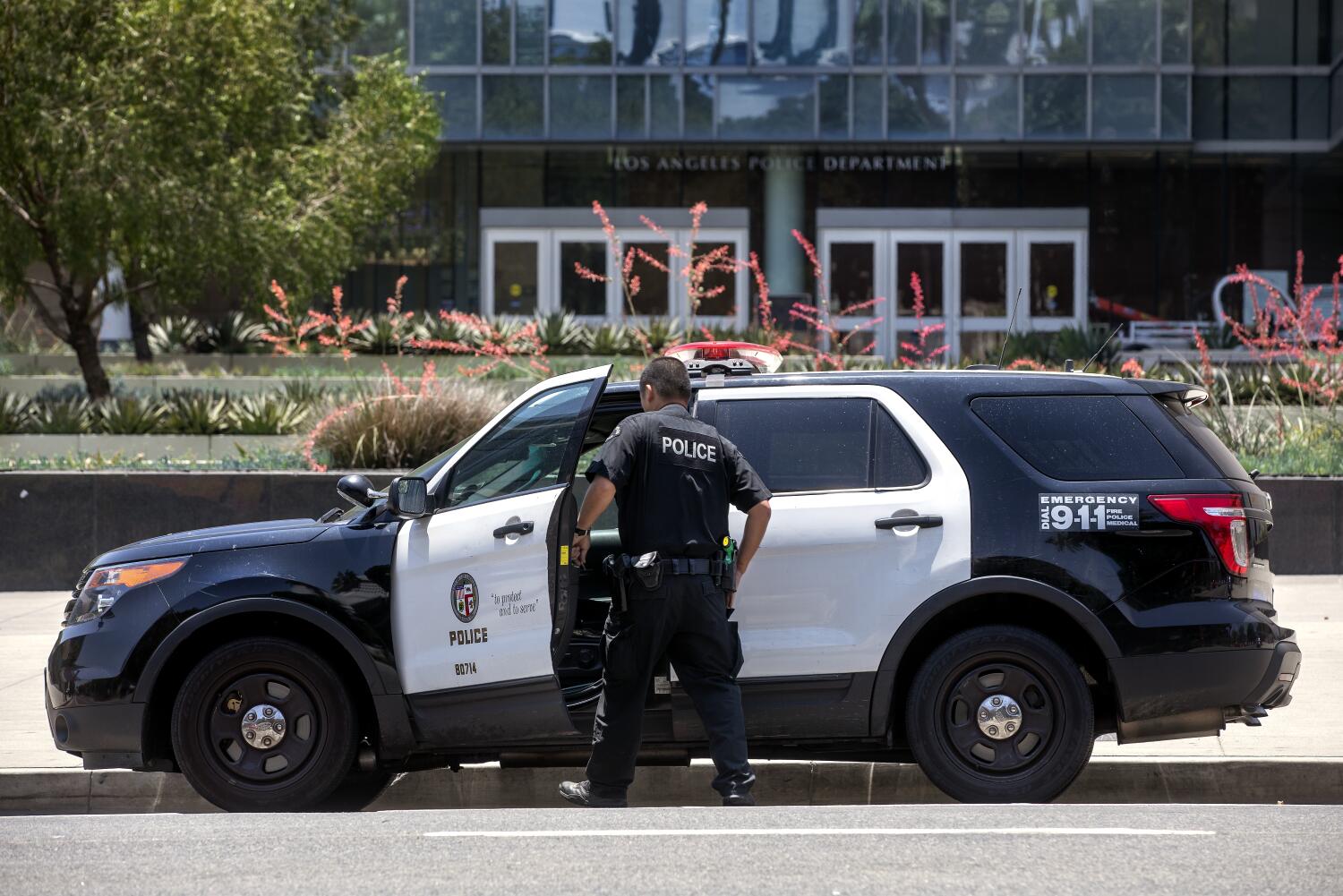
The dissolution of a high-tier anti-gang unit within the Los Angeles Police Department (LAPD) represents a fundamental breakdown in the principal-agent relationship of municipal governance. When specialized units are granted high degrees of autonomy to combat volatile criminal environments, the risk of "mission creep" and the erosion of oversight mechanisms increases exponentially. The recent investigation into officers deactivating body-worn video (BWV) cameras is not merely a breach of department policy; it is a tactical failure of the feedback loops designed to maintain institutional legitimacy and operational integrity.
The Structural Paradox of Elite Units
Specialized units like the Community Resources Against Street Hoodlums (CRASH) or its modern iterations are built on a high-risk, high-reward operational model. These units operate under a mandate of proactive intervention, which requires them to navigate the friction between aggressive enforcement and constitutional policing. The structural paradox lies in the fact that the very traits required for success in these environments—tight-knit group cohesion, rapid decision-making, and specialized tactics—are the same traits that facilitate the creation of insular subcultures.
When a unit begins to view itself as an independent cell rather than a component of a larger legal framework, the "Oversight Gap" widens. This gap is defined by the distance between the department’s stated rules of engagement and the actual field practices of the officers. In the case of the investigated anti-gang unit, the deliberate deactivation of body cameras served as a physical manifestation of this gap. It was a conscious choice to eliminate the primary data source used by the "principal" (the department leadership) to monitor the "agent" (the officer).
The Cost Function of Technical Circumvention
Body-worn video is more than a transparency tool; it is a critical data point in the risk management function of a modern police force. The deactivation of these devices introduces a massive negative externality into the judicial process.
- Evidentiary Degradation: Without objective video records, the legal system reverts to "testilying" or conflicting verbal accounts, which significantly lowers the probability of conviction in high-stakes gang prosecutions.
- Liability Inflation: Every unrecorded encounter creates a potential civil liability. The lack of video evidence prevents the department from defending against frivolous claims, leading to increased settlement costs that deplete municipal budgets.
- Information Asymmetry: When officers control the flow of data (by turning cameras on or off), they create a monopoly on truth. This asymmetry prevents supervisors from identifying "near-misses" or tactical errors that could be corrected through training before they escalate into systemic misconduct.
The decision to shut down the unit suggests that the cost of these externalities eventually outweighed the unit’s perceived utility in crime suppression. From a strategic perspective, a unit that cannot be audited is a liability that no organization can afford to carry, regardless of its arrest record or "cleared case" metrics.
The Mechanics of Subcultural Drift
The transition from a high-performing unit to a corrupted one follows a predictable logic of subcultural drift. This process occurs in three distinct phases:
Phase One: The Necessity Myth
Officers begin to believe that the formal rules (like camera mandates) are "handcuffs" that prevent them from dealing with "real" criminals. They justify minor infractions as necessary tools for achieving a greater good. This is the point where the mission begins to decouple from the law.
Phase Two: Mutual Shielding
As infractions become more frequent, the unit develops a "code of silence." Deactivating a camera is no longer an individual choice but a group expectation. At this stage, the unit’s internal loyalty surpasses its loyalty to the department or the public. The lack of internal whistleblowing indicates that the social cost of betrayal within the unit is higher than the professional cost of violating department policy.
Phase Three: Total Opacity
In the final phase, the unit operates entirely in the shadows. Documentation becomes sparse or falsified, and the unit becomes a "black box" to its supervisors. This is typically when major scandals, such as illegal searches or the planting of evidence, begin to surface. The current LAPD investigation into missing video footage suggests the unit was entrenched in this third phase.
Quantifying the Impact on Community Trust
The "Legitimacy Deficit" created by these failures can be modeled as a recursive loop. Law enforcement requires community cooperation to gather intelligence and solve crimes. When a specialized unit is perceived as lawless, community members withdraw their cooperation. This withdrawal makes the unit’s job harder, which in turn leads the unit to use more aggressive, often illicit, tactics to compensate for the lack of intelligence. This further alienates the community, completing the cycle.
The impact is measurable through:
- Witness Cooperation Rates: A downward trend in voluntary witness statements in areas patrolled by the unit.
- Trial Success Metrics: An increase in the number of cases dismissed due to "credibility issues" or "suppression of evidence" motions.
- Public Sentiment Analysis: Data from community surveys often reveals a sharp divergence in how "safety" is perceived versus how "policing" is perceived.
Operational Redesign and the Failure of Internal Audits
The collapse of this unit highlights a failure in the LAPD’s internal audit systems. If a unit can systematically turn off cameras without immediate detection, the audit frequency is insufficient. Strategic oversight must transition from reactive investigations to real-time data monitoring.
A robust audit framework requires:
- Automated Triggering: Linking camera activation to other high-stress events, such as the drawing of a firearm, the activation of sirens, or the opening of a patrol car door.
- Randomized Meta-Data Audits: Regularly comparing CAD (Computer-Aided Dispatch) logs against video upload timestamps to identify discrepancies in recording duration.
- External Validation: Removing the oversight function from the unit’s immediate chain of command and placing it under an independent civilian or inspector general's office to eliminate the "buddy system" bias.
Strategic Realignment of Anti-Gang Interventions
Shutting down a unit is a drastic measure that creates a power vacuum in high-crime neighborhoods. To prevent the resurgence of gang activity while rebuilding the enforcement mechanism, a department must pivot from "High-Impact Suppression" to "Targeted Deterrence."
This shift involves:
- Precision Over Volume: Moving away from "stop-and-frisk" or "saturation" tactics toward intelligence-led policing that targets only the most violent recidivists.
- Transparency by Design: Rebuilding units with a "Glass House" philosophy, where every action is recorded, logged, and audited by default.
- Leadership Accountability: Implementing a policy where supervisors are held administratively liable for the systemic failures of their subordinates. If a unit’s cameras are consistently off, the failure belongs to the Sergeant and Lieutenant as much as the individual officers.
The immediate strategic play for the LAPD is not merely the replacement of the unit but the implementation of a decentralized oversight model. This ensures that no specialized group can again operate as an autonomous entity. The department must treat BWV data as a non-negotiable operational requirement—if the camera is off, the operation is unauthorized. Only by enforcing this hard constraint can the department hope to close the Oversight Gap and mitigate the long-term erosion of its institutional authority.