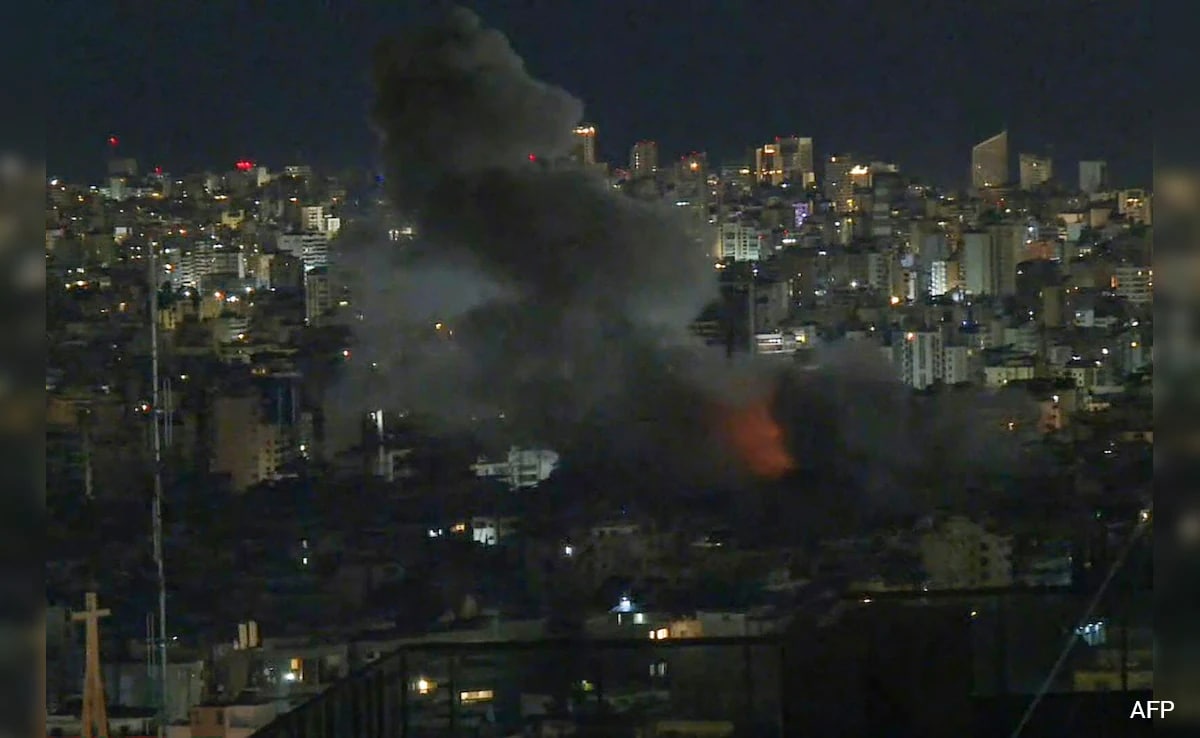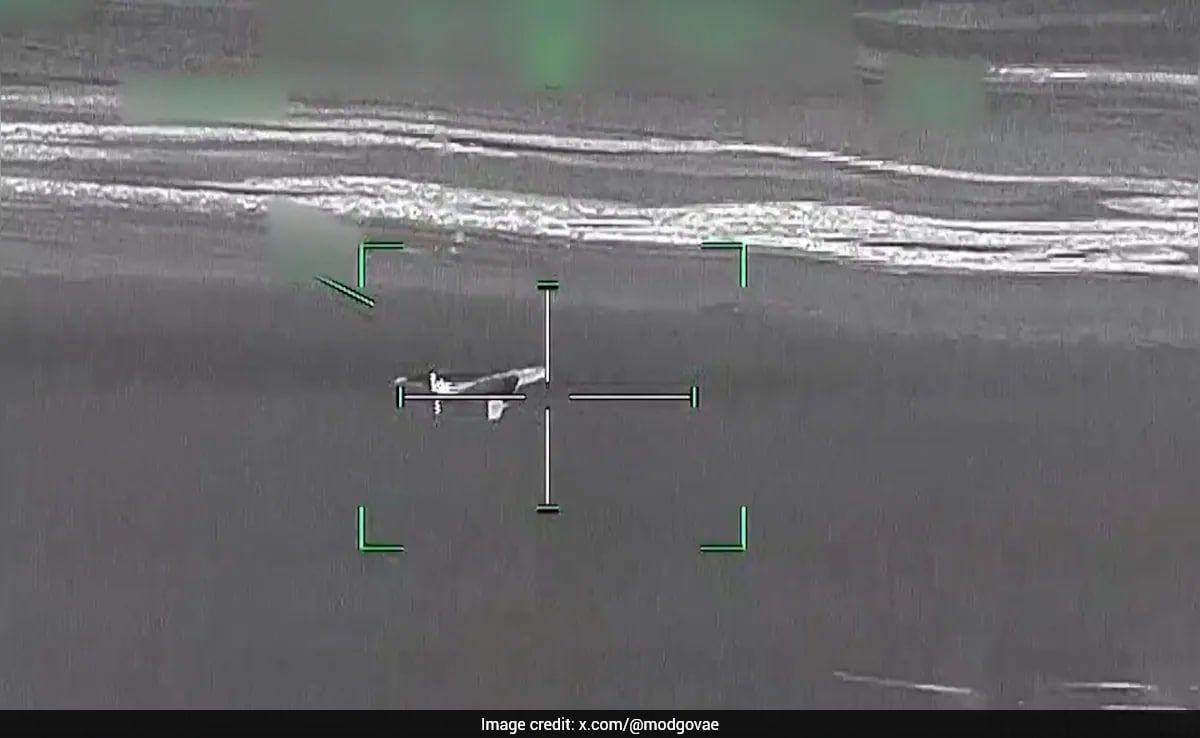
The release of thermal and radar footage documenting UAE air defense assets engaging Iranian-origin loitering munitions highlights a shift from traditional kinetic warfare to a high-volume attrition model. This engagement is not merely a tactical success; it serves as a live-fire validation of the "Layered Defense Architecture." To understand the strategic implications of these interceptions, one must look past the visual confirmation of a "kill" and analyze the cost-exchange ratios, the sensor-to-shooter latency, and the geometric constraints of defending high-value urban centers against low-RCS (Radar Cross Section) threats.
The Triad of Interception Physics
Modern aerial denial in the Persian Gulf relies on three distinct operational variables that determine the success of an engagement. When an Iranian-designed drone, such as the Shahed series, enters contested airspace, the defending system must solve for detection, classification, and terminal guidance under compressed timelines.
- The Detection Threshold: Low-speed, low-altitude drones often mimic the radar signature of large birds or civilian light aircraft. The UAE’s ability to isolate these targets suggests a highly tuned Doppler filtration system capable of distinguishing the specific rotational frequency of small gasoline engines against background ground clutter.
- The Classification Phase: Once a track is established, the system must determine the intent. In the footage provided, the clean thermal tracking indicates the use of Electro-Optical/Infrared (EO/IR) sensors. These sensors provide a passive way to verify the target without emitting detectable radar signals, preventing the drone (or its operators) from realizing they have been locked.
- The Kinetic Solution: The final stage is the deployment of an interceptor. The UAE utilizes a mix of systems, ranging from the long-range THAAD and Patriot PAC-3 to short-range Pantsir-S1 and C-RAM units. The choice of effector is a financial decision as much as a ballistic one.
The Economic Asymmetry of Drone Warfare
The primary challenge in these engagements is the radical disparity in unit cost between the attacker and the defender. This creates a "Cost-Exchange Deficit" that can bankrupt a national defense budget if managed poorly.
- Attacker Cost: An Iranian loitering munition typically costs between $20,000 and $50,000. These are constructed using commercial-off-the-shelf (COTS) components, including GPS modules found in consumer electronics and small internal combustion engines.
- Defender Cost: A single interceptor missile from a Patriot battery can cost between $2 million and $4 million.
If a state uses a $3 million missile to down a $30,000 drone, the attacker wins the economic war even if they lose the tactical one. The UAE’s strategy involves shifting toward "Lower-Tier Interceptors." By utilizing autocannons or smaller, cheaper surface-to-air missiles (SAMs) for these specific threats, the UAE is attempting to rebalance the cost-function. The footage suggests a reliance on medium-to-short range assets which optimize this expenditure.
Sensor Fusion and the Command Bottleneck
The effectiveness of the UAE’s response is rooted in "Sensor Fusion"—the ability to take data from sea-based radars, ground stations, and airborne early warning aircraft (AWACS) and merge them into a single, real-time operating picture.
The bottleneck in drone defense is rarely the "shooter" (the missile or gun); it is the "link." If the data link between the radar and the command center has high latency, the drone—which may be traveling at 180 km/h—will have moved several hundred meters from its last known coordinates by the time a fire command is issued. The UAE has invested heavily in the "Link 16" tactical data network, which allows for near-instantaneous handoffs between different battery units. This prevents "over-saturation," where multiple batteries fire at the same target, wasting precious ammunition.
Geometric Challenges of Urban Defense
Defending a geography like the UAE, which features dense vertical infrastructure (e.g., Dubai and Abu Dhabi), introduces "Masking Effects." Tall buildings create radar shadows where low-flying drones can hide from ground-based sensors.
To counter this, the defense must be "Proactive" rather than "Reactive." This involves:
- Forward Deployment: Placing sensors on offshore platforms or elevated terrain to catch threats before they reach the urban "canyons."
- Point Defense vs. Area Defense: While a Patriot battery provides area defense for a whole city, a C-RAM (Counter Rocket, Artillery, and Mortar) system provides point defense for a specific building or palace.
The footage released confirms that the interceptions occurred over unpopulated or controlled areas, indicating that the engagement logic successfully pushed the "Intercept Point" far enough away from the intended target to mitigate collateral damage from falling debris.
Technical Limitations and Probability of Leakage
No air defense system is 100% effective. In military theory, we discuss the "Probability of Kill" ($P_k$). If a single interceptor has a $P_k$ of 0.8, a commander will typically fire two interceptors to achieve a cumulative $P_k$ of 0.96.
However, against a "Swarm Attack"—where 50 or more drones are launched simultaneously—the system faces a "Channel of Fire" limitation. A battery can only track and engage a fixed number of targets at once. If the number of incoming drones exceeds the number of available guidance channels, "leakage" occurs. The UAE’s recent footage acts as a deterrent signal, suggesting that their "Multi-Channel Engagement" capabilities are currently scaled to handle the current threat density from regional actors.
Electronic Warfare: The Invisible Intercept
While the video focuses on kinetic destruction (explosions), a significant portion of the UAE's strategy involves "Non-Kinetic Interception." Electronic Warfare (EW) suites can jam the GPS or radio-command links of a drone, causing it to crash or veer off course.
The limitation of EW is "Frequency Agility." If the drone is programmed to switch frequencies or use inertial navigation (INS) that doesn't rely on external signals, jamming becomes ineffective. Therefore, the presence of kinetic footage is a deliberate choice by the UAE to show that even when EW fails or is bypassed, the hard-kill capability remains a reliable backstop.
Strategic Realignment of Procurement
The transition in UAE defense procurement is moving away from "Prestige Platforms" (heavy tanks and high-altitude interceptors) toward "distributed resilience." This involves:
- Directed Energy Research: Testing laser systems that have a near-zero cost per shot, theoretically solving the economic asymmetry problem.
- AI-Augmented Target Acquisition: Using machine learning to identify the specific flight profiles of Iranian drones, reducing the "False Alarm" rate caused by birds or weather.
- Domestic Production: Reducing reliance on US or European supply chains for interceptor missiles by developing indigenous short-range systems.
The footage serves as a performance audit for these investments. It proves that the "Kill Chain"—the sequence from initial detection to final destruction—is closed and functional.
To maintain this edge, the strategic play for regional players is the integration of "Passive Coherent Location" (PCL) systems. These systems do not emit their own radio waves but instead monitor the disruptions in existing civilian signals (like FM radio or cellular towers) caused by an aircraft. This makes the sensors themselves invisible to the enemy and provides a persistent, un-jammable method for tracking the very drones showcased in the UAE's latest release. Focusing on PCL integration will be the decisive factor in whether the UAE can sustain its defense against the next generation of stealth-optimized loitering munitions.
Would you like me to analyze the specific flight telemetry visible in the footage to estimate the interceptor's velocity?