Silence.
That is what passengers always notice first when a high-speed train reaches cruising velocity, gliding across welded steel rails so smooth the coffee in a paper cup barely ripples against the cardboard rim. You sit back in the plush seat, watching olive groves or dry Castilian plains blur into streaks of ochre and green, trusting entirely in an invisible architecture of sensors, automated braking systems, and human vigilance that promises to carry you safely from one city to the next before your podcast finishes.
Then comes the jolt.
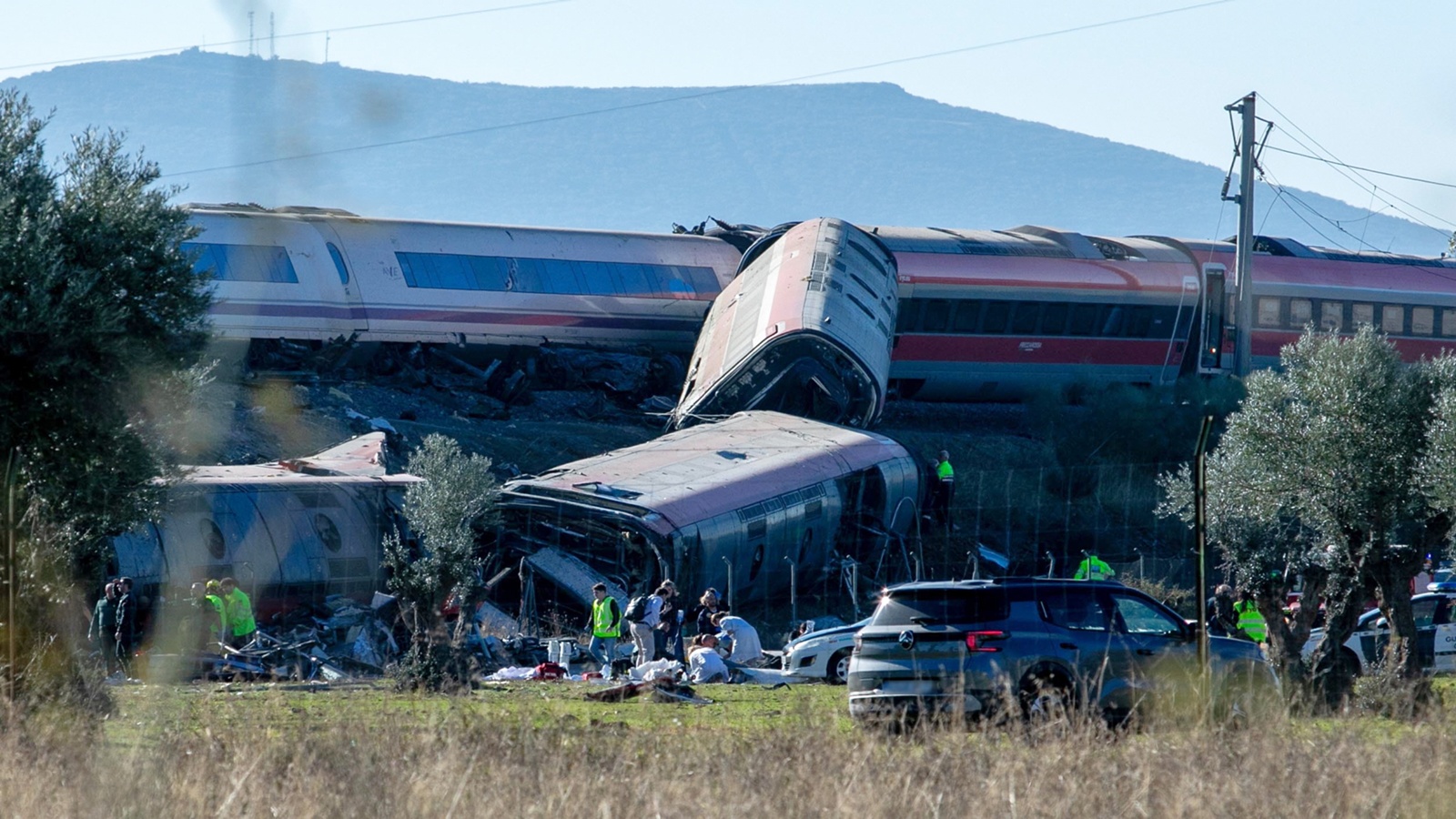
Not the gentle lateral sway of a switch track, nor the gradual, reassuring compression of regenerative brakes easing into a station platform. It is a violent, unnatural shudder—a sudden, sickening lurch where momentum refuses to surrender to metal, turning a marvel of modern engineering into a projectile of twisted aluminum and glass. In Spain, where a catastrophic high-speed train collision claimed sixty-eight lives and left survivors describing that exact, terrifying sensation of a sudden, sharp impact, the illusion of effortless modern transit shattered in a fraction of a second.
When sixty-eight people die on a railway line, headlines reduce human lives to a single grim integer, accompanied by a quote from a shaken survivor and a map showing where the metal bent. We read the numbers over morning coffee, shake our heads at the tragedy, and move on to the weather forecast. Yet treating a high-speed rail disaster as an isolated mechanical anomaly misses the deeper, more unsettling truth about how we live now, what we surrender when we step onto a platform, and the fragile human systems hiding behind sleek aerodynamic noses.
The Physics of Trust
To understand why a collision on a high-speed line feels like a betrayal, you have to understand the psychological bargain every modern traveler makes.
Consider a hypothetical commuter—let us call her Elena, a composite drawn from the thousands of ordinary professionals, students, and grandparents who board Spanish trains every single week. Elena is thirty-four, carrying a laptop bag with a charger tangled at the bottom and a half-eaten pastry wrapped in a napkin. She chose the train over driving because the statistics are overwhelmingly on her side; rail travel remains, by orders of magnitude, safer per kilometer than getting behind the wheel of a sedan on a rain-slicked highway. She does not inspect the signaling relays before boarding, nor does she ask the driver whether the track sensors along the corridor were calibrated that morning. She buys a ticket, scans a QR code, and hands over her physical survival to strangers.
That surrender is the foundation of modern civilization. We cannot personally verify the structural integrity of every bridge we cross or the software logic governing every air traffic control tower. Instead, we rely on what engineers call defense-in-depth—layers of redundancy designed so that no single human mistake, no solitary software glitch, and no isolated mechanical failure can ever cascade into mass casualty.
Think of high-speed rail safety like a series of locked doors separating a speeding projectile from disaster. The first door is human awareness: trained operators watching signals, communicating with dispatchers, and adhering to strict speed profiles. Behind that sits automated train protection, electronic systems constantly reading balises—transponders bolted between the rails—that verify whether the track ahead is clear. If a driver misses a warning or fails to brake in time, the machine is supposed to intervene, cutting power and clamping emergency brakes onto the wheels without asking permission.
When sixty-eight people perish in a collision, it means every single one of those doors failed to latch, or worse, someone built a corridor where one of those doors was never installed at all.
Anatomy of a Sudden Jolt
Survivors of rail disasters rarely remember the sound before they remember the physics.
In the aftermath of the Spanish collision, accounts centered on that abrupt, violent jolt—the exact microsecond when kinetic energy, governed by the unforgiving formula where mass multiplies by velocity squared, demanded immediate payment. Because kinetic energy scales with the square of speed, doubling a train's velocity does not double the destructive force of an impact; it quadruples it. At high speeds, steel carriages do not simply bump and stop. They buckle, telescope into one another, or derail sideways across adjacent tracks, transforming luggage racks, tray tables, and window frames into hazards within milliseconds.
What happens inside a carriage during those first three seconds is almost impossible for the human brain to process in real time.
I remember standing once near a freight yard in northern Spain during a routine coupling maneuver, watching two heavy cars connect at barely five miles an hour. The metallic clang rattled my teeth through the soles of my boots, a sharp, chest-thumping percussion that made me flinch despite standing twenty meters away behind a chain-link fence. Now multiply that mass by an entire passenger consist, multiply that velocity by thirty, and place hundreds of unsuspecting people inside—people reading novels, scrolling through family photos, or dozing with their foreheads pressed against cool window glass.
First comes the primary impact, when the lead cars meet resistance and decelerate violently. Next comes the secondary collision, a fraction of a beat later, when everything inside the cabin—suitcases, briefcases, human bodies—continues moving forward at the original cruising speed until it strikes a seatback, a bulkhead, or another passenger. Finally comes the eerie, ringing quiet after the screech of tearing metal subsides, broken only by the hiss of severed pneumatic brake lines, the smell of scorched electronics and ballast dust, and the tentative voices of survivors calling out in the dark to see who is still breathing.
Spain's Golden Rail Paradox
There is a particular poignancy to a tragedy of this scale occurring in Spain, a country that spent three decades transforming itself into the envy of the global transportation world.
Following the launch of its first high-speed line between Madrid and Seville in 1992, Spain embarked on one of the most ambitious infrastructure expansions in European history. Across mountains, river valleys, and arid plateaus, engineers laid thousands of kilometers of dedicated standard-gauge track, creating a network second in length only to China's. For international observers, urban planners, and policymakers struggling with congested highways and short-haul aviation emissions, the Spanish network became the gold standard—fast, punctual, immaculate, and seemingly invincible.
Yet rapid expansion carries a quiet, structural vulnerability that rarely shows up in glossy ribbon-cutting brochures.
When a nation builds an ultra-modern network at breakneck pace, complexity accumulates faster than institutional memory. Different stretches of track operate under different generations of signaling technology. Seamless corridors on a passenger timetable often mask invisible seams underneath the wheels: transitions between the European Rail Traffic Management System—an advanced, continuous digital supervision network—and older, legacy signaling architectures that rely more heavily on driver vigilance and intermittent trackside beacons.
History offers grim warnings about what happens at those seams. In July 2013, just outside Santiago de Compostela, an Alvia high-speed train entered a sharp curve at nearly twice the posted speed limit after transitioning off a digitally supervised high-speed segment onto conventional track lacking automated speed-enforcement transponders at that critical approach. Seventy-nine people died in that derailment. Investigators later pointed not merely to a distracted driver, but to a system design that left zero margin for human fallibility at the exact moment a train needed protection most.
Every time a high-speed collision or derailment occurs in the wake of such history, the public asks the same anguished questions: How can two trains occupy the same block of track? Why did an automated system not stop them? Were the warnings ignored, or were the systems mismatched?
The Myth of the Infallible Machine
We like to believe that technology eliminates human error, when in reality, technology mostly relocates it.
Instead of a driver misreading a semaphore signal in thick fog, modern error hides inside maintenance schedules, budget allocations, software patches delayed until the next fiscal quarter, and control rooms where operators monitor dozens of glowing screens simultaneously. When an investigation begins after a fatal crash, officials inevitably recover the event recorders—the ruggedized black boxes engineered to survive extreme heat and crushing force—and begin reconstructing the final minutes down to the tenth of a second.
Yet black boxes only record what happened. They rarely capture why an organization allowed a vulnerability to persist.
Consider how complacency creeps into any high-performing system. When a railway operates thousands of trains every week without incident, safety begins to look expensive. Engineers who ask for redundant track circuits or upgraded balises on secondary connectors are told that the current protocol meets regulatory minimums, that budgets are tight, or that operators are thoroughly trained to handle the transition manually. Everyone points to the spotless safety record as proof that the existing safeguards are sufficient—until the afternoon when a rare alignment of weather, equipment wear, scheduling delay, and human fatigue threads straight through the gaps.
Safety experts call this the Swiss cheese model of accident causation. Imagine several slices of Swiss cheese stacked together, each slice representing a defensive layer: hardware, software, operator training, dispatch oversight, maintenance inspection. Each slice has holes—small, acceptable imperfections that pose no danger on their own because the solid cheese behind them blocks any threat. Disaster strikes only when the holes in every single slice momentarily align, allowing a hazard to pass straight through from one end to the other.
For the sixty-eight victims and their families, abstract diagrams of overlapping holes offer zero comfort. Nobody boards a train thinking about statistical anomalies or legacy signaling transitions. They board thinking about dinner waiting in Madrid, a grandchild's birthday in Andalusia, or a weekend by the coast.
What Survives the Wreckage
In the days immediately following a major rail crash, a familiar choreography unfolds.
Emergency crews work through the night under portable floodlights, using hydraulic cutters to peel back twisted aluminum while neighbors bring blankets, bottled water, and hot coffee to gymnasiums turned into triage centers. Political leaders arrive at the scene in dark coats, promising a swift, transparent, and exhaustive investigation. Flags drop to half-mast. Transport ministries issue statements reminding the public that rail remains overwhelmingly safe, while quietly ordering emergency audits of similar corridors across the country.
And then, slowly, the news cycle moves on—leaving behind a permanent, silent wreckage that never appears in transport statistics.
It lives in the empty chair at a Sunday family lunch in Valencia or Seville. It lives in the survivor who hears the metallic screech of a subway brake three years later and feels their pulse spike into cold panic, their hands gripping the edge of their seat as their body braces for a jolt that never comes. It lives in the train driver who survived the impact, haunted forever by whether a three-second reaction could have altered the laws of physics.
I have spoken with people who survived severe transit accidents, and what stays with them is rarely anger at a single broken valve or misread signal. What haunts them is the sudden realization of how thin the margin truly is—how completely our daily lives depend on thousands of unseen people doing tedious, unglamorous jobs with absolute perfection, every single day, without applause.
We build trains that slice through the wind at three hundred kilometers an hour because we want distance to disappear. We want cities to feel like neighborhoods and countries to feel small enough to cross before lunch. That ambition is noble, even exhilarating. Yet speed is never free. Every kilometer per hour we add to steel wheels demands an equal, uncompromising investment in the invisible architecture beneath them—the sensors, the redundancies, the honest audits, and the humility to assume that humans will always make mistakes, so the machines must be built to forgive them.
Somewhere tonight, another sleek, aerodynamic train will pull out of a brightly lit terminal, accelerating smoothly until the platform lights blur into a single white ribbon and the cabin settles into that familiar, hypnotic hum. Passengers will open their laptops, lean their heads back, and close their eyes, trusting once more in the silent promise under the floorboards—hoping that every door along the track is locked.