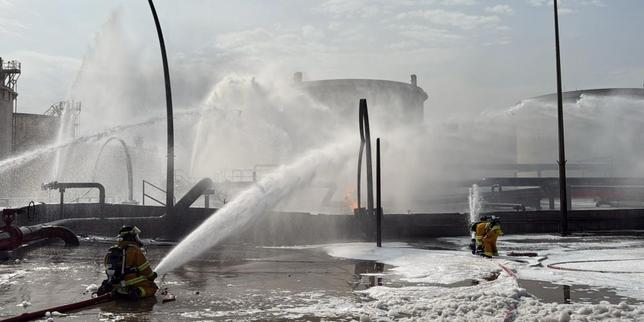
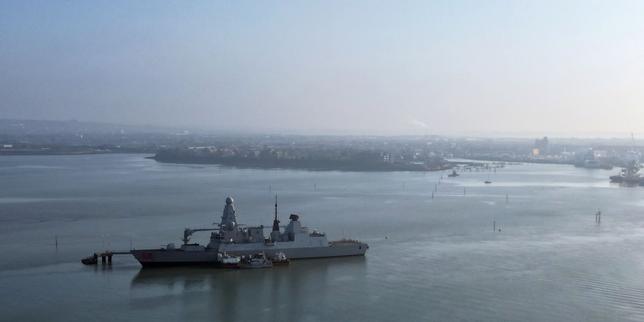
The recent sinking of an Iranian frigate in the Gulf of Oman was not a random mechanical failure or a simple training mishap. While official channels in Tehran and Washington trade carefully worded barbs over whether the vessel was carrying offensive ordnance, the reality of the engagement points to a much more dangerous shift in maritime warfare. This was a demonstration of quiet lethality. For decades, the presence of a submarine was enough to deter surface movements; today, the mere suspicion of an underwater strike is being used to redraw the boundaries of international law and naval engagement.
Whether the ship was "armed" is a semantic distraction. Modern naval doctrine recognizes that every gray-hull vessel is a platform for electronic signatures and intelligence gathering. The core of the dispute lies in the methodology of the strike. If a submarine can neutralize a surface asset without leaving a definitive acoustic or physical fingerprint that the public can verify, the era of plausible deniability in high-seas combat has officially arrived. You might also find this connected coverage insightful: The $2 Billion Pause and the High Stakes of Silence.
The Ghost in the Water
Naval analysts have spent years tracking the development of low-frequency sonar and anaerobic propulsion systems. The goal has always been total silence. When an Iranian warship disappears from the surface, the first instinct of the regional command is to blame internal negligence. This stems from a historical pattern of maintenance issues within the Iranian fleet. However, the debris field tells a different story.
High-resolution satellite imagery and hydroacoustic data captured by third-party sensors in the region suggest a localized, high-velocity impact. This was not a boiler explosion. A boiler explosion radiates heat and pressure from the center of the ship outward, often leaving the hull plates peeled like an orange. The damage observed here indicates an external pressure wave consistent with a heavyweight torpedo or a bottom-moored mobile mine. As reported in latest reports by Al Jazeera, the implications are widespread.
Submarine operations in the Gulf are a game of inches. The shallow, high-salinity waters create "ducts" that can trap sound or bounce it in unpredictable directions. A veteran commander knows how to hide in these thermal layers. If a U.S. or allied submarine was indeed involved, the operation would have been executed from a distance that renders visual or standard radar detection impossible.
The Armed Vessel Precedent
The argument over whether the ship was "armed" is a legal gambit intended to trigger specific clauses of the San Remo Manual on International Law Applicable to Armed Conflicts at Sea. If the U.S. can prove the vessel was transporting advanced missile components to proxy groups, the strike moves from an act of aggression to a preemptive strike against a legitimate military target.
Iran’s insistence that the ship was on a "peaceful training mission" is a standard diplomatic shield. In the world of covert naval operations, "peaceful" is a relative term. A ship can be a floating command center for drone swarms without ever firing a deck gun. The intelligence community knows that the cargo hold of an aging frigate is often more dangerous than its visible missile launchers.
The cargo in question likely involved guidance systems for suicide boats or components for anti-ship cruise missiles. By focusing on the "armed" status, both nations are avoiding the more uncomfortable conversation regarding the rules of engagement in international waters. We are seeing a return to the "Tanker War" logic of the 1980s, but with 21st-century precision.
The Tech Behind the Shadows
Modern submarines are no longer just torpedo tubes with a hull attached. They are multi-mission nodes. The specific signatures detected during the incident suggest the use of an Mk 48 ADCAP (Advanced Capability) torpedo or a similar heavy-weight variant. These weapons do not actually hit the ship. They explode beneath the keel, creating a massive vacuum that literally breaks the back of the vessel.
The Physics of the Kill
- Initial Shock: The explosion creates a high-pressure bubble.
- The Void: As the bubble expands and then collapses, it creates a vacuum under the hull.
- Structural Failure: The ship’s own weight causes it to sag into the void, snapping the structural steel.
- The Second Hit: The collapsing bubble shoots a "jet" of water upward through the weakened hull.
This method leaves very little evidence of a "missile" strike. There are no charred entry holes above the waterline. The evidence is on the seabed, hundreds of meters down, where only specialized deep-sea salvage teams can reach it. By the time any international body can verify the nature of the weapon, the currents have scattered the chemical residue.
Strategic Ambiguity as a Weapon
The U.S. Navy has long maintained a policy of neither confirming nor denying the location of its submarine fleet. This silence is an active tactical choice. By refusing to clarify the details of the sinking, the Pentagon forces Iranian naval commanders to operate under a cloud of paranoia. If you don't know where the threat came from, you have to assume it is everywhere.
This psychological pressure is more effective than a hundred public statements. It forces the adversary to keep their most valuable assets in port or to burn fuel and resources on constant anti-submarine patrols. The Iranian Navy, while capable of asymmetric "swarm" tactics with small boats, lacks the sophisticated acoustic sensors required to hunt a modern nuclear-powered submarine.
The Proxy Problem
Every action in the Gulf is a message sent to someone else. In this case, the message is directed at the supply lines feeding regional conflicts. The Gulf of Oman serves as the primary artery for the movement of hardware. If the U.S. can demonstrate that it can intercept and sink a "protected" naval vessel without starting a full-scale war, the risk calculation for every other shipment changes instantly.
The technical difficulty of proving who did what is exactly why this theater is so active. A missile leaves a trail. A drone has a serial number. A submarine is a ghost that leaves only a hole in the water and a diplomatic headache.
Why Surface Fleets are Vulnerable
- Limited Acoustic Horizon: Surface ships struggle to detect objects directly beneath them due to their own engine noise.
- Predictable Pacing: Cargo movements follow established sea lanes that are easily monitored.
- Soft Targets: Older frigates lack the double-hull construction or modular damage control of modern destroyers.
The vulnerability of the Iranian surface fleet is not a secret, but the brazenness of this specific event marks a new chapter. We are moving past the era of "harassment" by small boats and into an era of high-stakes underwater attrition.
Verification and the Data Gap
We live in an age where people expect video evidence of every military engagement. However, the depths of the ocean do not accommodate GoPro cameras or live streams. The public is forced to rely on "informed leaks" and state-run media, both of which have specific agendas. To find the truth, one must look at the movements of the salvage ships.
Shortly after the sinking, satellite tracking showed Iranian tugs and a Chinese-built crane ship loitering near the last known coordinates of the frigate. They aren't just looking for survivors; they are looking for the remains of the weapon. If they can find a fragment of a torpedo shroud, they have the political leverage they need to take the case to the UN. Until then, it is just another "unexplained" loss in a region full of them.
The technology of concealment has outpaced the technology of verification. This gap is where the next decade of naval conflict will be fought. It is a gray zone where the definitions of "armed," "attack," and "accident" are rewritten by whoever survives the encounter.
The Cost of the Deep
Building and maintaining a submarine fleet is an astronomical expense that few nations can truly afford. The U.S. Virginia-class program and the Seawolf-class before it represent the pinnacle of this investment. When one of these boats engages a target, it is the culmination of billions of dollars in research and decades of specialized training.
The Iranian response has been to invest in "midget" submarines like the Ghadir-class. These are tiny, hard-to-detect vessels that can hide in the rocky coves of the coastline. While they lack the endurance of a nuclear sub, they are perfect for the narrow confines of the Strait of Hormuz. The sinking of their frigate might be the catalyst that shifts their entire naval budget away from surface ships and toward these underwater guerrillas.
This shift would make the Gulf even more dangerous. Instead of a few large ships that can be tracked by satellite, the water will be filled with small, silent threats that can sit on the bottom for days waiting for a target. The "sparring" between the U.S. and Iran is not just about one ship; it is about the future of how these waters are policed.
Naval commanders are now facing a reality where the absence of a threat is the most certain sign that a threat is present. The frigate at the bottom of the Gulf of Oman is a monument to this new logic. It serves as a reminder that in modern warfare, the loudest statements are often made in total silence.
Demand a full release of the hydroacoustic signatures recorded by the regional sensor arrays. If the international community wants to prevent a slide into an underwater "wild west," the data must be treated as public evidence rather than classified intelligence.