The numbers on the digital display at the corner gas station flicker with a rhythmic, mechanical indifference. $3.45. $3.89. $4.12. To most, these are just inconveniences, the minor tax on a morning commute or the reason a family vacation gets shortened by a hundred miles. But look closer at those glowing LEDs. They are the pulse of a global nervous system, a fever chart of human ambition, desperation, and the terrifying fragility of the modern world.
We live in a civilization built on the back of a prehistoric soup. We have spent the last century tethered to the price of a barrel of Brent or West Texas Intermediate as if it were oxygen itself. When that price stays steady, the world breathes easy. When it spikes or craters, the air leaves the room.
The Summer the Earth Stood Still
Consider July 2008. The air in New York was thick, the kind of heat that sticks to your skin and refuses to let go. In a glass-walled office high above Manhattan, a trader watches a screen where a line graph is doing something it has never done before. It is climbing. It isn't just rising; it is soaring toward a peak that felt, at the time, like the end of an era.
$147.27 per barrel.
That number wasn't just a statistic. It was a catalyst for a global panic. In the American Midwest, a long-haul trucker named Elias—let’s call him that for the sake of the story—sits in a diner, staring at a fuel receipt that costs more than his mortgage payment. He isn't thinking about "market volatility" or "geopolitical risk premiums." He is thinking about the fact that his daughter’s college fund is being burned away in the exhaust pipe of his Peterbilt.
The 2008 shock was a perfect storm of Chinese industrial hunger and a weakening dollar, but the emotional reality was simpler: fear. The world realized it didn't have a backup plan. We were all Elias, watching the cost of movement become a luxury we could no longer afford. Then, as quickly as the fever rose, it broke. The Great Recession arrived, not as a guest, but as a wrecking ball. By December, that same barrel was worth $33. The whiplash was enough to break the spine of the global economy.
The Fracking Revolution and the Death of Scarcity
For decades, the narrative was "Peak Oil." We were told the wells were running dry. We were told to prepare for a world of permanent scarcity. This was the gospel of the 20th century.
Then came the engineers.
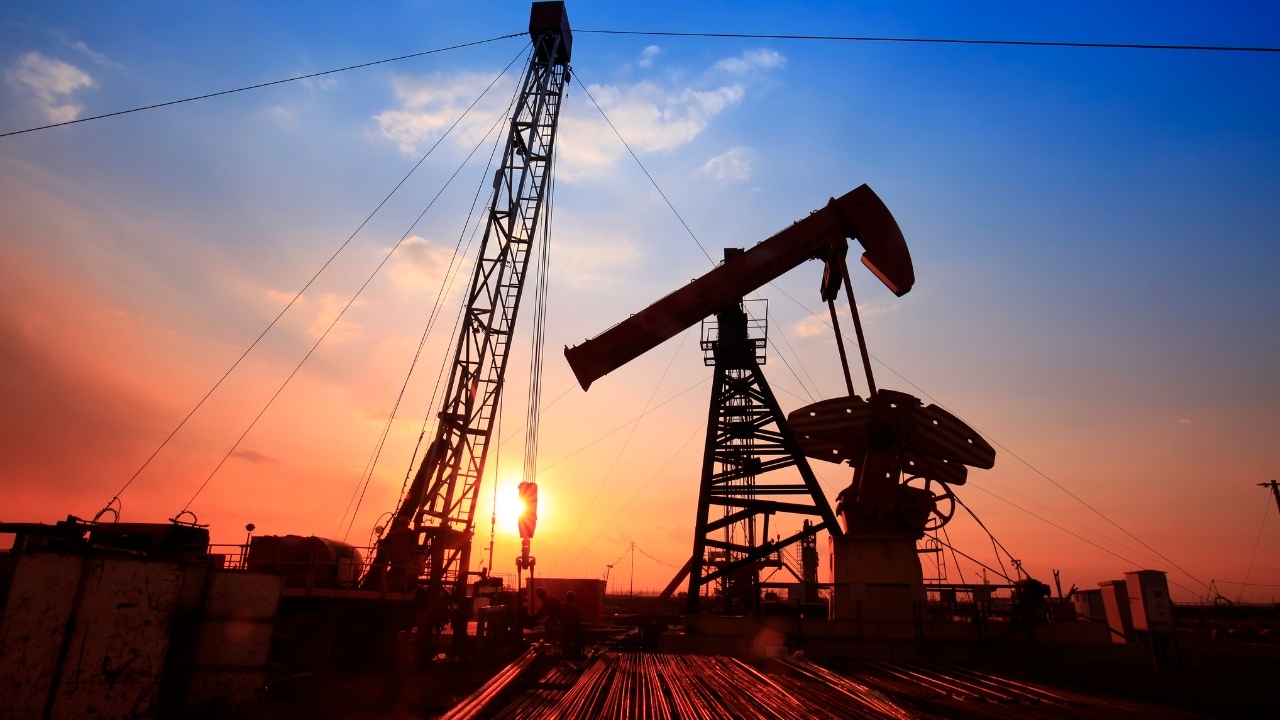
Deep under the shale rock of North Dakota and Texas, a new kind of alchemy was taking place. By blasting water, sand, and chemicals into the earth, the United States didn't just find more oil; it unlocked a floodgate. This wasn't a gradual shift. It was an industrial insurrection.
By 2014, the world was drowning in the very substance it once feared would disappear. The price, which had comfortably sat above $100 for years, began a long, agonizing slide. It hit $50. Then $40. In the boardrooms of Riyadh and the palaces of Moscow, the math was no longer working.
Imagine the sheer scale of the miscalculation. An entire global infrastructure built on the assumption that oil would always be expensive suddenly found itself in a race to the bottom. In 2014 and 2015, the "shock" wasn't a shortage. It was a surplus. For the consumer, it felt like a gift. For the oil-producing nations, it was an existential threat. They tried to squeeze the American frackers out of business by keeping production high and prices low, hoping the newcomers would go bankrupt.
They didn't. They just got more efficient.
When the Price of Nothing Became Less Than Nothing
If 2008 was a fever and 2014 was a slow bleed, April 20, 2020, was a hallucination.
The world had locked its doors. The highways were empty. The planes were grounded in silent rows on desert runways. COVID-19 had done what no war or embargo could: it killed demand.
In a small control room in Oklahoma, the reality of physics met the reality of finance. Oil is a physical thing. You have to put it somewhere. And on that Monday, the "somewhere" ran out. The tanks were full. The ships were full. The pipelines were backed up.
For the first time in human history, the price of West Texas Intermediate went negative.
-$37.63.
Think about the absurdity of that moment. You weren't paying for oil; the sellers were paying you to take it away. It was a glitch in the Matrix of capitalism. For a few hours, the most valuable commodity on the planet was a liability. It was trash. This wasn't just a market shock; it was a total collapse of the logic we used to govern the world. It signaled that the old rules—the ones where supply and demand moved in predictable cycles—were dead.
The Pendulum Swings Toward the Invisible
We often think of oil shocks as events that happen to us, like a thunderstorm or an earthquake. But these shocks are actually the echoes of our own choices.
When Russia moved across the Ukrainian border in 2022, the price didn't just jump because of lost barrels. It jumped because of the collective realization that our "energy security" was an illusion. We saw $120 again, but this time, it felt different. It felt like the last gasp of an old god.
The 21st century has taught us that the price of oil isn't actually about oil. It’s about the tension between two worlds. One world is made of steel, internal combustion, and the legacy of the Industrial Revolution. The other is made of lithium, silicon, and the desperate hope for a carbon-neutral future.
Every time the price spikes to $100, the transition to electric vehicles and heat pumps accelerates. Every time it drops to $30, that transition slows down. We are caught in a feedback loop. We are trying to outrun a monster while relying on that monster to fuel our getaway car.
The Ghost in the Machine
We talk about these shifts in trillions of dollars and millions of barrels. But the true cost is measured in the quiet anxieties of the dinner table. It’s the small business owner in Lyon who can’t afford to heat his bakery. It’s the farmer in India whose diesel pump is now too expensive to run, threatening a season’s harvest.
It is easy to look at a chart from $147 to $120 and see a story of recovery. But there is no "normal" to return to. We are moving toward a reality where oil is no longer the undisputed king, but its abdication is messy, violent, and unpredictable.
The shocks of the 21st century aren't just market corrections. They are the growing pains of a species trying to reinvent its relationship with energy. We are watching the gears of the old world grind against the aspirations of the new.
The next time you see the numbers change at the pump, don't just think about your wallet. Think about the invisible threads connecting that nozzle to a rig in the North Sea, a pipeline in Siberia, and a battery factory in Nevada. We are all participants in this narrative, whether we like it or not.
The era of cheap, predictable energy was a historical fluke, a brief summer in the long winter of human history. Now, the wind is picking up, and the price of staying warm is something no spreadsheet can truly capture. We are no longer just buyers and sellers; we are passengers on a ship that is changing its engines while navigating a hurricane.
The flickering LEDs at the gas station aren't just prices.
They are a countdown.