Cold Engines in the Dark
Somewhere off the frostbitten coast of Northern Europe, a cargo vessel sits low in the black water. Its holds are heavy, filled with hundreds of thousands of barrels of ultra-low sulfur diesel. On paper, this liquid is just a hydrocarbon mixture—a refined blend of alkane chains destined for combustion.
In reality, it is civilization’s circulatory fluid.
Without it, the combine harvesters in Iowa stall before the winter wheat is reaped. The refrigerated long-haul trucks carrying life-saving insulin across state lines lose power. The backup generators in regional trauma centers fall silent.
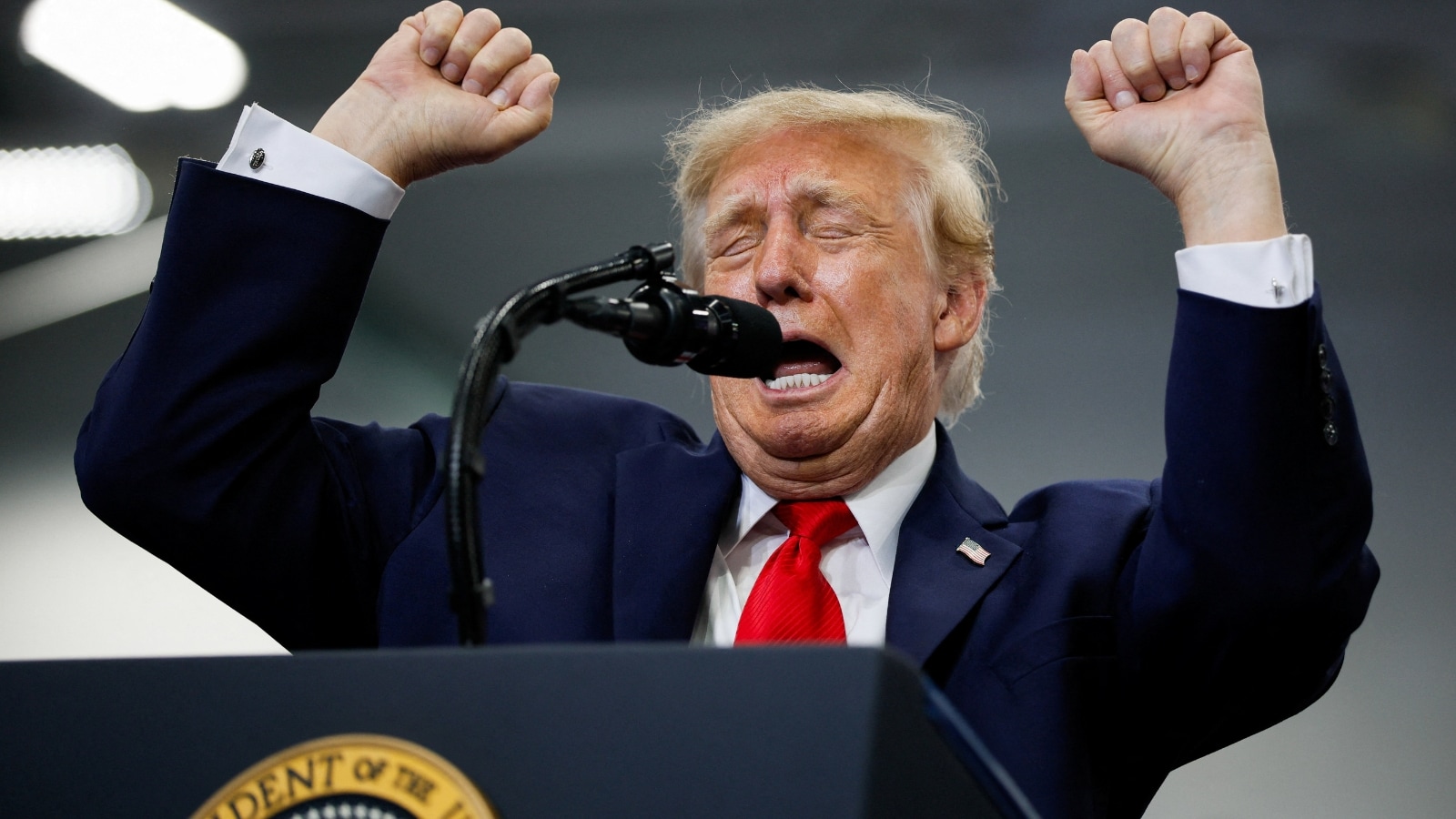
So when Donald Trump stood before a swarm of flashing cameras and defended a controversial deal to keep Russian diesel flowing into global markets, the immediate reaction in western capitals was a mixture of outrage and disbelief. How could the United States, after years of punitive sanctions designed to starve Moscow’s war machine, sanction or condon a transaction that hands financial lifelines back to the Kremlin?
Trump’s justification was characteristically blunt. "It's for the world," he asserted, brushing off accusations of geopolitical betrayal.
Behind that simple, populist defense lies a brutal economic reality that most politicians prefer to ignore: the global energy grid is not an ethical tribunal. It is a desperate, ongoing struggle against scarcity. When you cut off one of the world's primary suppliers of refined fuel, you don’t just punish a dictator in a distant palace. You freeze a family in a drafty apartment six thousand miles away.
The Anatomy of a Refined Dilemma
To understand why a former and aspiring commander-in-chief would step into the firing line for Russian fuel, you have to look past the political grandstanding and look at a diesel pump in suburban Ohio.
Crude oil gets all the headlines. We track the price of Brent and West Texas Intermediate like daily pulse rates. But crude oil is useless in its raw state. You cannot pour unrefined dark sludge into the tank of a delivery van and expect it to drive.
Refining is where the true bottleneck exists.
When global sanctions choked off Russian refined products, Europe and North America didn't just lose oil—they lost specialized refinery capacity. Heavy industrial engines do not run on sunlight, and they do not run on unrefined promises. They run on middle distillates.
Consider a small trucking firm in Pennsylvania. The owner, a woman named Sarah who inherited three semi-trucks from her father, doesn't follow foreign policy debates in Geneva. She follows the digital numbers ticking upward at the truck stop off Interstate 80. When diesel prices spike past five dollars a gallon, her margins vanish. When they reach six dollars, she begins laying off drivers. At seven dollars, the supply chain breaks, store shelves go bare, and prices for everyday goods skyrocket across the entire continent.
Inflation isn't an abstract economic metric calculated by bureaucrats in Washington. It is Sarah sitting at her kitchen table at midnight, staring at an overdue fuel bill, wondering if she can keep the mortgage paid.
When Trump claims a Russian diesel deal is "for the world," he is speaking directly to Sarah. He is betting that the average voter cares significantly more about their immediate survival than the high-minded principles of international sanctions.
The Morality of the Flow
This creates a terrifying moral compromise.
On one side of the ledger sits international justice. Every barrel of diesel Russia exports generates revenue that can fund artillery shells, armor plating, and missile systems. By allowing Russian refined fuel to find its way to market—whether directly or through shadowy third-party intermediaries—the international community indirectly finances the very violence it condemns.
On the other side of the ledger sits systemic collapse.
If Russian diesel is abruptly and totally removed from the global market, global supply drops instantly. Demand remains unchanged. Prices explode. Emerging economies in South America, Africa, and Southeast Asia, already operating on paper-thin energy budgets, are plunged into immediate darkness. Food distribution halts. Power grids flicker out.
It is a agonizing trade-off between distant geopolitical strategy and immediate domestic survival.
Critics call Trump's position appeasement. They argue that backing down on energy sanctions signals weakness, demonstrating to authoritarian regimes that the West's moral resolve collapses the moment fuel prices get uncomfortably high.
Supporters call it pragmatic realism. They argue that destroying Western economies to moralize over foreign borders is a form of self-sabotage that ultimately leaves everyone weaker.
Neither side is entirely wrong. That is what makes the situation so perilous.
Shadow Fleets and Gray Markets
The debate over Trump’s statements ignores an even deeper, darker truth: the energy market has already adapted to the chaos, regardless of what politicians say at podiums.
Even under strict sanctions, Russian diesel has never truly stopped moving. Instead, it went underground.
A massive "shadow fleet" of aging, unflagged tankers now moves across the oceans with their transponders switched off. Russian fuel is shipped to refineries in India or Turkey, blended with fuel from other sources, re-certified under new paperwork, and sold right back to the nations that banned it.
The fuel in a European commuter bus today may very well have originated in a Siberian oil field, passed through a refinery in Gujarat, bought by a trader in Dubai, and delivered to a port in Rotterdam.
Everyone knows it. Nobody talks about it.
Trump’s defense of the diesel deal simply brought this uncomfortable open secret into the bright light of public discourse. By explicitly stating that the world needs this fuel, he stripped away the diplomatic fiction that the West has completely severed its dependence on Russian energy.
The Human Factor at the End of the Line
We like to view international politics as a high-stakes game of chess played by leaders in tailored suits. We trace lines across maps, tally up trade deficits, and cheer when economic sanctions are announced like points scored on a scoreboard.
Ground level looks vastly different.
Ground level is a farmer in the Midwest watching his fuel expenses devour his annual profits. Ground level is a factory worker in Germany whose plant shut down because energy costs made manufacturing impossible. Ground level is a fisherman in the Philippines who can no longer afford the fuel required to take his boat out to sea.
When crude oil policy fails, people don't just lose money. They lose their livelihoods. They lose their ability to feed their families.
The debate over Russian diesel isn't really about Vladimir Putin, Donald Trump, or sanction enforcement mechanisms. It is about the fundamental fragile thread that connects energy security to human dignity.
Until the world builds an alternative energy architecture capable of powering heavy industry, agricultural machinery, and global logistics without relying on autocratic nations, leaders will continue to face this impossible choice. They will continue to balance moral outrage against economic necessity.
The ship off the coast continues to idle in the cold water. Its engines thrum quietly in the dark, waiting for clearance to dock. In the captain's cabin, a computer screen displays the current global price per gallon, updating every few seconds.
Down below, deep in the steel belly of the vessel, the dark liquid sits waiting—indifferent to who bought it, indifferent to who sold it, and entirely indifferent to the political storms brewing on the shore.