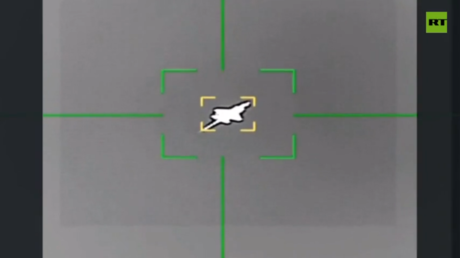
The myth of the untouchable F-35 Lightning II just hit a wall of Iranian shrapnel. For years, the Lockheed Martin stealth fighter was marketed as a ghost in the machine—a $100 million piece of hardware that would never see a missile it couldn’t outrun or a radar it couldn’t blind. That narrative shifted on March 19, 2026, when a U.S. Air Force F-35 was forced into an emergency landing at a regional base after sustaining damage during a combat mission over central Iran.
While U.S. Central Command (CENTCOM) remains tight-lipped, confirming only that the pilot is stable and the aircraft "landed safely," the incident represents the first time the fifth-generation platform has suffered confirmed combat damage from enemy fire. This isn't the total "kill" the Islamic Revolutionary Guard Corps (IRGC) is currently celebrating on state television, but for the Pentagon, it is a sobering validation of a reality they’ve long feared. The F-35 can be touched.
The Mirage of Total Invisibility
The IRGC's propaganda machine was quick to flood the internet with thermal camera footage, claiming their air defense systems successfully engaged the American jet. Most analysts view these videos with skepticism, noting they often feature recycled footage or low-resolution blurs. However, the physical reality of a damaged F-35 sitting on a tarmac in the Middle East cannot be edited away.
This hit didn't happen in a vacuum. It follows a year of escalating kinetic exchanges, including the "Twelve-Day War" in June 2025, where Iran repeatedly claimed to have downed Israeli F-35s. Those previous claims were later debunked, even by Iranian media officials who admitted to "inflated reporting." But the March 19 incident is different. The admission by CENTCOM that the jet was forced down suggests the damage was more than a mere bird strike or mechanical failure.
The "how" is the question haunting the halls of the Department of Defense. If an F-35 was flying a standard high-altitude stealth profile, it shouldn't have been within reach of anything but the most advanced Russian-made S-400 batteries—systems Iran has long sought but officially lacks.
The Low and Slow Vulnerability
Intelligence suggests the F-35 may have been caught in a "low and slow" mission profile. These missions, often used for close air support or precision electronic sniffing, bring the aircraft out of its high-altitude sanctuary and into the range of "trash fire"—the military's term for anti-aircraft guns and shoulder-fired missiles.
Even the most advanced radar-absorbent material (RAM) is useless against a 23mm shell or the jagged shrapnel of a proximity-fused surface-to-air missile. If the F-35 was loitering to provide data for the massive coalition strikes currently pounding Tehran’s infrastructure, it likely traded its stealth for situational awareness.
Technical Fragility in a High-Stakes Theater
The timing of this hit is a nightmare for Lockheed Martin. Just as reports surfaced that new F-35 deliveries are being accepted without functional radars due to supply chain bottlenecks, the aircraft’s survivability is being tested in the world's most contested airspace.
The F-35’s stealth is a delicate ecosystem. A single scratch in the RAM coating or a bent panel from a shrapnel strike can turn a "ghost" into a bright spot on a legacy radar screen. Recovering this specific airframe is likely a higher priority than the mission itself; the Pentagon cannot afford for the IRGC to get their hands on a single bolt of a battle-damaged Lightning II.
A Legacy of Strategic Overreach
The F-35 program has always been a gamble on technology over numbers. The U.S. and its allies have bet that a few "invincible" jets are worth more than a fleet of cheaper, more rugged fourth-generation fighters like the F-15 or F-16.
But as the 2026 Iran conflict expands into a war of attrition—striking gas hubs in South Pars and naval assets in the Caspian Sea—the "exquisite" nature of the F-35 becomes a liability. You cannot easily repair an F-35 in a forward-operating tent. You cannot "patch up" a stealth skin with duct tape and hope it still hides from an Iranian Bavar-373 system.
The Regional Shockwaves
For Israel, this incident is a cautionary tale. Only weeks ago, an Israeli F-35 "Adir" made history by scoring the first-ever air-to-air kill against a manned Iranian YAK-130 over Tehran. That victory felt like the dawn of a new era of aerial dominance. The damage to the American F-35 just days later acts as the cold-water splash.
Iran’s domestic air defenses, often mocked as antiquated or derivative, have spent decades preparing for this exact fight. They have integrated domestic sensors with a hybrid web of older Western technology and newer Russian components. They don't need to shot down the jet to win the propaganda war; they only need to make the cost of flying over Tehran too high for the American public to stomach.
The pilot’s survival and the safe landing of the aircraft will be touted as a testament to the F-35’s ruggedness. It is, after all, a single-engine fighter that took a hit and kept flying. But the aura of invincibility is gone. The F-35 is no longer a theoretical deterrent; it is a combatant that bleeds.
Monitor the tail number of the aircraft involved in the March 19 emergency landing. If the Air Force quietly retires the airframe rather than repairing it, you’ll know the "shrapnel" was far more devastating to the F-35’s sensitive internals than the Pentagon is willing to admit.