The Trader wakes up at 4:00 AM in a Tribeca loft, his face illuminated by the harsh, blue glow of three curved monitors. His eyes are bloodshot. His coffee is cold. For the last seventy-two hours, his world has shrunk to a single, fluctuating number on a screen: the price of a barrel of West Texas Intermediate crude oil.
To most people, oil is an abstraction. It is a unpleasant chore at a Sunoco station on a freezing Tuesday morning. It is a number at the bottom of a cable news ticker. But to the Trader, oil is a living, breathing monster. It is the blood flow of global commerce, and right now, that blood pressure is dropping. If you found value in this piece, you might want to read: this related article.
Suddenly, a headline flashes across the Bloomberg terminal. It is not loud. There are no sirens. Just a few words indicating that diplomat-negotiators in a gilded room in Vienna are smiling, shaking hands, and moving closer to a sanctions deal with Iran.
Within ninety seconds, billions of dollars evaporate from the energy markets. Oil plunges to a two-week low. For another perspective on this development, check out the latest update from Business Insider.
We watch these financial shifts from a distance, treating them like weather patterns. We assume the market is a cold, calculated machine run by algorithms and mathematical equations. It isn't. The global oil market is a fragile psychological construct built entirely on human fear, hope, and the desperate anticipation of what happens next. When a few politicians in Europe edge toward peace, a trucker in Ohio breathes a sigh of relief, a wildcatter in Texas freezes a hiring plan, and a state-backed driller in the Persian Gulf recalculates its decade-long budget. Everything is connected by an invisible, hyper-sensitive thread.
The Ghost Barrels of the Persian Gulf
To understand why a sudden peace deal sends panic through the trading floors of New York and London, you have to understand the concept of the ghost barrel.
For years, Iran has been largely choked off from the official global oil market. Heavy economic sanctions act like a tourniquet on the country’s economy, restricting how much crude it can legally export. But the oil did not vanish. It is sitting there. Millions upon millions of barrels are trapped in massive storage tanks along the Persian Gulf or floating aimlessly on supertankers anchored in the South China Sea, waiting for a legal green light.
Imagine a crowded theater where the exits are locked. The crowd inside is sweating, anxious, and eager to get out. That is Iran’s oil supply. The diplomats in Vienna are currently playing with the keys to the door.
The moment those doors unlock, a tidal wave of crude enters an already jittery global market. Economics 101 tells us that when supply spikes and demand remains steady, prices fall. But the market does not wait for the physical oil to hit the refineries. The market trades on the expectation of that oil.
Traders call this pricing in the future. The second a deal looks likely, the value of every barrel of oil currently sitting in a pipe in North Dakota drops because the world knows cheaper competition is on the horizon. It is a brutal, preemptive psychological game.
The Quiet Panic on the Black Gold Trail
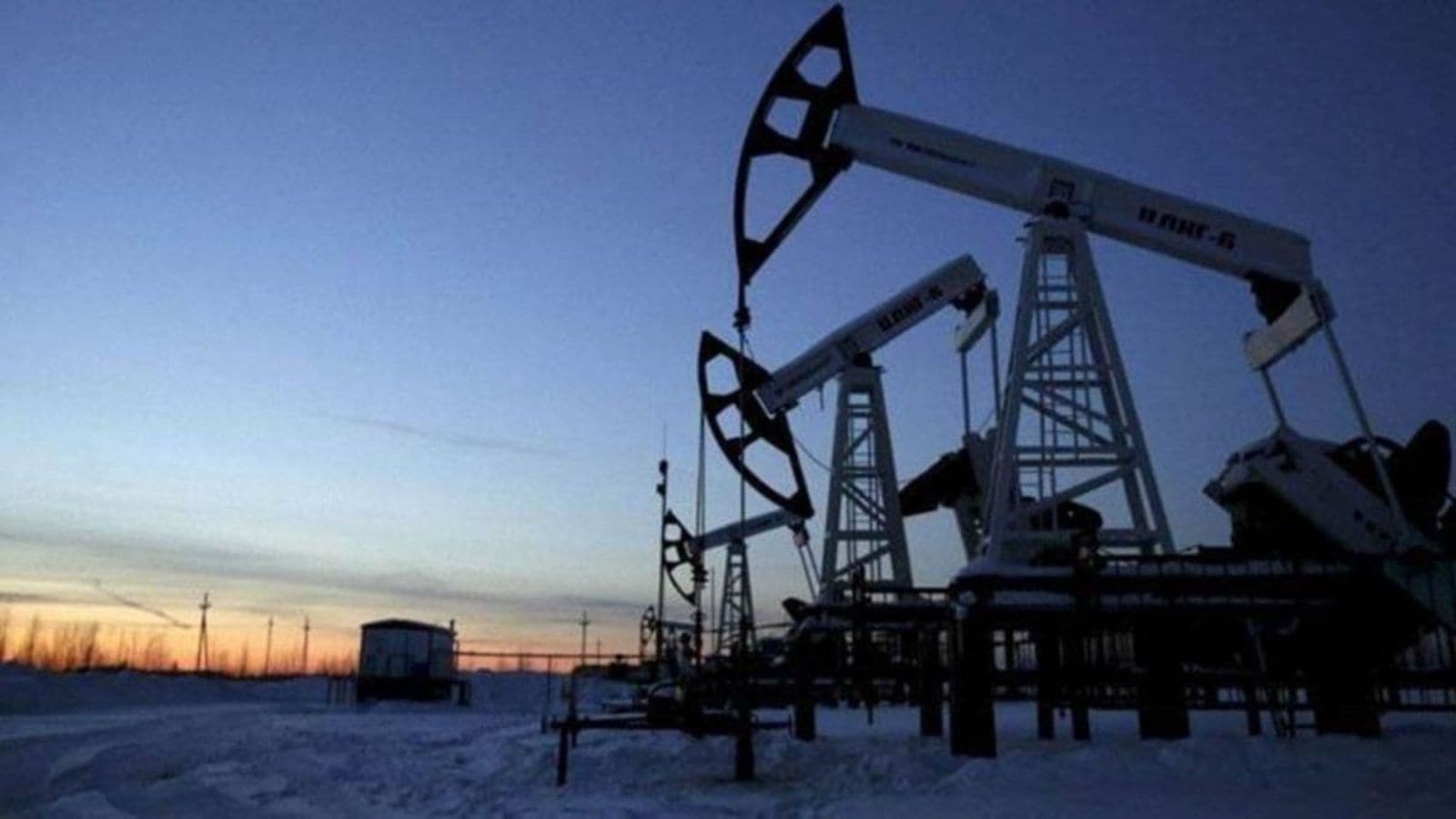
Let us shift our gaze from the glowing screens of Manhattan to a dusty gravel road just outside of Midland, Texas. This is the Permian Basin, the heart of the American oil boom.
Consider a hypothetical independent oil producer named Sarah. She does not wear a tailored suit, and she does not care about Viennese architecture. She wears steel-toed boots and manages a crew of forty roughnecks. For Sarah, a two-week low in oil prices is not a data point. It is a mathematical vise tightening around her neck.
When oil prices are high, Sarah can afford to drill new wells, maintain her equipment, and pay her crew a premium to work sixty-hour weeks in the blistering heat. But her operation runs on razor-thin margins. She took out millions in bank loans to buy modern drill bits and secure mineral rights. Those loans have fixed interest rates. The banks do not care about geopolitical breakthroughs or international diplomacy. They want their money.
When the price of crude slips because of a diplomatic breakthrough half a world away, Sarah's revenue projections for the next quarter collapse.
If prices stay down, she has to make decisions that keep her awake at night. She will postpone the purchase of a new service truck. She will tell a local contractor that his services are no longer needed. Eventually, she might have to look a father of three in the eye and tell him he is being laid off.
This is the human collateral of a falling market. We celebrate lower prices at the pump—and we should—but every downward tick on the chart represents a direct hit to the livelihoods of communities built on the extraction of fossil fuels. The energy market is a seesaw; when the consumer rises, the producer falls, and the balance is maintained by a razor’s edge.
The Illusion of Control
We love to believe that someone is in charge. We point to OPEC, to the White House, or to shadowy consortiums of international bankers, imagining a smoke-filled room where puppet masters pull levers to set the price of gas.
It is a comforting myth. The truth is far more terrifying. Nobody is in charge.
The global energy market is a chaotic, decentralized system driven by millions of individuals making panicked, self-interested decisions in real time. It is a massive, collective interpretation of human behavior.
When US and Iranian officials edge toward a deal, the market is not reacting to the physical reality of new oil. It is reacting to the fear of being caught on the wrong side of a trend. A hedge fund manager sees a competitor selling off oil contracts, so he sells his own to minimize losses. A computer algorithm detects the sudden surge in sell orders and triggers an automated liquidation. A cascade failure begins, fueled entirely by the momentum of collective anxiety.
This is why the market fluctuates so wildly on mere rumors. A single anonymous source quoting a diplomat can erase billions of dollars in valuation in thirty seconds. The fundamentals of the world have not changed—the cars are still driving, the factories are still running, the planes are still flying—but the perception of the future has shifted.
The Ripple in the Concrete Jungle
Eventually, the shockwave that started in a Viennese conference room and traveled through the trading desks of New York and the oil fields of Texas arrives at its final destination: your local community.
It shows up quietly. You might notice that the regular unleaded price on the big plastic sign outside your neighborhood gas station has dropped by fifteen cents. You feel a small, subconscious burst of relief. That is an extra ten dollars in your pocket this week. That is a takeout dinner you do not have to cook, or a movie ticket for your kid.
But look closer at the ripple effect.
The local trucking company that hauls groceries to your supermarket suddenly finds its diesel fuel surcharge reduced. The cost of shipping those avocados from Mexico or that electronics shipment from California ticks down. If the peace deal holds and oil prices stabilize at this lower level, the ambient background noise of inflation begins to quiet down.
Yet, the same lower price means an international airline decides it does not need to rush the purchase of more fuel-efficient jets, delaying a multi-billion-dollar order from an aerospace manufacturer. That manufacturer pauses its expansion plan in a midwestern suburb, affecting hundreds of manufacturing jobs.
Every action in the global economic ecosystem triggers an equal, unpredictable reaction elsewhere. The cheap gallon of gas is paid for, somewhere down the line, by economic contraction in an energy-producing region. We are all participants in this massive, global game of musical chairs, and the music is controlled by events completely beyond our sight or influence.
The Screen Goes Dark
Back in the Tribeca loft, the sun is beginning to peek over the East River, painting the brick facades of the old warehouses in shades of burnt orange and pale pink.
The Trader stretches his arms, his joints popping in the quiet room. On his screen, the downward plunge has finally flattened out. The market has digested the news from Vienna. The initial panic has subsided, replaced by a tense, watchful waiting period. The new, lower price is the baseline. For now.
He logs off his trading platform, rubs his eyes, and grabs his coat. He walks down the stairs and steps out into the crisp morning air, heading toward the small bodega on the corner for a bacon, egg, and cheese sandwich.
As he walks, a delivery truck idles curbside, its exhaust pluming in the cold air, rattling with the steady, heavy heartbeat of a diesel engine. The driver is inside, unloading crates of milk, completely unaware of the frantic trading sessions that just occurred while he was asleep. He does not know about the diplomats in Vienna, the ghost barrels in the Gulf, or the late-night panic in the Permian Basin.
But as the driver climbs back into his cab, glances at his dashboard fuel gauge, and notes the slightly lower cost of his route, he feels just a little bit lighter. The invisible thread has pulled tight, connecting his morning delivery to the fate of nations across the globe.