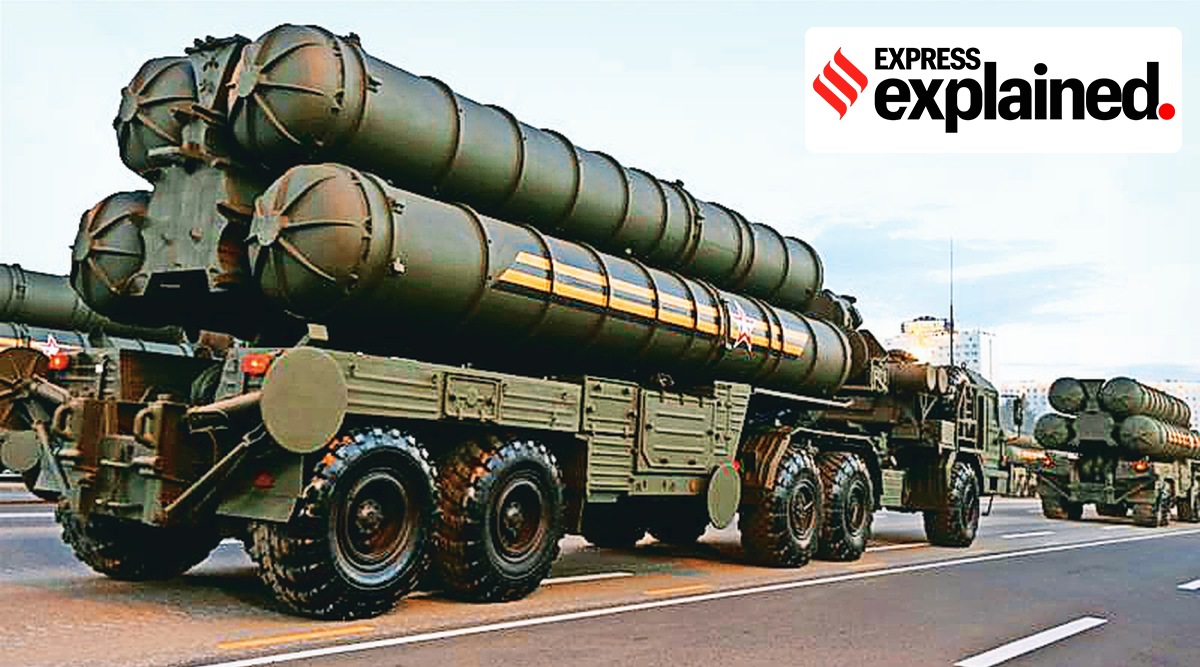
Imagine standing in a control room where the air smells faintly of ozone and recycled plastic. You are watching a screen that represents the culmination of trillions of dollars and decades of human ingenuity. For forty years, the world has operated under a specific kind of faith. It is the belief that if something wicked comes screaming out of the sky, we have a shield. We have the Patriot. We have THAAD. We have the Aegis. We have the "Steel Dome" that keeps the nightmare at bay.
But late one night in the high-desert testing ranges or over the choppy waters of the Persian Gulf, the math changed. The shield didn't break, exactly. It just found itself trying to catch a ghost.
Recent reports from Chinese military analysts, echoed by the chaotic reality of Middle Eastern skirmishes, suggest that the era of the invincible interceptor is ending. The technology we trusted to provide a "bullet hitting a bullet" is facing a predator it wasn't designed to hunt: the hypersonic missile. This isn't just a technical glitch or a budget line item. It is a fundamental shift in how humans wage war and, more importantly, how we feel safe.
The Velocity of Despair
To understand why a Patriot battery might struggle, you have to appreciate the sheer, terrifying physics of the modern battlefield. Traditional ballistic missiles are like a high-arcing lob in tennis. They go up, they reach a predictable peak, and they come down. Because their path is a mathematical certainty, a computer can calculate exactly where to send an interceptor to meet them.
Hypersonic weapons are different. They don't just fly fast; they fly low and they move. Imagine trying to catch a bird that is traveling at five times the speed of sound, weaving through the air like a dragonfly.
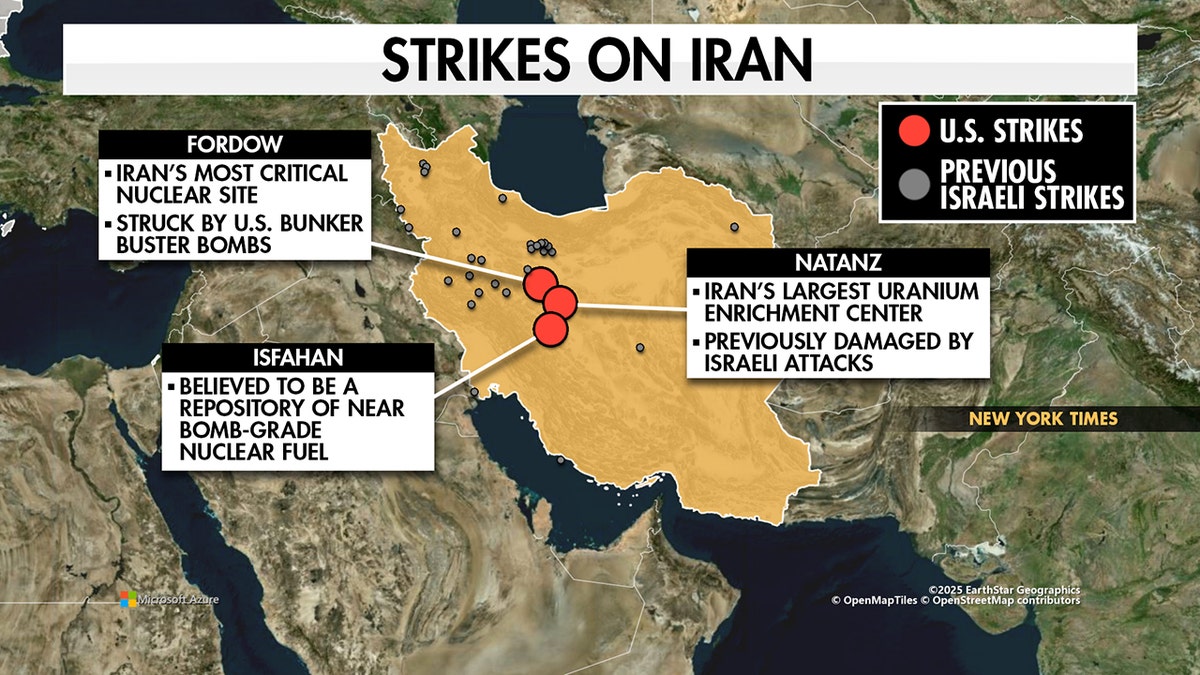
Chinese researchers are now pointing to recent engagements in the Middle East as a live-fire laboratory. They argue that when advanced Iranian missiles—some allegedly sporting maneuverable warheads—pierced through layers of Western-made defenses, the myth of the "impenetrable shield" dissolved. It wasn't that the Patriot or the THAAD (Terminal High Altitude Area Defense) failed to function. They functioned perfectly. They simply ran into a problem that their internal logic couldn't solve.
The Human Cost of a Split Second
Consider the operator. Let’s call him Miller. He sits in a darkened terminal, his eyes reflecting the glow of a radar sweep. He has been trained to trust the system. The system is his god. When an incoming threat is detected, Miller doesn't have minutes to contemplate the philosophy of defense. He has seconds.
In those seconds, the computer must identify the threat, lock on, and fire. But if the incoming missile is traveling at Mach 5 and starts to zigzag, the computer's "prediction" becomes a hallucination. The interceptor flies to where the threat should be, but the threat is already somewhere else.
The reports suggest that during recent escalations, dozens of interceptors were launched to stop a handful of targets. This is the "magazine depth" problem. If it takes five million-dollar missiles to fail at hitting one hundred-thousand-dollar drone or a fast-moving warhead, the math of survival starts to look like a bankruptcy filing.
A Lesson from the Paper Dragon
Beijing has been watching. For years, the Chinese military has invested heavily in "asymmetric" warfare. They knew they couldn't outspend the West on aircraft carriers, so they built missiles designed to make those carriers obsolete. By analyzing the performance of U.S. systems like Aegis in the Red Sea and the Patriot in Israel, Chinese scientists are essentially getting a free masterclass in Western vulnerabilities.
They claim that the Aegis system, which protects the pride of the Navy, was never intended to handle the thermal signatures and low-altitude plasma clouds generated by hypersonic flight. When a missile moves that fast, it literally ionizes the air around it. It becomes a fireball that blinds radar.
The "failing" grade given by these papers isn't just propaganda. It is a warning. It suggests that we are currently living in a window of extreme vulnerability. Our shields are made of iron, but the new arrows are made of lightning.
The Psychological Fortress
The most dangerous part of this shift isn't the hardware. It is the ego.
We have spent so long telling ourselves that our technology is peerless that we have forgotten the basic rule of the sword and the buckler: eventually, someone always builds a better sword. For a generation of policymakers, the Patriot missile was more than a weapon; it was a security blanket. It allowed for a certain kind of bold, sometimes reckless, foreign policy because we believed the consequences could always be intercepted.
If the shield is porous, the strategy must change. We can no longer assume that a carrier strike group is a floating island of invincibility. We can't assume that a city is safe because a battery is parked on its outskirts.
The Sound of Silence
There is a specific sound a missile makes when it breaks the sound barrier—a sharp, double-crack that rattles windows and bones. But the sound of a hypersonic missile failing to be intercepted is something else entirely. It is the sound of a system being bypassed.
Military analysts are now scrambling to bridge the gap. There are talks of laser-based defenses, of "space-based sensor layers" that can track these ghosts from above. But those are years, perhaps decades, away. For now, we are left with the hardware we have.
The Patriot is a masterpiece of 20th-century engineering. It is reliable, rugged, and has saved countless lives. But it is a record player in a world that has moved to streaming. It is trying to read a digital signal with an analog needle.
Beyond the Numbers
The data coming out of recent conflicts tells a story of saturation. Even if an interceptor is 90% effective, a swarm of twenty missiles means two are getting through. When those two are traveling at hypersonic speeds, the energy they carry upon impact is equivalent to a massive explosion even without a warhead. Kinetic energy is a cruel master.
We are entering a period of "defensive shivering." This is the moment when a nation realizes its armor is too heavy to move and too thin to protect. The Chinese reports might be biased, and they certainly have an interest in making Western tech look obsolete, but the core observation remains: the physics don't lie.
The struggle isn't just about who has the faster missile. It’s about who realizes first that the old rules are dead. We are watching the sunset of a certain kind of certainty.
The screen in the control room still sweeps. The radar still hums. Miller still sits in his chair, ready to push the button. But for the first time in his career, when he looks at the green blip on his screen, he isn't wondering if he can hit it. He is wondering if the blip is even there at all, or if it has already passed him by, a shadow moving faster than his ability to pray.
The wall hasn't fallen. It has just become a fence, and the wind is starting to blow right through the gaps.