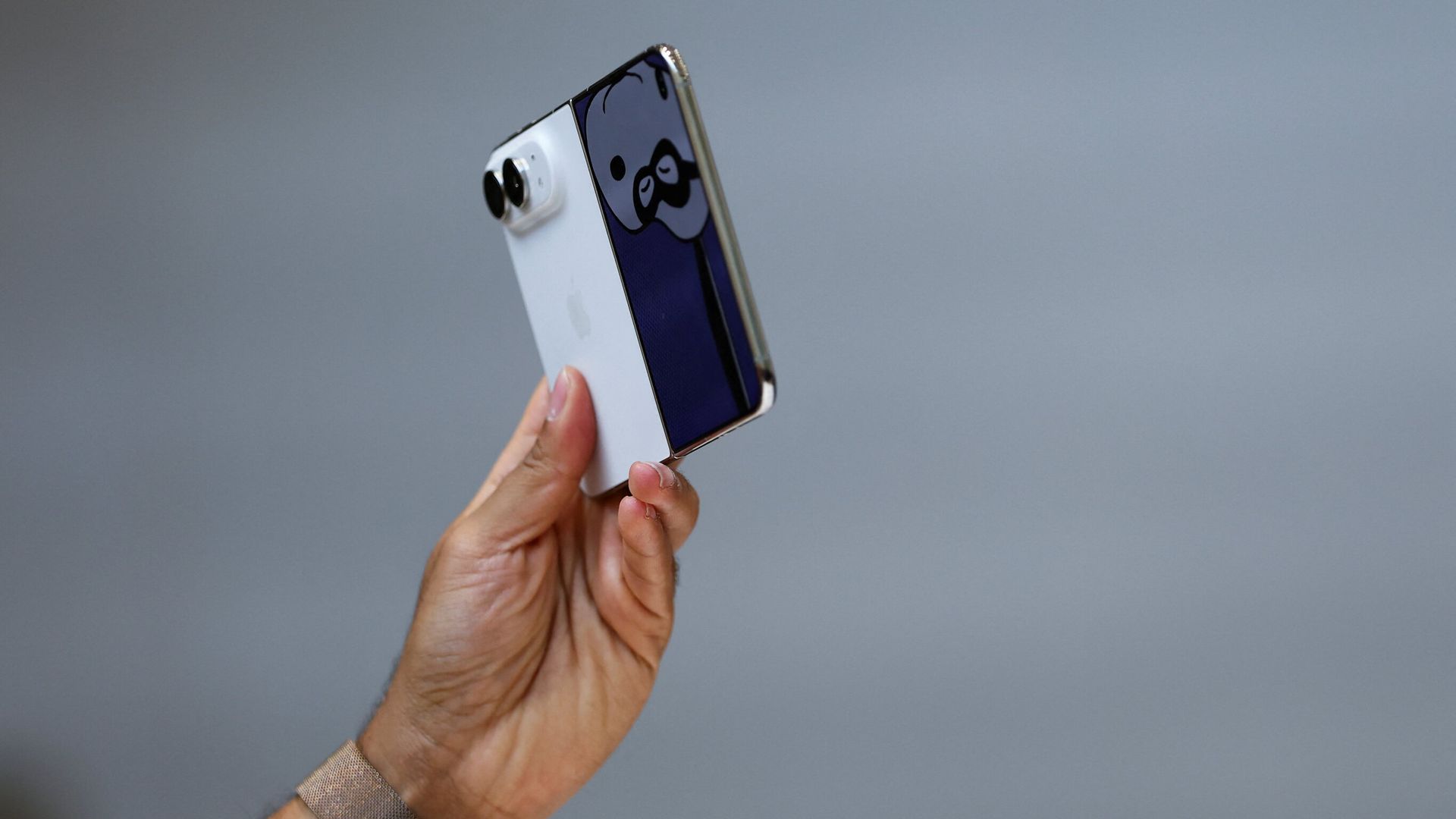
Lines around the block. Sold-out walk-in stock. Delivery dates slipping into January 2027.
Every lazy tech columnist on the planet sees that headline and writes the exact same story: Apple did it again. Massive demand for the $1,999 foldable iPhone Duo overwhelmed supply.
That is lazy consensus. Worse, it is backward.
A shortage is not proof of unstoppable consumer desire. Sometimes a shortage is just what happens when you build an ultra-fragile, ultra-expensive first-generation hardware gamble on a compressed factory schedule, throttle early allocations, and let Wall Street confuse a backorder queue with a cultural landslide.
Let's strip away the launch-day theater and look at what is actually happening with the iPhone Duo.
The Lazy Consensus Around "Sold Out"
The standard launch narrative treats supply and demand like a simple see-saw. If shelves clear fast, demand must be towering. If shipping windows stretch to 79 or 91 days—pushing U.S. orders into late January 2027—shoppers must be fighting tooth and nail for the device.
That framing misses two critical mechanics.
First, a backorder is not a stampede. When Apple opens pre-orders with a tight initial build and keeps accepting reservations even after launch-day batches are spoken for, the phone isn't "gone" in the way a limited-edition sneaker drop is gone. It is queued. A 90-day wait on a $1,999 foldable phone tells you something about yield, tooling, and allocation—not whether the average smartphone buyer is ready to abandon a slab phone.
Second, manufactured scarcity and yield bottlenecks look identical on day one. When a hardware maker introduces a brand-new form factor—complete with ultra-thin glass, tight crease tolerances, precision hinges, and complex lamination—early production lines run slower and reject more parts. Add a staggered release calendar where high-end models take center stage in fall and entry-level or Air models get pushed into next year, and the entire launch window funnels attention into a narrow bottleneck.
Calling every launch-day squeeze a "demand blowout" is bad economics. It mistakes scarcity of units for abundance of conviction.
What the Supply Chain Actually Shows
Look past the retail lines and examine the factory floor realities behind the iPhone Duo.
Foldable hardware is a completely different beast from slab assembly. On a traditional glass-and-metal phone, tolerances are forgiving compared to a moving hinge paired with flexible display layers. Ultra-thin glass thickness has to be tightly controlled, crease depth after unfolding has to stay minimal, and sealing against dust and moisture while the chassis bends creates dozens of failure points.
In hardware operations, I have seen companies blow tens of millions of dollars celebrating early pre-order sellouts while quietly bleeding margin on scrap rates and rework lines. You ship a small, gleaming batch to retail stores, watch social media light up with "can't find one anywhere" posts, and treat the excitement as validation. Meanwhile, your line engineers are sweating over yield consistency at volume.
Consider a thought experiment. Imagine a scenario where Apple shipped 300,000 iPhone Duo units at launch and 280,000 sold in forty-eight hours, while the remaining demand plateaued at 450,000 rather than ten million. On launch morning, the headlines scream "massive shortage" and "overwhelming demand." Six months later, once supply catches up, the total volume looks like a niche halo product rather than a mass-market replacement for the standard iPhone.
That is the trap of reading day-one stockouts as a ten-year trajectory.
Form Factor Timing vs. Form Factor Necessity
Apple entered the foldable market well after rivals had already spent years testing hinges, apps, and aspect ratios in public. Waiting allowed Apple to polish industrial design and avoid the worst early-generation embarrassments.
Still, timing does not erase a basic question: what problem does folding solve at $1,999 that a Pro slab or an iPad already solves more cheaply?
A bigger screen in a pocket sounds great on a keynote stage. In daily life, folding phones force trade-offs in thickness, weight, repairability, battery geometry, and software ergonomics. Early adopters—die-hard Apple loyalists, creators, and hardware collectors—will gladly pay two grand to carry the newest toy first. Supplying that first wave takes time, especially when display suppliers and assemblers are juggling multiple tiers and memory constraints across the lineup.
What happens after the early-adopter wave clears is the real test.
| Launch Metric | Lazy Consensus Reading | Sharper Operational Reading |
|---|---|---|
| Launch-week stockouts | Proof of runaway mass-market demand | Small initial allocation meeting concentrated early-adopter interest |
| 80–90+ day shipping quotes | Consumers willing to wait endlessly out of pure hype | Slow production ramp, tight yields, and queued fulfillment |
| Staggered lineup timing | Pure marketing brilliance building suspense | Concentrated engineering focus and phased component schedules |
| $1,999+ starting price | Validation of limitless pricing power | High-margin niche tier where volume naturally narrows over time |
The Questions People Are Asking Wrong
When a flagship gadget is hard to find, search feeds fill up with the same predictable questions. Most of them start from a flawed premise.
"Why is demand so high for the iPhone Duo?"
That assumes we already know the true steady-state demand from a few weeks of constrained supply. Early demand for a brand-new Apple category is always distorted by curiosity, status signaling, and limited retail stock. A better question is: how much of this demand survives once shipping times drop from months to days?
"Should I wait in line or keep checking store stock?"
If you want a gamble and enjoy the hunt, checking inventory can occasionally pay off. As a buying strategy, chasing sporadic store drops on a $1,999 device is backwards. First-generation form factors carry early-adopter tax—both in price and in undiscovered quirks that only show up after millions of open-close cycles in the wild. Unless you specifically want to be an early tester at full retail price, patience protects your wallet and your sanity.
"Does a supply crunch mean Apple's foldable is an instant smash hit?"
Not yet. A smash hit is measured by sustained volume, healthy margins at scale, and repeat upgrades—not a tight holiday queue. Even seasoned hardware leaders like Tim Cook, Jeff Williams, and current leadership—along with operators like Sabih Khan and supply-chain partners from Foxconn to Samsung Display and LG Display—know that a launch-day squeeze is only chapter one. Real success shows up in year two and year three, when novelty wears off and everyday utility has to carry the weight.
Where My Contrarian View Can Go Wrong
Being contrarian is easy when you sit on the sidelines. Being right is harder.
Here is the honest risk to my own skepticism: Apple has a long track record of turning skeptics into footnotes. Critics doubted the iPad's screen ratio, doubted the Apple Watch's independence from the phone, and doubted whether buyers would pay premium prices year after year without dramatic spec jumps. In several of those cases, what looked like a niche or overhyped category gradually expanded as software, ecosystems, and manufacturing scale matured.
If Apple nails durability, keeps software transitions smooth, and brings costs down over subsequent generations, today's constrained launch could look like the opening bell of a major multi-year shift. Contrarianism stops being smart the moment you defend a thesis past the point where the evidence changes.
What You Should Actually Do Right Now
If you are watching the iPhone Duo—either as a buyer, an investor, or someone building hardware products—stop mistaking excitement for inevitability.
- If you are buying for daily use: Do not stretch your budget or chase store rumors for a first-wave foldable. Compare what you actually do on your phone against a standard Pro model or a phone-plus-tablet setup, and let early durability data settle.
- If you are tracking the business: Watch delivery lead times, component yield commentary, and second-wave demand—not day-one headlines about lines outside stores.
- If you are building products: Never confuse a sold-out pilot batch with product-market fit at scale. Scarcity flatters your ego; repeat volume pays the bills.
A line outside an Apple Store proves people want to touch the shiny new thing first. It does not prove they want to live with it forever.