The headlines are screaming about "legitimate targets" and the imminent peril facing the USS Gerald R. Ford. If you listen to the mainstream narrative, we are one drone strike away from a total regional conflagration that sends the global economy into a tailspin. Iran issues a warning, the media amplifies the signal, and suddenly, the "lazy consensus" is that a carrier strike group is a sitting duck in the face of asymmetric warfare.
It is time to stop falling for the theater.
Most analysts treat these threats as tactical realities. They aren't. They are psychological operations designed to mask a fundamental shift in how maritime power is actually projected. When Tehran labels support centers for the USS Gerald Ford as targets, they aren't planning a knockout blow. They are trying to stay relevant in a theater where the math no longer favors the insurgent.
The Myth of the Asymmetric "Win"
For twenty years, the defense establishment has obsessed over the "Carrier Killer." We've been told that cheap drones and swarm boats have rendered a $13 billion nuclear-powered supercarrier obsolete. The argument is simple: why spend billions on a ship when a $20,000 suicide drone can disable its flight deck?
This logic is a hollow shell. It ignores the reality of layered defense and the sheer physics of kinetic energy. The USS Gerald Ford is not just a ship; it is the center of a sophisticated mobile ecosystem. To actually "target" the Ford or its support nodes effectively, an adversary needs a kill chain that functions under the most intense electronic warfare environment on the planet.
Iran knows this. When they talk about targeting "centers aiding" the carrier, they are admitting they cannot hit the carrier itself. They are moving the goalposts to land-based infrastructure because the sea-based assets are functionally untouchable by anything short of a state-level ballistic barrage that would result in the immediate erasure of the attacking regime.
Logistics is the Real Battlefield
The media focuses on the missiles. The real story is the logistics.
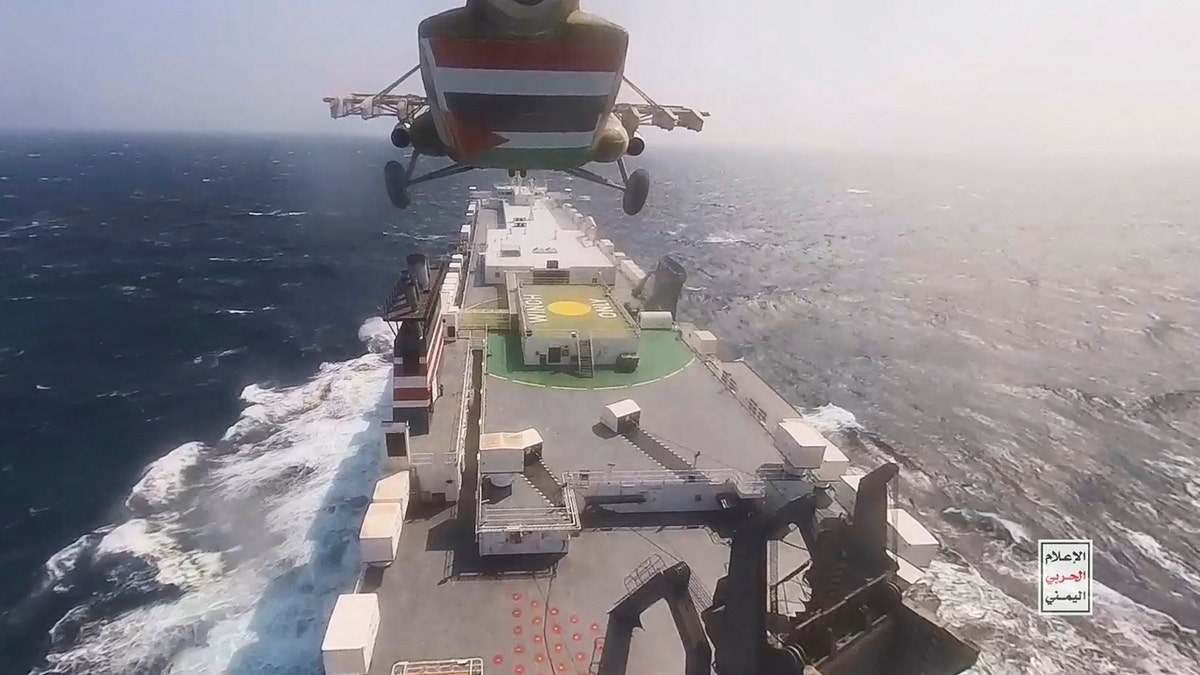
The Red Sea is a choke point, yes, but it is also a data corridor. The "centers" Iran refers to are likely intelligence-sharing hubs and logistical nodes in places like Djibouti or Bahrain. Threatening these spots is a desperate attempt to disrupt the OODA loop (Observe, Orient, Decide, Act).
If you want to understand why these threats are failing, look at the Directed Energy transition. We are moving away from $2 million interceptors hitting $50,000 drones. The Ford class is designed with an integrated power system capable of supporting laser weapon systems that change the cost-exchange ratio in favor of the defender.
I have watched defense contractors burn through billions trying to solve the "swarm" problem with traditional kinetic weapons. It was a waste. The shift to high-energy systems means that for the first time in history, the defender has the "infinite magazine." Iran’s rhetoric is a reaction to the fact that their primary leverage—cheap, expendable weapons—is being neutralized by physics.
The False Premise of Regional Escalation
Every time a headline pops up about Iran's "big warning," the immediate follow-up is a question about World War III. This is a flawed premise. Iran is a rational actor that prioritizes regime survival above all else.
An actual strike on a U.S. carrier or its primary support nodes is a terminal event for the Islamic Revolutionary Guard Corps (IRGC). They are masters of "gray zone" conflict—actions that stay just below the threshold of open war. The moment they cross that line, their asymmetric advantage evaporates.
- Deniability: This is Iran's greatest weapon. Using proxies like the Houthis allows for a degree of separation.
- Economic Pressure: Threatening the Bab el-Mandeb strait creates market volatility, which Iran uses as diplomatic leverage.
- Internal Consumption: These warnings are often for the hardliners back in Tehran, not the generals in the Pentagon.
By treating these warnings as credible military precursors, we give Iran exactly what they want: the prestige of being a peer competitor without the risk of actually being one.
Stop Asking if the Carrier is Safe
The question isn't whether the USS Gerald Ford can be hit. Anything can be hit if you throw enough metal at it. The real question is: Does hitting it achieve any strategic objective for the attacker?
The answer is a resounding no.
If Iran hits a support center, the U.S. doesn't pack up and go home. It triples down. The history of American naval engagement, from the Barbary Wars to Operation Praying Mantis in 1988, shows a consistent pattern. When you touch the boats, the response is disproportionate and devastating. In 1988, the U.S. Navy destroyed half of Iran's operational fleet in a single day after the USS Samuel B. Roberts hit a mine.
The IRGC hasn't forgotten that lesson, even if the 24-hour news cycle has.
The Technological Reality of Modern Blockades
We are seeing a disruption in the concept of a blockade. In the past, you needed a fleet to close a sea lane. Today, you just need a few truck-mounted missiles and a Twitter account. This is the "democratization of disruption."
However, this disruption is temporary. We are currently witnessing the testing phase of autonomous underwater vehicles (AUVs) and AI-driven sensor nets that can map every launch site in real-time. The "centers" aiding the Ford are moving from physical buildings to decentralized, cloud-based networks. You can't bomb a distributed data stream.
The vulnerability that Iran is trying to exploit—the reliance on fixed regional bases—is being engineered out of the system. The Ford is a floating sovereign territory that generates its own power, water, and strike capability. It is the ultimate hedge against the very threats Iran is making.
The High Cost of the Contrarian Truth
Is there a downside to this perspective? Of course. Overconfidence leads to complacency. If the U.S. military assumes its tech is an impenetrable shield, it misses the low-tech "black swan" events. But the current "sky is falling" narrative isn't just wrong; it’s a distraction.
It prevents us from seeing that the Red Sea tension isn't a military crisis—it's an energy and insurance crisis. The missiles don't have to hit the ships to win; they just have to make the insurance premiums too high for commercial tankers to sail.
Iran isn't fighting the U.S. Navy. They are fighting Lloyd's of London.
The Disconnect Between Rhetoric and Power
When you read a report about "legitimate targets," check the source. It’s almost always a press release or a state-aligned media outlet. It’s noise.
The signal is the movement of assets. While the headlines focus on the warning, the USS Gerald Ford and its counterparts are collecting more data on Iranian signatures, drone frequencies, and tactical patterns than they could ever get in a simulation. Every "threat" is a free training exercise for the most advanced electronic warfare suite ever built.
The status quo says Iran is a looming threat to the carrier fleet. The reality is that Iran is inadvertently helping the U.S. Navy perfect the very systems that will render Iranian coastal defenses useless for the next thirty years.
Stop reading the warnings. Watch the sensors.
Go look at the deployment maps of the carrier strike groups and compare them to the actual commercial shipping traffic. You will see that despite the "warnings," the heavy metal stays exactly where it needs to be. The bluff has been called, and the only people who haven't realized it are the ones writing the clickbait.