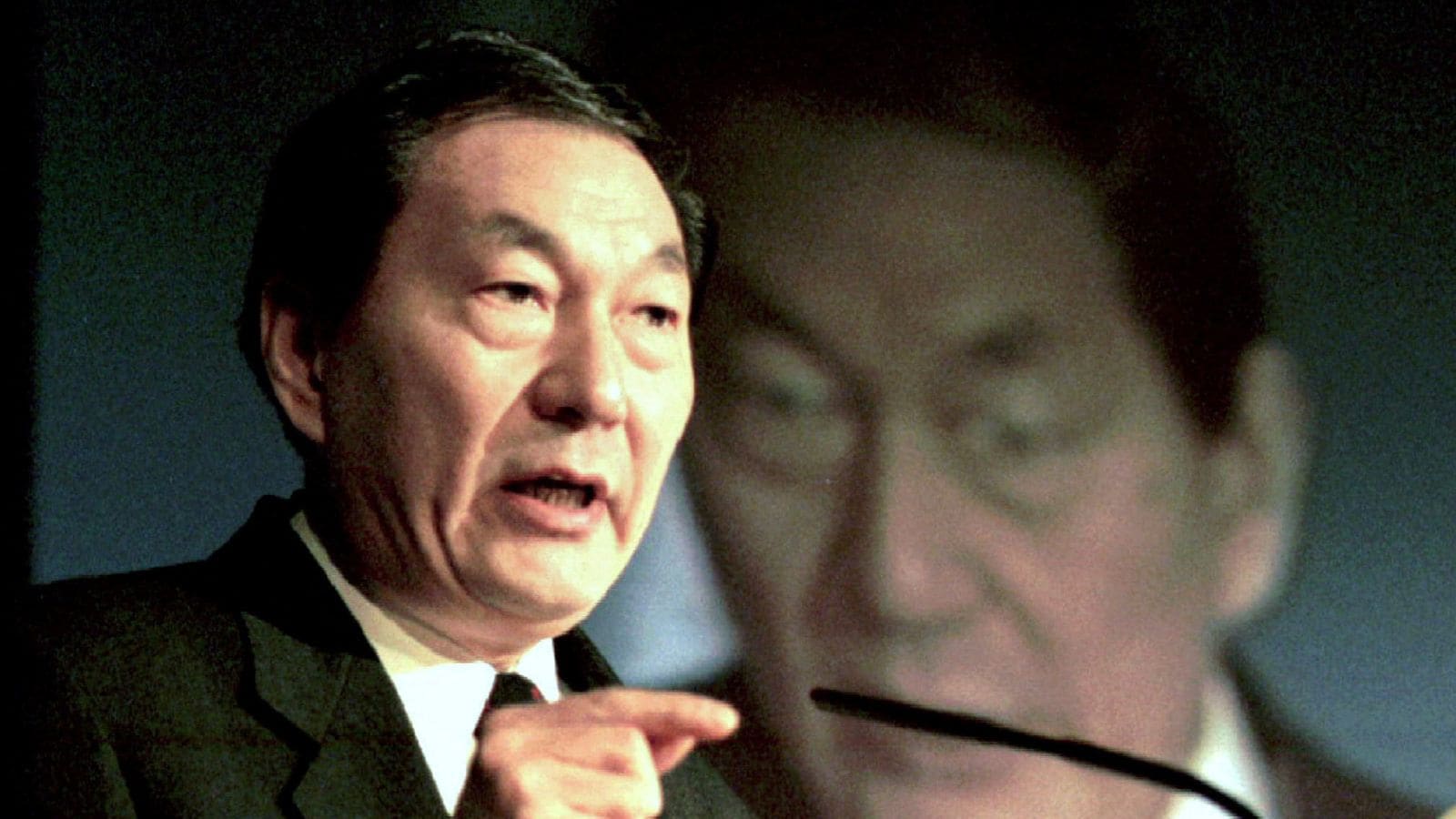
Former Chinese Premier Zhu Rongji died in Beijing at the age of 97, closing the book on the life of an uncompromising technocrat who forced a reluctant state machine into the global capitalist order. State media reported his death following medical treatment for an unspecified illness. He leaves behind a polarizing architectural legacy that defined modern economic growth.
History rarely remembers administrators with affection. It remembers the ones who broke things. Zhu, serving as premier from 1998 to 2003 after years as the nation's chief economic troubleshooter, was fundamentally a breaker of bad habits.
The Anatomy of a Fixer
When Zhu assumed the premiership, the state-directed model of the People's Republic was staggering under the combined weight of rampant inflation, structural debt, and inefficient industrial monopolies. He did not manage the decline. He attacked it with structural violence.
His predecessor Deng Xiaoping had opened the ideological door to markets, but it was Zhu who built the plumbing. As governor of the People's Bank of China through the mid-1990s and later as premier, he centralized tax collection, reined in local government overspending, and forced bloated state-owned enterprises into commercial reality.
Affectionately dubbed "Boss Zhu" by subordinates and "Madman Zhu" by detractors, he possessed an acerbic public persona entirely foreign to modern political sanitization. Famous for declaring he had prepared one hundred coffins for corrupt officials and one for himself, he weaponized blunt candor against bureaucratic inertia.
The Human Cost of Market Realism
Economic metrics rarely capture human friction. Zhu's restructuring of inefficient state industries during the late 1990s resulted in the displacement of tens of millions of urban workers.
Entire communities built around heavy industrial plants in China's rust belt found themselves cast adrift as subsidies evaporated. Safety nets were primitive. Social unrest bubbled in provincial cities.
Yet Zhu viewed the pain as non-negotiable. Allowing insolvent enterprises to bleed the national treasury dry would have triggered a total systemic collapse. He traded immediate social stability for long-term industrial solvency, a gamble that ultimately cleared the runway for China's historic ascent into global manufacturing dominance.
WTO Accession and International Gamble
His crowning geopolitical achievement remains China's accession to the World Trade Organization in 2001. The negotiations were brutal. Domestic political opponents accused him of capitulating to Western demands, while foreign negotiators found him an unyielding adversary who refused to trade fundamental sovereignty for diplomatic pleasantries.
By binding Beijing to global trade rules, Zhu exposed domestic markets to fierce international competition. Protectionist barriers fell. Tariffs dropped. The subsequent export explosion reshaped global supply chains over the next two decades, positioning China as the indispensable engine of global commerce.
The Silent Retirement
Unlike many of his peers, Zhu vanished completely from public view upon retiring in 2003. He accepted no honorary sinecures and offered no public commentary on contemporary governance. He retreated into reading, music, and quietly funding rural education through book royalties.
That silence only amplified his shadow. In recent years, as economic growth cooled and local debt burdens mounted, reformers and intellectuals frequently circulated volumes of his historic speeches. They looked back at his warnings against over-leveraged growth and official corruption not merely as historical artifacts, but as an urgent diagnostic text for modern structural vulnerabilities.
The architect is gone, but the foundations he poured continue to bear the weight of an empire