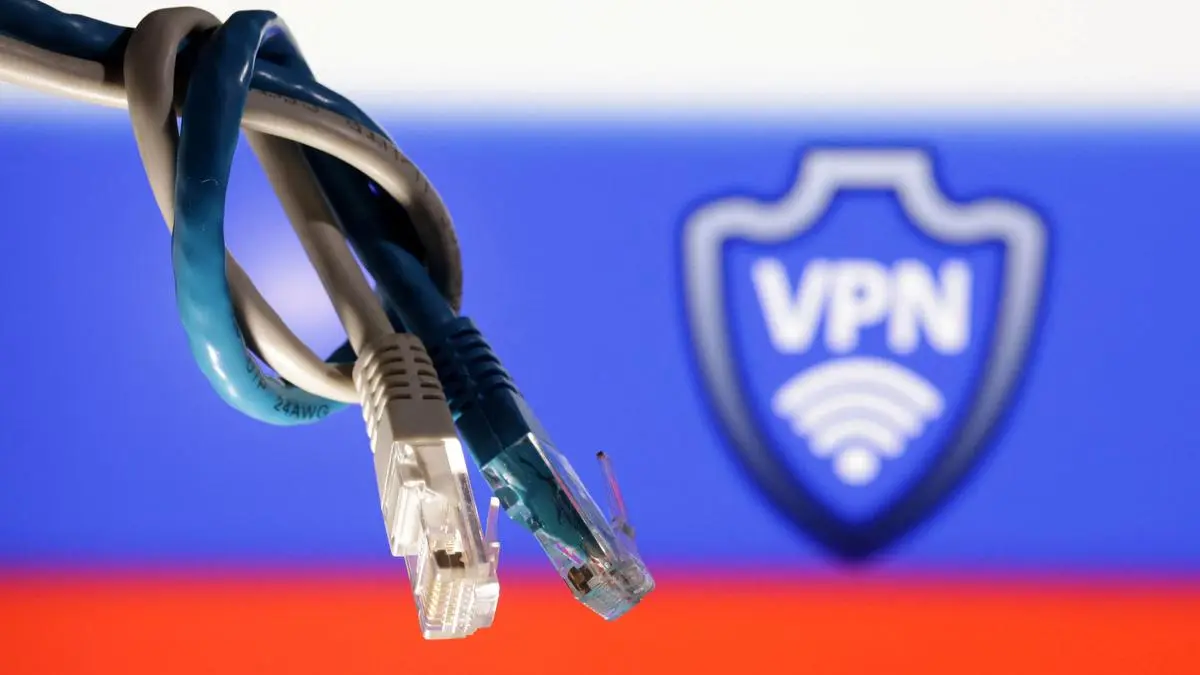
The Kremlin has finally stopped pretending that its systematic dismantling of the open internet is a temporary measure. By framing the recent wave of platform throttling and site blocks as a mandatory shield for national security, Moscow is signaling the birth of a permanent, state-controlled digital environment. This isn't just about stopping a few dissident videos or blocking a single app. It is a fundamental rewiring of how 140 million people access information, moving away from a global network toward a closed-loop system modeled on the Great Firewall.
The strategy is simple. If you cannot control the narrative on a platform, you break the platform until it is unusable.
The Infrastructure of Digital Isolation
For years, the Russian internet, or Runet, was a relatively wild space compared to the country’s television landscape. That changed with the "Sovereign Internet Law," which mandated that all internet service providers install specialized equipment—Deep Packet Inspection (DPI) tools—controlled directly by the state censor, Roskomnadzor.
These black boxes allow the government to bypass the service providers entirely. They don't just block a URL. They can slow down specific types of traffic, such as video streaming, to the point where the service becomes a source of frustration rather than information. We are seeing this play out with YouTube. While the state blames "aging hardware" within Russia, the reality is a deliberate, dial-turned-down throttling intended to migrate users toward state-sanctioned alternatives like RuTube or VK Video.
The Myth of Technical Decay
The official line claims that Google’s refusal to maintain its local servers is causing the slowdown. This is a convenient fiction. While it is true that Google has stopped installing new Global Cache servers in Russia, the sudden and localized nature of the outages points directly to intentional interference. Independent technical monitoring shows that the "degradation" occurs at the exchange points where state-controlled DPI equipment sits.
By blaming the companies they are actively strangling, the Kremlin attempts to maintain a veneer of innocence while training the public to accept a slower, more restricted experience. It is a war of attrition against user patience.
Moving Toward the Intranet Model
The ultimate goal isn't just censorship. It is total digital autarky. The Kremlin wants a reality where the Russian internet can function entirely independently of the global web. This requires more than just blocking YouTube or Instagram. It requires a domestic replacement for every critical piece of the digital stack, from Domain Name Systems (DNS) to app stores and cloud hosting.
Moscow is betting that convenience will trump freedom. If VKontakte offers a smoother, faster experience because it sits on state-favored servers, the average user will eventually stop fighting with a VPN to access blocked Western sites. It is a slow-motion migration into a digital gated community.
The VPN Arms Race
VPNs have become the primary weapon for the Russian middle class to stay connected to the outside world. However, the state is getting better at identifying and neutralizing these tunnels. Instead of just blocking the websites of VPN providers, Roskomnadzor is now targeting the protocols themselves—the underlying "languages" that VPNs use to communicate.
WireGuard and OpenVPN, two of the most popular protocols, have faced intermittent but widespread blocks across various Russian mobile networks. This creates a cat-and-mouse game where developers must constantly iterate on obfuscation techniques to stay one step ahead of the state's DPI boxes. It is an expensive, exhausting battle that the state is prepared to fund indefinitely.
The Economic Cost of Security
There is a heavy price for this level of control. The Russian tech sector, once a vibrant hub of innovation that produced companies like Yandex and Telegram, is being hollowed out. Talented engineers are leaving in droves, not just because of the political climate, but because they no longer want to work on a "halved" version of the internet.
Building a sovereign internet requires massive capital. Billions of rubles are being diverted from genuine infrastructure improvements into surveillance tech. The irony is that by seeking to "secure" the nation, the government is making its digital economy more fragile. A closed system is a stagnant system. Without the cross-pollination of global ideas and competition, Russian tech platforms are becoming bloated, uncompetitive mimics of Western originals.
Dependency on Chinese Hardware
As Western tech firms exit, Russia is forced to lean heavily on Chinese networking equipment. This creates a new kind of dependency. While Moscow talks about "sovereignty," it is essentially trading one set of foreign dependencies for another. The specialized hardware required to maintain this level of surveillance almost exclusively comes from firms that are themselves deeply integrated with the Chinese state's security apparatus.
The Psychological Siege
Information control is most effective when it is invisible. By slowly degrading the quality of foreign sites rather than switching them off overnight, the state avoids a sudden shock to the system that might trigger mass protests. It is the "boiling frog" approach to digital rights.
Users are being nudged, not shoved, into the arms of the state. When a Western platform takes 30 seconds to load a thumbnail, and the domestic version loads instantly, the choice for the non-political user becomes a matter of practicality. This is how you build a captive audience. You don't have to convince them your narrative is better if you are the only one capable of delivering it at high speed.
State Sanctioned Content Only
The domestic platforms like VK are not just social networks; they are compliance engines. They are integrated with state databases, making it trivial for authorities to track "illegal" speech. The move to these platforms represents a total loss of anonymity. In the Kremlin’s version of the internet, every click is a data point in a security file.
Why the Shield is Actually a Cage
The "security" the Kremlin defends is not the security of the Russian citizen. It is the security of the regime. By framing the internet as a battlefield where foreign "information psychological operations" are constantly being waged, the state justifies any level of intrusion.
The rhetoric of "digital sovereignty" is a mask for a desperate need to control the flow of dissent. In a world where a single viral video can spark a movement, the state views an open internet as an existential threat. They are not protecting the network from hackers or foreign interference; they are protecting the government from its own people's ability to communicate freely.
The infrastructure for a total shutdown is now in place. All that remains is the political will to flip the final switch.
The Fragmentation of Truth
As the Runet drifts further away from the global web, the very nature of reality within the country begins to shift. When you control the search algorithms and the video hosting platforms, you control what is considered a "fact." We are entering an era where the digital border is just as real and just as impenetrable as any physical wall.
The Future of the Broken Web
The transition to a sovereign internet will not be finished in a day. It is a multi-year project involving thousands of miles of fiber optics and millions of lines of code. But the direction of travel is undeniable. The Kremlin has decided that the benefits of being part of a global, open network are outweighed by the risks of losing control over the national conversation.
For the rest of the world, this is a warning. The Splinternet is no longer a theoretical concept; it is a lived reality for millions. The global web is fracturing into a series of disconnected islands, each governed by its own set of rules, its own truths, and its own gatekeepers.
The Russian experiment is the most aggressive attempt to date to prove that a modern nation-state can thrive while disconnected from the heart of the digital age. It is a high-stakes gamble that ignores the fundamental law of the network: its value is derived from its connections. By severing those connections, Moscow isn't building a fortress. It is building a silo.
Governments watching from the sidelines will see Russia's success or failure in this endeavor as a blueprint for their own digital futures. If Moscow can successfully quell internal dissent through technical throttling without collapsing its economy, expect other authoritarian regimes to follow suit with renewed vigor. The era of the truly "World Wide" Web is ending, replaced by a patchwork of national intranets defined by the paranoias of their rulers.
Check your connection.