The sea has always had its own rules. Long before iron-hulled leviathans cut through its surface, the water demanded respect, offering unpredictable storms and deep, silent currents. Today, however, the Black Sea listens to a different kind of heartbeat. It is the rhythmic, high-pitched whir of carbon-fiber propellers cutting through salt spray at dawn.
Stand on a pier in the quiet hours before sunrise, and you can feel the shift. The horizon is no longer just a meeting place of water and sky. It is a frontier.
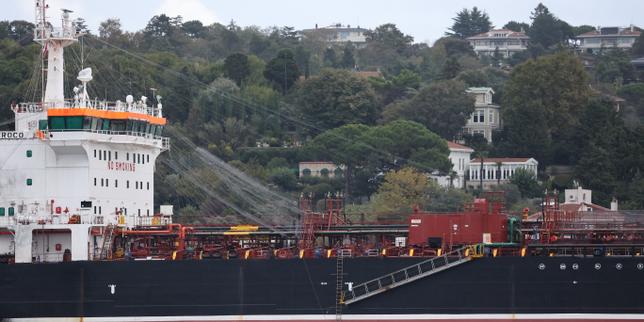
For months, maritime observers have tracked a peculiar metamorphosis unfolding along the commercial shipping lanes. Vessels carrying ties to Russia, navigating the contested waters of the Black Sea, have begun to wear an unexpected garment. From a distance, they look strange, almost clumsy—wrapped in makeshift meshes of heavy rope, metal grates, and wire netting.
They look like ships wearing armor made of chain-link fences.
Why? Because the sky above the water has turned hostile.
The Calculus of the Unseen Threat
To understand the nets, you have to understand what happens when a drone arrives from nowhere.
Imagine sitting in a control room hundreds of miles away, staring at a screen that flickers with grainy thermal imagery. To the operator, the target is a glowing silhouette against a cold sea. A joystick moves. A finger presses a trigger. Seconds later, a fiber-optic cable or a radio link delivers a high-speed projectile directly into the superstructure of a commercial cargo vessel.
For decades, international maritime law treated merchant ships as neutrals, passing ghosts immune to the direct fires of sovereign conflict. But modern asymmetric warfare cares little for old parchment. When a speedboat-sized drone packed with explosives can turn a multi-million-dollar freighter into a floating torch, the definition of a combat zone evaporates.
The ships became targets. And captains, staring down the barrel of an invisible aerial enemy, had to improvise.
Enter the iron web.
The logic is brutally simple, born from the battlefield trenches thousands of miles inland. If you cannot shoot down every incoming mosquito-like drone, you stop them before they touch your flesh. The nets are designed to detonate shaped charges prematurely, or to tangle rotors and guidance fins, robbing the explosive payload of its lethal contact point against the steel hull.
It is medieval engineering applied to twenty-first-century terror. It is desperate. And it is revealing.
The Psychology of the Floating Fortress
There is a profound psychological weight that settles over a crew when the sea stops being a workplace and becomes a minefield.
Talk to anyone who has spent weeks on a cargo vessel navigating high-risk corridors, and they will tell you about the silence. It is not a peaceful silence. It is the quiet of waiting for a sudden, violent interruption. Every shadow on the radar becomes a threat. Every flock of gulls breaking the surface triggers a spike in adrenaline.
When the shipyards welded those steel cages around the superstructures, they did more than add physical protection. They signaled a permanent change in how humanity moves goods across the globe.
For years, globalization functioned on a quiet assumption: that the oceans were open highways, policed by treaties and guarded by distance. We built our supply chains like clockwork, expecting coffee from South America and grain from Eastern Europe to arrive with the predictable monotony of the tides. We forgot that supply chains are fragile human endeavors, tethered to the physical safety of ordinary people working in cramped engine rooms and cramped wheelhouses.
When a captain looks out at a web of wire surrounding his bridge, he is looking at the fracture lines of our modern world.
The Wider Ripple
Every action generates an equal and opposite reaction in the physics of conflict.
As ships don their wire armor, the technology hunting them adapts. Drone designers watch the improvised netting and start engineering payloads with tandem warheads, cutting blades, or specialized triggers designed to slice through wire before detonating the main charge. It is an endless, frantic chess match played out in real-time, far from the polished halls where diplomats debate the rules of engagement.
Meanwhile, the economic reality trickles down to everyone else. Insurance rates for vessels operating in the region skyrocket. Crew members demand hazard pay, or they refuse the contracts entirely. Grain prices twitch in European markets because a single cargo ship is delayed, rerouted, or trapped behind a wall of caution.
We like to think of technology as clean. We imagine wars fought by satellites and algorithms, neatly contained on computer screens. But the reality on the Black Sea is gritty, salty, and profoundly analog. It is rusty steel, tangled cables, and exhausted sailors staring at the horizon, waiting for the buzz in the sky.
The sea still has its own rules. But now, it shares them with the drones.