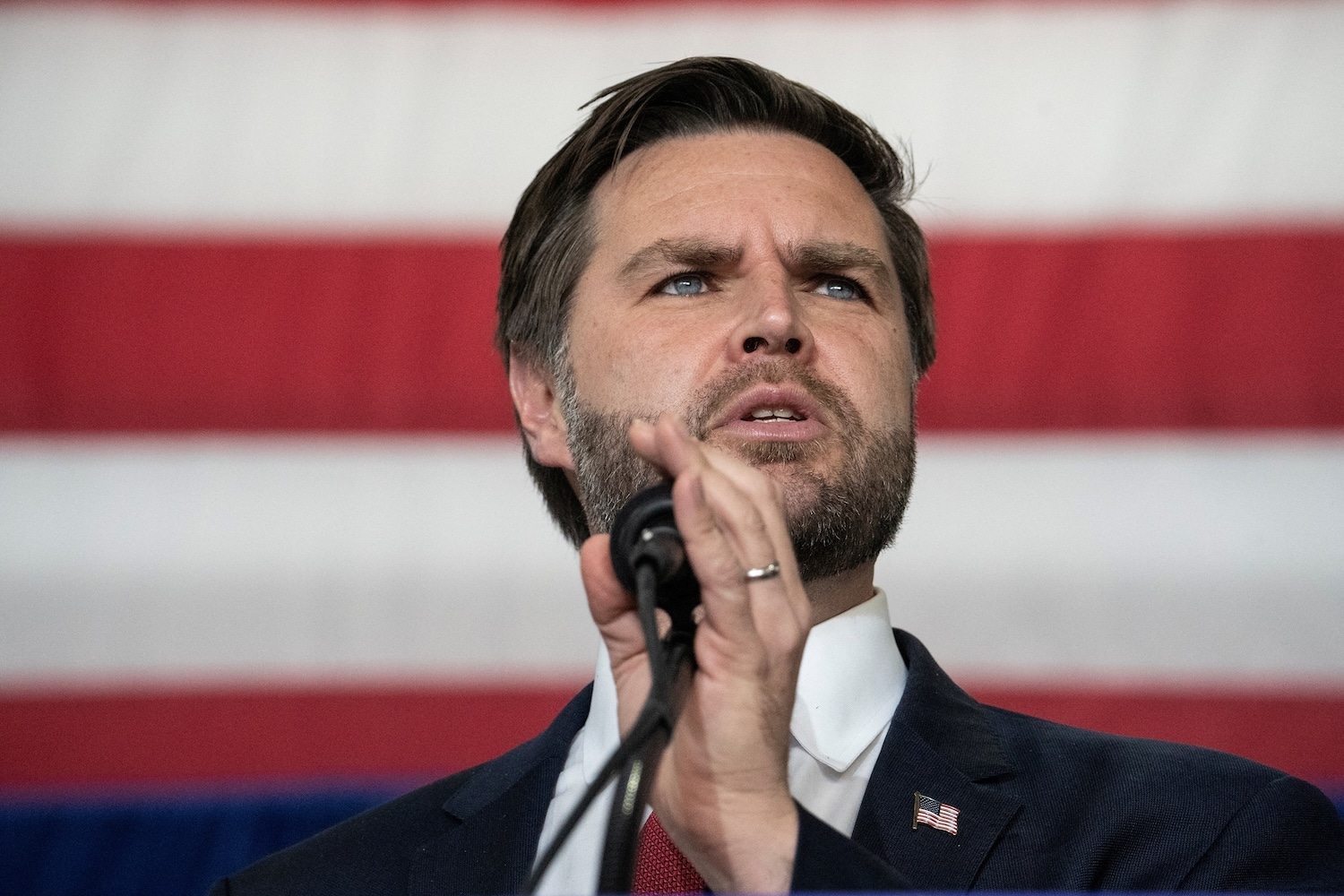
The headlines are screaming about a "collapse" in Islamabad. They want you to believe that the inability of the US and Iran to sign a piece of paper is a diplomatic catastrophe. JD Vance is being framed as the face of a failed mission. The consensus is lazy, predictable, and fundamentally wrong.
Diplomacy is not a vending machine where you insert a handshake and receive a treaty. In the high-stakes theater of Middle Eastern geopolitics, "no deal" is often the most sophisticated deal on the table. We need to stop viewing diplomatic stalemates as failures and start seeing them as the deliberate calibration of tension.
The Myth of the Final Resolution
Mainstream pundits treat the US-Iran relationship like a broken marriage that just needs the right therapist. They obsess over "breakthroughs." But for anyone who has actually navigated the backchannels of statecraft, the goal isn't resolution—it’s management.
Islamabad wasn't a failure to communicate. It was a successful demonstration of boundaries. When two powers with diametrically opposed regional interests meet, the most honest outcome is an impasse. A signed agreement in Islamabad would have likely been built on "creative ambiguity," the kind of linguistic gymnastics that led to the eventual erosion of the JCPOA. By walking away without a signature, both sides signaled that the cost of compromise currently outweighs the benefit of a fragile peace.
Why JD Vance Walked Away
The current narrative suggests the US delegation lacked the "finesse" to close the gap. This ignores the reality of domestic political capital. Vance isn't playing for the approval of the UN General Assembly; he’s playing for a domestic audience that is tired of seeing American interests traded for the optics of a Rose Garden ceremony.
The sticking points—sanctions relief versus regional militia activity—are not misunderstandings. They are fundamental survival strategies for both regimes.
- The US Position: Maintaining the leverage of secondary sanctions is the only tool short of kinetic action that keeps Tehran at the table.
- The Iranian Position: Using proxy networks is Iran's primary defense mechanism against conventional military superiority.
To expect either side to drop these pillars in a single summit in Pakistan is naive. Vance's refusal to cave on the specifics of the IRGC’s regional footprint isn't a "stumble." It is a cold, hard assertion of priority. He didn't lose the deal; he protected the floor.
The Islamabad Paradox
Observers are baffled by the choice of Islamabad as a venue. They see Pakistan as a volatile middleman. They're missing the geography of power. Choosing Islamabad was a message to Beijing and Riyadh as much as it was a meeting with Tehran.
By engaging in a neutral, non-Western capital, the US signaled a willingness to move outside the traditional Brussels-Washington corridor. That move alone changes the gravity of the negotiation. Even without a signed document, the optics of the dialogue forced regional players to recalibrate their own hedging strategies. Saudi Arabia and the UAE are now looking at the "failed" talks and realizing that the US isn't desperate. Desperation leads to bad deals. Stoicism leads to better ones later.
Stop Asking if They Will Agree
The "People Also Ask" sections of the internet are filled with variations of: "When will the US and Iran reach a peace deal?"
It is the wrong question.
The right question is: "How much tension can the global energy market sustain before a deal becomes a necessity?"
Right now, the answer is: quite a lot. We have seen that the global economy has decoupled from Middle Eastern volatility in ways that were unthinkable twenty years ago. Shale production, diversified supply chains, and the shift toward renewables mean that Washington can afford to wait. Tehran, facing internal economic pressures, has less time, but their "Look East" policy provides just enough oxygen to keep them from total capitulation.
The Cost of the "Perfect" Deal
Imagine a scenario where Vance and the Iranian Foreign Minister emerged from the summit beaming, holding a signed memorandum of understanding. The markets would rally for forty-eight hours. Then, the reality would set in.
- Hardliners in the Majlis would accuse the negotiators of treason.
- The US Congress would immediately move to block any funding associated with the deal.
- Israel would likely accelerate its covert operations to sabotage the newfound "stability."
A premature deal is a destabilizing force. A stalemate, however, provides a predictable status quo. Businesses hate uncertainty, but they can price in a standoff. They cannot price in a deal that might be shredded by the next administration or ignored by the IRGC the moment the ink dries.
The Professionalism of Deadlock
There is a certain "battle scar" wisdom in knowing when to leave the room. I have seen administrations chase the ghost of a legacy deal and end up with a mess that takes decades to clean up. The Clinton-era attempts at Camp David between Israel and the Palestinians are the gold standard for how "almost" reaching a deal can lead to a more violent fallout than never trying at all.
Vance is applying a realist framework. In this school of thought, the absence of war is the primary metric of success, not the presence of a formal alliance. By keeping the channels open but the signatures absent, the US maintains a "threshold diplomacy" that prevents total escalation without giving up the farm.
The Real Winners of the Non-Deal
If you want to know who truly benefited from the Islamabad stalemate, look at the regional balancers.
- Turkey: Gains importance as the alternative conduit for dialogue.
- The Gulf States: Maintain their leverage as security partners without being forced to pick a side in a new US-Iran "grand bargain."
- The US Defense Sector: Continues to provide the necessary hardware for a "containment" strategy that is far more profitable and predictable than a "reconciliation" strategy.
The Hard Truth About Peace
We have been conditioned to think of "Peace" as a static state of harmony. In the real world, peace is a high-maintenance machine that runs on the oil of mutual suspicion. The failure in Islamabad wasn't a glitch in the system; it was the system working exactly as intended.
JD Vance didn't go to Islamabad to bring back "peace in our time." He went to remind Tehran that the current price of admission to the global community is a price they aren't yet willing to pay—and that the US is perfectly comfortable with that.
Stop mourning the missing treaty. The stalemate is the strategy. It is the only honest outcome in a world that has no room for the easy answers JD Vance’s critics are selling.
The deal isn't dead. It's just correctly priced for the first time in years.