You can't fix a geopolitical fracture with a piece of paper that ignores the loudest gun in the room. Right now, the international community is trying to patch up the 2026 Lebanon war with high-level Washington summits and state-to-state declarations. Lebanese President Joseph Aoun called the recent US-brokered talks a "last chance" for peace. Yet, hours after diplomats shook hands, Israeli airstrikes pounded southern Lebanon, and Hezbollah flatly rejected the deal.
Why does this cycle keep repeating? It’s simple. The Lebanese government is signing deals it can't enforce, Israel is demanding a demilitarized zone it insists on policing with its own drones, and Hezbollah won't stop shooting as long as Israeli troops occupy Lebanese soil. The current diplomatic push aims to bypass the militia entirely, but ignoring the asymmetric reality on the ground makes these treaties dead on arrival. If you want to understand why peace feels impossible right now, you have to look at the mechanics of this broken diplomatic machine.
The Flaw in State to State Diplomacy
The core problem with the recent negotiations in Washington is structural. Israel and the official Lebanese government under Prime Minister Nawaf Salam are engaging in direct talks for the first time since 1983. On paper, it sounds like progress. The United States and other Western allies are pushing a framework where the Lebanese Armed Forces (LAF) take over "pilot zones" in the south, pushing non-state actors away from the border.
But there's a glaring catch. Hezbollah is not at the table.
[Diplomatic Framework]                     [Ground Reality]
Lebanese Govt <---> Israel    VS.          Hezbollah <---> Israel Defense Forces
(Signing Agreements)                       (Trading Fire in South Lebanon)
The Lebanese state doesn’t have the military muscle to disarm Hezbollah. Expecting the LAF to walk into southern towns like Anqoun or Nabatieh and forcefully strip a heavily armed, battle-tested militia of its rockets is fantasy. When the central government signs a treaty promising to secure the south, it's writing a check its army can't cash. Hezbollah views the current proposal—which allows Israel to continue defensive strikes while demanding the militia withdraw north of the Litani River—as total surrender. They’ve made it clear they won’t stop firing until the Israel Defense Forces (IDF) pull back completely.
Why the 2024 Truce Fractured
To understand the current crisis, look back at how we got here. After the devastating escalation in late 2024 that saw the death of Hassan Nasrallah, a fragile ceasefire was established. It didn't bring peace; it just changed the nature of the violence.
For over a year, Lebanon endured near-daily Israeli surveillance flights and targeted strikes aimed at keeping Hezbollah from rebuilding. At the same time, Hezbollah quietly reconstructed its underground infrastructure, waiting for a flashpoint.
That flashpoint arrived on February 28, 2026, when coordinated US and Israeli strikes hit Iran, killing Supreme Leader Ali Khamenei. Within 48 hours, Hezbollah launched a massive barrage of rockets and drones toward Haifa. The fragile truce shattered instantly. Israel responded by launching five military divisions across the border, sparking a full-blown invasion that has already killed over 3,500 people in Lebanon and displaced more than a fifth of the country’s population.
The Reality of De-escalation and Disarmament
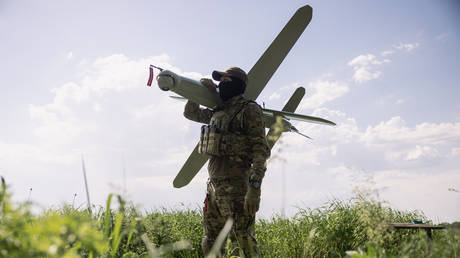
A major sticking point right now is Israel’s insistence on maintaining operational freedom inside Lebanon. Israeli Defense Minister Israel Katz has stated that Israel will not fully withdraw from the south and demands the right to strike Hezbollah targets whenever it spots a violation.
No sovereign nation, or even a highly autonomous militia, accepts a ceasefire where the other side retains the explicit right to keep bombing them. This isn't a ceasefire; it's a managed occupation.
Aaron Miller, a senior fellow at the Carnegie Endowment for International Peace, points out that without robust, independent monitoring and a fundamental commitment from both actual combatants, ceasefires are structurally built to fail. The United Nations peacekeeping mission, UNIFIL, has been rendered toothless. Its mandate is set to expire by the end of 2026, and its positions are literally caught in the crossfire—evident when a mortar strike recently killed a UN peacekeeper near Marjayoun.
What Happens Next on the Ground
If you are tracking this conflict for security, investment, or humanitarian reasons, stop looking at the press releases from Washington and start looking at these specific indicators on the ground:
- The Status of the Pilot Zones: Watch if the Lebanese army actually deploys to towns like Dibbin, where Israeli troops recently pulled back. If the LAF gets caught between IDF re-entry and Hezbollah ambushes, the state-to-state track is officially dead.
- Netanyahu’s Cabinet Votes: Israeli Prime Minister Benjamin Netanyahu has refused to bring the Washington proposals to a formal cabinet vote until Hezbollah signs on. Watch for growing rifts within the Israeli coalition between hardliners who want a deeper push past Nabatieh and pragmatists looking for an exit.
- The US-Iran Channel: The conflict in Lebanon is tied directly to the wider war with Iran. Tehran has stated it won't agree to a broader regional truce unless the bombing stops in Lebanon. Watch the backdoor diplomatic channels handled by the Trump administration; any real pause will have to be leveraged through pressure on Tehran and Jerusalem simultaneously, not just Beirut.
The current diplomatic track is trying to build a stable house on a foundation of quicksand. Until an agreement addresses the territorial presence of the IDF and the political survival of Hezbollah, the war machine will keep turning.
Hezbollah faces a new challenge in Lebanon: Disarmament push tests the group’s future
This video provides critical historical context on the evolving relationship between the Lebanese state and Hezbollah, detailing how the push for disarmament is shaping current cease-fire negotiations.