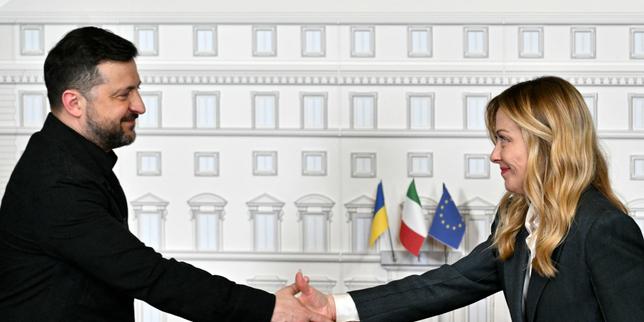
Rome is collapsing under the weight of public exhaustion, or so the narrative goes. For months, the mainstream press has peddled a lazy consensus: Italian support for Ukraine is a fragile house of cards, bound to shatter at the first hint of electoral pressure. The lazy thesis argues that a weary electorate, squeezed by inflation and historical ties to Moscow, will inevitably force populist factions to pull the plug on military aid.
It sounds tidy. It sounds plausible to anyone sitting in a distant newsroom. It is also fundamentally wrong.
I have spent the past year tracking the shifting corridors of power in Palazzo Chigi and talking directly to defense analysts across Lombardy and Lazio. The conventional wisdom misses the hard, unvarnished mechanics of Italian foreign policy. Rome is not about to abandon Kyiv. If anything, the political class has engineered a quiet, pragmatic consensus that survives precisely because it ignores the noisy fringe.
The Mirage of Popular Revolt
Let us dismantle the primary myth: that Italian voters are staging a widespread rebellion against European defense commitments.
Polls frequently show a population uneasy with war. Naturally. Nobody wakes up hoping to fund artillery shells. But public anxiety does not automatically translate into radical political realignment. When citizens step into the voting booth, abstract geopolitical fatigue routinely takes a backseat to domestic economic survival, local taxation, and administrative competence.
Look at how the ruling coalition handled the pressure. Giorgia Meloni’s administration inherited a messy web of international obligations and executed a masterclass in strategic continuity. Critics predicted that nationalist factions would fracture the moment domestic approval ratings dipped. Instead, Rome doubled down on trans-Atlantic alignment. Why? Because abandoning Kyiv carries an economic and diplomatic price tag that no Italian finance minister is willing to pay.
The Industrial Realpolitik
To understand why Italian support holds firm, you have to look past the political talk shows and examine the ledger. Italy’s defense manufacturing sector is deeply integrated into European supply chains. Major defense contractors do not operate in a vacuum of political whimsy; they rely on long-term institutional stability and cross-border cooperation.
When a nation steps back from multilateral security frameworks, its industrial base pays the penalty. Italian executives know this. They have watched regional competitors secure lucrative modernization contracts while isolationist politicians score cheap points on morning television.
Realpolitik is rarely cinematic. It is driven by supply chains, credit ratings, and the cold calculation of sovereign risk.
Italy cannot afford to decouple from the Western security architecture without inviting immediate financial penalties from international markets. Spreads on Italian government bonds react badly to geopolitical erraticism. The markets demand stability, and stability right now means honoring defense commitments.
Confronting the Opposition Flaws
Critics of Rome’s current trajectory point to divided public sentiment as proof of an impending U-turn. They ask: How can a government sustain military aid when domestic social programs need funding?
The premise of the question is flawed. It treats national budgets as a zero-sum playground where every euro sent abroad is a euro stolen from a hospital or a highway. Modern fiscal policy does not work that way. Defense spending and infrastructure investments are managed through distinct budgetary instruments, heavily buffered by European Union recovery funds and structural adjustments.
Furthermore, the opposition lacks a coherent alternative. Splintered factions on both the hard left and the populist right can agree on what they oppose, but they cannot agree on what comes next. A fractured opposition is the best insurance policy an incumbent government can have.
The Cost of the Contrarian View
Honesty requires admitting the vulnerability of this stance. This rigid adherence to the Western consensus carries a domestic cost. It breeds a quiet resentment among citizens who feel unrepresented by mainstream foreign policy. If inflation spikes unexpectedly or energy markets face another severe winter shock, that simmering discontent could rapidly morph into an electoral weapon.
Rome is walking a tightrope. The margin for error is razor-thin.
Yet, confusing a tightrope walk with an imminent fall is a rookie error. The establishment understands the stakes. They are betting that the pragmatic center of the country values institutional predictability over revolutionary disruption.
The next time you read about Italy’s inevitable pivot away from Kyiv, remember who is actually writing the checks and managing the supply lines. The noise belongs to the pundits. The reality belongs to the balance sheet.
Stop waiting for Rome to blink. It has already made its calculation.