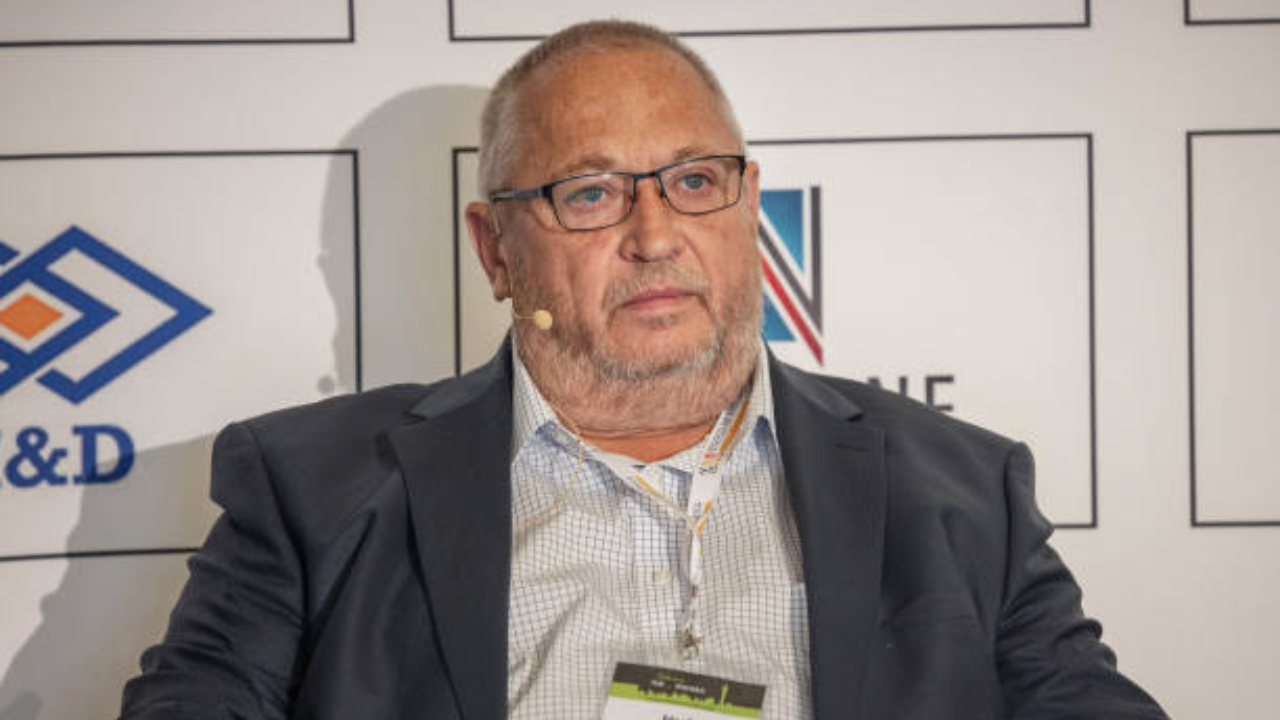
Ivan Toney has pleaded not guilty to assault occasioning actual bodily harm after being accused of head-butting and punching Saber Da Silva at a Wardour Street nightclub in Soho on December 6, 2025. The England forward has rejected criminal culpability while his legal team frames the physical contact around self-defence. Even if Toney clears his name in front of a jury, the justice system has already delivered a punishing blow: a Southwark Crown Court trial date set for June 12, 2028, right in the middle of the Euro 2028 group stage.
Standard sports wire copy treats a player plea like a routine scoreline update. Not guilty entered. Bail granted. Move along. That surface reading misses the deeper mechanics at work when a high-earning footballer collides with London nightlife, criminal procedure, and an overburdened court docket.
What Actually Happened Inside the Soho Dispute
Metropolitan Police charged the 30-year-old Northampton-born striker on July 31, 2026 with assault occasioning actual bodily harm following an investigation into the December 6, 2025 confrontation on Wardour Street. Prosecutors allege that Toney head-butted and punched Da Silva, leaving him with injuries to his nose and fingers.
When Scotland Yard announced the charge at the end of July, a spokesperson for Toney said the forward was shocked by the development and looked forward to clearing his name in court. Two months later, on September 24, 2026, Toney appeared at Westminster Magistrates' Court, and on October 1, 2026 he entered a not guilty plea while electing for a Crown Court trial before a judge and jury.
Then came the October 29, 2026 hearing at Southwark Crown Court before Judge Christopher Hehir. Toney arrived in a black button-up cardigan, white shirt, and tie, stepped into the dock, and confirmed his not guilty plea during a brief session before receiving unconditional bail.
Here is the crucial nuance that casual summaries flatten out. Reporting around the pre-trial proceedings indicates that while Toney does not dispute causing the injury, his legal team argues he acted in self-defence. In English criminal law, that distinction is everything. A punch or head-butt that leaves a complainant with a damaged nose and injured fingers satisfies the physical element of actual bodily harm on paper. Whether it amounts to a crime depends on whether the defendant honestly and reasonably believed force was necessary to defend himself, and whether the force used was proportionate to the perceived threat.
Nightclub CCTV rarely captures audio. Witnesses often have conflicting recollections, blurred by alcohol, music, and crowd movement. A jury listening to competing accounts of who initiated aggression in a cramped Wardour Street room faces a messy evidentiary puzzle long before reaching a verdict.
Why a Two-Year Court Delay Changes Everything
Most fans assume a footballer facing a serious criminal charge either gets sidelined immediately by his club or settles the matter within a few months. Toney's trajectory defies both assumptions.
Judge Christopher Hehir fixed a provisional trial date of June 12, 2028. Almost two years after the plea hearing. Nearly two and a half years after the night on Wardour Street.
The judge did not hide behind legal jargon. He apologized directly to the defendant. "That's a long way in advance and I'm sorry about that," Judge Hehir told the court. "As you may know, the crown courts are operating under a great deal of pressure. We have got a massive backlog of work for various reasons."
That backlog functions as an invisible sentence. Assault occasioning actual bodily harm is a criminal offence punishable by imprisonment, and Judge Hehir warned Toney that the case would likely be tried in his absence if he failed to attend. For a player based in Saudi Arabia with Al-Ahli Saudi FC, that means years of mandatory travel obligations, legal preparation, and looming uncertainty.
More immediately, June 12, 2028 collides directly with Euro 2028. For a 30-year-old striker who has earned 10 England caps, reached the Euro 2024 final squad, and featured at the World Cup 2026—including appearances in the semi-final against Argentina and the third-place victory over France—a tournament clash during his prime years is devastating. Even if selectors wanted to consider him, scheduling rules and dock space effectively rule him out of the tournament.
| Stage | Date | Venue or Body | Key Development |
|---|---|---|---|
| Alleged Incident | December 6, 2025 | Wardour Street nightclub, Soho, London | Confrontation involving Ivan Toney and Saber Da Silva |
| Charge Filed | July 31, 2026 | Metropolitan Police | Charged with assault occasioning actual bodily harm |
| Magistrates Hearing | September 24 to October 1, 2026 | Westminster Magistrates' Court | Elected Crown Court trial and entered not guilty plea |
| Crown Court Plea | October 29, 2026 | Southwark Crown Court | Confirmed not guilty plea before Judge Christopher Hehir; unconditional bail granted |
| Provisional Trial | June 12, 2028 | Southwark Crown Court | Scheduled during Euro 2028 group stage amid court backlog |
The Counter-Argument Nobody Wants to Voice
When an athlete denies an assault charge, public reaction usually splits into two rigid camps. One side treats an accusation as proof of guilt. The other treats a not guilty plea as a clean slate.
Both reactions miss the institutional realities of modern football.
First, consider the club perspective. Toney moved from Brentford to Al-Ahli in 2024 for £40m after scoring 72 goals across four seasons in west London. He arrived as a marquee signing and has continued producing goals in the Saudi Pro League and AFC Champions League Elite. Why has his club status remained intact while the criminal case grinds forward? Because in international football, clubs weigh commercial exposure against immediate sporting output, and an unresolved allegation with a self-defence posture does not trigger automatic contract termination.
Second, consider the counter-argument that critics raise whenever Toney's name enters a disciplinary or legal dispute. This is not the first time Toney has stood at the center of a high-profile controversy. Back in 2022 and 2023, an FA betting investigation resulted in a lengthy suspension before his return to action in January 2024. Critics argue that a pattern of off-pitch friction—whether regulatory breaches or a Soho nightclub altercation—creates self-inflicted drag on a career that should be defined solely by penalty-box instinct.
Yet there is an equally compelling counter-argument on the other side. High-profile footballers are magnets for confrontation in crowded nightlife districts. Strangers recognize them, film them, crowd their personal space, and test their patience. Saying Toney must bear responsibility for choosing to be in a Wardour Street venue on a December night is fair. Equating presence in a nightclub with criminal guilt is not. Self-defence exists precisely because people sometimes find themselves cornered in physical spaces where walking away is no longer an option.
Overlooked Factors in Athlete Legal Battles
Watch how coverage of Toney's case evolves over the next eighteen months and you will notice three overlooked mechanics that shape almost every athlete prosecution in England and Wales.
- Witness attrition and memory decay: A trial set for June 2028 asks witnesses to reconstruct seconds of chaos that happened in December 2025. Memories harden into rehearsed narratives or fracture completely over thirty months.
- The asymmetry of reputational damage: Prosecutors only need to persuade twelve jurors beyond reasonable doubt, while media narratives operate on far looser standards. Even an acquittal rarely restores the unblemished public standing a player held before charges were brought.
- Geographic distance from the courtroom: Playing in Saudi Arabia means Toney operates far from the London media ecosystem that dissected his Brentford years. Distance shields him from daily tabloid scrutiny, yet it also complicates coordination with solicitors, investigators, and defense experts.
Let us use a hypothetical example to clarify how self-defence works in practice. Suppose a player is standing near a bar in central London, a stranger blocks his path, grabs his arm, and swings first, and the player strikes back to break free before security intervenes. Under English law, the player admits making physical contact and causing injury, yet argues he acted to repel an unlawful attack. Whether that hypothetical mirrors Wardour Street is a question strictly for the jury in 2028, not speculation today.
What the Docket Reveals About Football and Justice
There is an uncomfortable irony in watching a World Cup semi-finalist wait nearly two years for a judge and jury to hear a Soho assault allegation. Toney's wealth and international profile buy him top-tier legal representation, not an express lane through Southwark Crown Court. The same backlog affecting ordinary defendants across London governs his calendar.
For Toney, the immediate task is straightforward enough: keep scoring for Al-Ahli, comply with unconditional bail, and prepare a defense that can survive cross-examination years after the event. Every goal he scores between now and June 2028 will be measured against an unavoidable asterisk, because the decisive verdict will not come from a referee's whistle.