Japan is executing a fundamental doctrinal shift in its national defense strategy, moving away from post-war defensive constraints toward long-range strike parity and asymmetric denial capabilities. This transformation is driven by a stark geographic vulnerability combined with an accelerating regional power imbalance. Tokyo faces a rapidly closing window to deter peer-competitor expansion in the Western Pacific. The introduction of hypersonic glide vehicles and advanced underwater weapon systems into the Japan Self-Defense Forces inventory is not merely an acquisition program. It represents a systemic re-engineering of the defense architecture designed to alter the operational calculus of potential adversaries through structural cost imposition.
The Geopolitical Drivers of Force Structure Evolution
The security architecture of East Asia relies on access denial, missile density, and maritime choke points. Japan occupies the northern anchor of the First Island Chain, a geographic barrier that historically functioned as a natural containment zone. Modern anti-access area-denial networks, particularly those deployed by Beijing, have eroded the protective buffer of geography. Surface fleets and fixed airbases within the operational range of regional strike assets face extreme attrition risks during an opening salvo.
Tokyo’s defense planners recognize that traditional symmetric defense is mathematically untenable against massed theater ballistic and cruise missile inventories. A conventional defense based primarily on interceptor missile batteries suffers from a severe economic asymmetry. Interceptors cost millions of dollars per unit, while offensive saturation strikes utilize lower-cost projectiles. Closing this expenditure gap requires offensive deterrence. By fielding counter-strike capabilities, Tokyo shifts the burden of risk onto an adversary's command nodes and mobile launchers.
Hypersonic Systems and the Collapse of Warning Times
Hypersonic glide vehicles combine high maneuverability with speeds exceeding Mach 5, operating at altitudes that complicate radar horizon detection. Traditional ballistic missile defense systems rely on predictable parabolic trajectories to calculate intercept vectors. Hypersonic weapons invalidate these algorithms through unpredictable aerodynamic maneuvering during the terminal glide phase.
Japan’s development of the Hyper Velocity Gliding Projectile and related high-speed strike assets introduces a specific tactical dilemma for regional command structures.
- Trajectory unpredictability: Terminal phase course corrections prevent defensive systems from calculating a reliable intercept solution until seconds before impact.
- Flight profile altitude: Operating within the upper stratosphere allows these weapons to bypass lower-tier radar networks that rely on line-of-sight tracking.
- Time-to-target compression: Strategic decision-making windows shrink from hours to minutes, forcing automated response loops that increase the risk of crisis escalation.
The inclusion of these capabilities in Japan's defense inventory alters the operational freedom of movement for opposing naval task groups. Surface action groups operating within the East China Sea must now account for rapid-response strike options that originate from mobile land batteries deployed across the Nansei Island chain.
Underwater Warfare and Sub-Surface Asymmetry
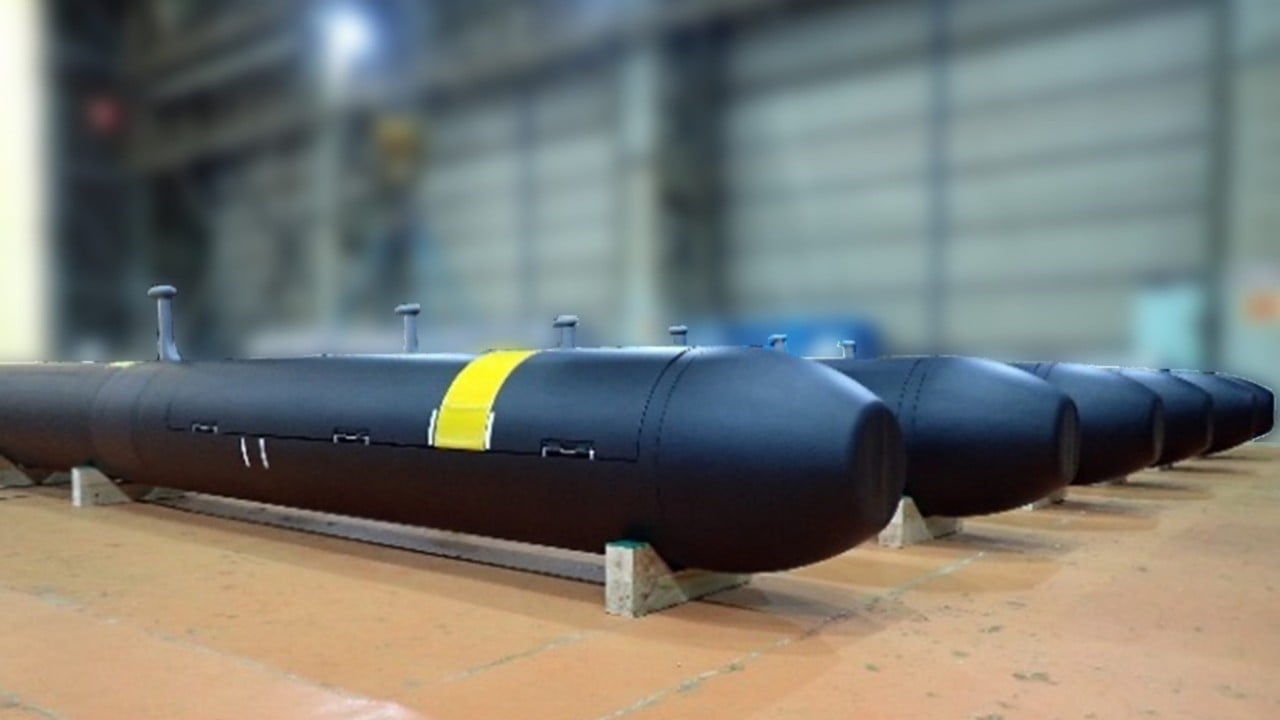
Sub-surface assets represent the ultimate strategic stealth domain, and Japan maintains one of the world's most sophisticated diesel-electric submarine fleets alongside advanced uncrewed underwater vehicle initiatives. The focus on underwater weapon systems stems from the need to contest maritime supply lines and choke points without risking high-value surface platforms.
Modernizing the undersea fleet involves three distinct technological vectors.
- AIP Integration: Advanced lithium-ion battery integration replaces older lead-acid systems, extending submerged endurance and reducing acoustic signatures below ambient ocean noise levels.
- Distributed Sensor Grids: Fixed and mobile hydrophone arrays deployed across strategic straits establish persistent undersea surveillance, feeding targeting data directly to strike platforms.
- Autonomous Effectors: Long-range underwater autonomous vehicles capable of intelligence, surveillance, reconnaissance, and minelaying operations reduce personnel exposure in contested littoral zones.
Controlling access through critical straits like Miyako, Tsushima, and宗谷 (Soya) requires a dense sub-surface denial network. By integrating undersea weapons with surface and air-launched strike options, Tokyo constructs a layered defense grid that forces opposing naval forces to expend disproportionate resources on mine clearance and antisubmarine warfare.
The Industrial and Alliance Bottlenecks
Translating strategic intent into hardware requires overcoming severe structural limitations within Japan’s defense industrial base. Decades of strict self-imposed arms export restrictions have stunted the scaling capacity of domestic defense contractors. Production lines operate on low-volume, high-cost batch models rather than mass-manufacturing scales.
The joint development frameworks established under agreements like the Global Combat Air Programme and bilateral technology-sharing pacts with the United States represent an effort to share research and development costs. However, supply chain vulnerabilities for critical raw materials, specialized computing components, and aerospace-grade composites create manufacturing bottlenecks. Scaling up hypersonic production requires precision machine tools and skilled engineering talent that cannot be rapidly expanded without institutional reform.
Interoperability with the United States military presents both an advantage and a friction point. While joint command-and-control frameworks enhance tactical coordination, reliance on shared data links and encrypted communication architectures requires continuous software integration to prevent electronic warfare vulnerabilities.
Resource Allocation and Economic Tradeoffs
National defense expenditure must be weighed against macroeconomic reality. Japan faces a shrinking workforce, an aging population, and a high sovereign debt-to-GDP ratio. Committing to a sustained increase in defense spending toward the two percent of GDP threshold forces difficult fiscal choices between social security obligations and hardware acquisition.
The economic model of high-end military procurement relies on predictable multi-year budgeting. Disruptions in public financing or political shifts regarding security policy can derail long-term research programs. The cost function of maintaining a dual-capability force structure—retaining traditional territorial defense while simultaneously developing long-range power projection systems—stretches fiscal capacity.
Strategic Realignment
Operationalizing these weapon systems requires a parallel evolution in command structures. The establishment of the Joint Operations Command aims to unify operational control across the Maritime, Ground, and Air Self-Defense Forces, replacing legacy stovepiped command relationships with a centralized authority capable of managing high-tempo, multi-domain operations.
To maximize the deterrent value of hypersonic and underwater capabilities, procurement must prioritize high-volume production runs over exquisite, low-quantity platforms. Tokyo should redirect capital away from legacy surface platforms toward distributed, highly survivable mobile launchers and autonomous sub-surface networks. This configuration maximizes adversary uncertainty while keeping long-term sustainment costs manageable within constrained fiscal projections.