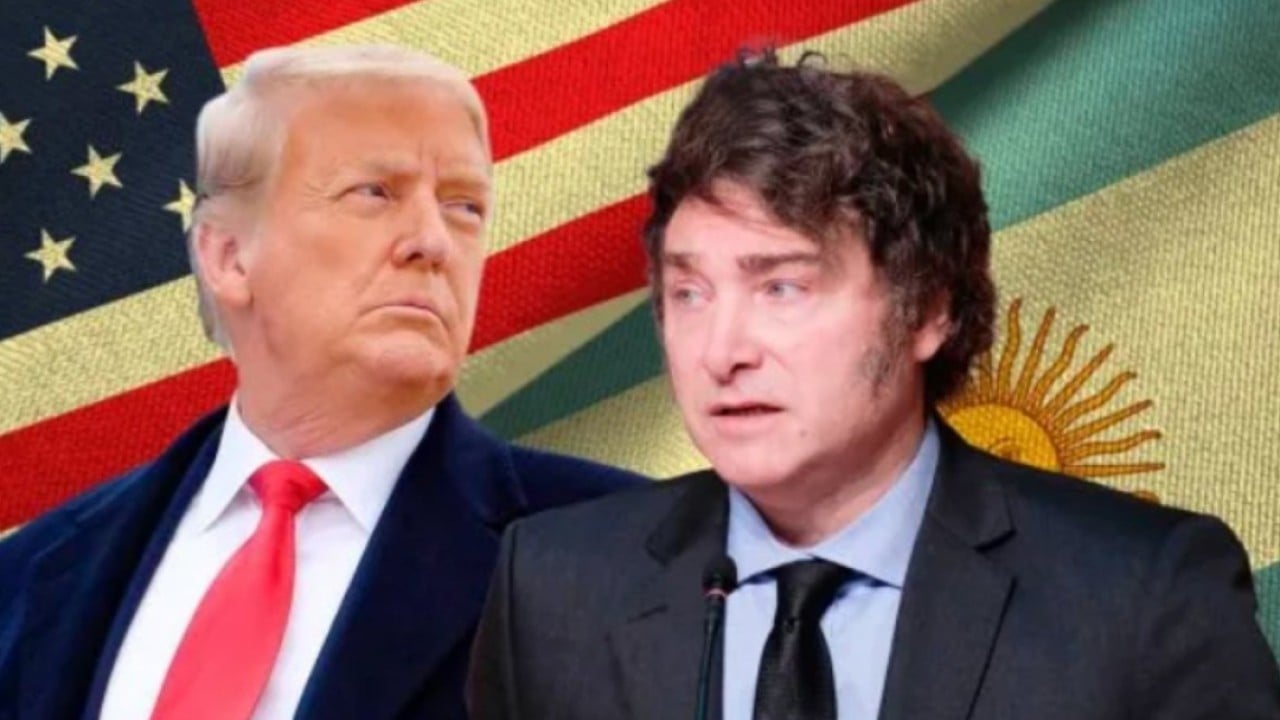
Javier Milei just took the biggest geopolitical gamble of his presidency. By effectively cutting off Argentina’s economic dependence on Beijing's multi-billion-dollar currency swap, Milei didn't just tweak his nation's balance sheet. He chose a side.
The radical libertarian president traded his country’s Chinese financial safety net for a massive, unprecedented $20 billion currency swap framework from Donald Trump’s Washington. This isn't a standard diplomatic shuffle. It's a high-stakes realignment that transforms South America into the frontline of a fresh economic cold war.
For years, Argentina survived on a financial lifeline controlled by the People’s Bank of China. When the country ran out of US dollars, Beijing was always there, offering billions in yuan to keep Buenos Aires from plunging into total default. Milei’s predecessors eagerly took the cash, giving China massive leverage over local infrastructure, space stations, and lithium mines.
Then came the ultimatum from Washington. The White House and Treasury Secretary Scott Bessent made it clear that US financial backing was contingent on a major concession: getting China out of Argentina.
The $20 Billion Dollar Swap That Changed Everything
Argentina’s economic reality is simple. The country is chronically short on hard currency. While Milei’s aggressive fiscal tightening and "chainsaw" budget cuts temporarily balanced the books, the central bank’s usable foreign exchange reserves remained dangerously low.
Out of roughly $33 billion in reported reserves, a staggering $13 billion sat in Chinese yuan. Argentina couldn't touch that money without explicit permission from Beijing. It was a golden cage.
Enter the Trump administration with an extraordinary proposition. The US Treasury arranged a $20 billion currency swap through the Exchange Stabilization Fund, purchasing Argentine pesos to stabilize the local currency. This was the first direct, large-scale financial rescue of a Latin American nation by Washington since the Clinton administration bailed out Mexico in 1995.
But American generosity always has a price. Washington didn't offer this cushion out of pure ideological affection for Milei. The real objective was containment. The US needed to break Beijing's financial stranglehold on the region, and Milei was more than willing to serve as the hammer.
Why the Chinese Lifeline Became an American Trap
To understand why Milei smashed the China pipeline, you have to look at the immense pressure build-up. US officials publicly stated that Milei committed to removing Chinese influence from strategic sectors. The message from the Trump team was blunt: you can't hold hands with Washington while keeping your pockets full of yuan.
For months, Milei tried to play a pragmatic game. He even extended the Chinese swap line to keep his economy afloat while negotiating with Western lenders. But Beijing’s money came with invisible strings, including potential extortion over infrastructure projects, lithium mining rights, and a mysterious deep-space tracking station in Patagonia.
When Washington put a real alternative on the table—backed by cold, hard US dollars instead of restricted yuan—the calculation shifted instantly. Milei chose to repay the US swap quickly, proving his economic credibility to Washington while signaling a complete pivot away from the East.
The Massive Risks Behind Milei's Gamble
This strategy isn't without serious peril. Milei’s domestic opponents are already screaming bloody murder. Former President Cristina Fernández de Kirchner and other left-wing leaders slammed the shift, calling the heavy-handed US involvement an act of blatant extortion against Argentine sovereignty.
There’s also major blowback brewing inside the United States. Prominent lawmakers, including Republican Senator Chuck Grassley, openly questioned why American taxpayers are backing an agricultural competitor. American farmers aren't thrilled that Washington is propping up an economy that exports massive amounts of soybeans, wheat, and beef to global markets.
Worse, the financial lifeline came with political turbulence. Trump openly conditioned the longevity of American support on political stability and the success of Milei’s party. When local markets realized US backing hung on political fortunes, Argentine stocks listed in New York temporarily tanked by over 8%. It proved that relying on Washington can be just as volatile as relying on Beijing.
What Happens Next for Argentina's Economy
The immediate crisis has passed, and Argentina successfully navigated the initial terms of the US arrangement, but the long-term work is just beginning. If you're tracking the economic reality in Buenos Aires, watch these specific developments.
First, monitor the central bank’s genuine dollar reserves. The true test of Milei’s independence isn't how many pesos Washington buys in a crunch, but whether Argentina can build organic, liquid dollar reserves through real private investment and commodity exports.
Second, look at the status of major infrastructure projects. China still holds massive stakes in Argentine dams and lithium mines. Squeezing Beijing out of the currency reserve is one thing; forcing Chinese state-owned enterprises out of physical mining sectors without triggering a massive international legal battle is a much higher hurdle.
Finally, watch the private capital markets. Milei’s ultimate goal isn't to swap a Chinese master for an American supervisor. He wants to normalize Argentina's economy enough to eliminate the need for emergency swaps altogether. Keep a close eye on sovereign bond yields and the "blue dollar" parallel exchange rate. If institutional investors don't step in with real, un-subsidized capital over the coming months, Milei might find that cutting off his Chinese lifeline left him entirely dependent on the political whims of Washington.