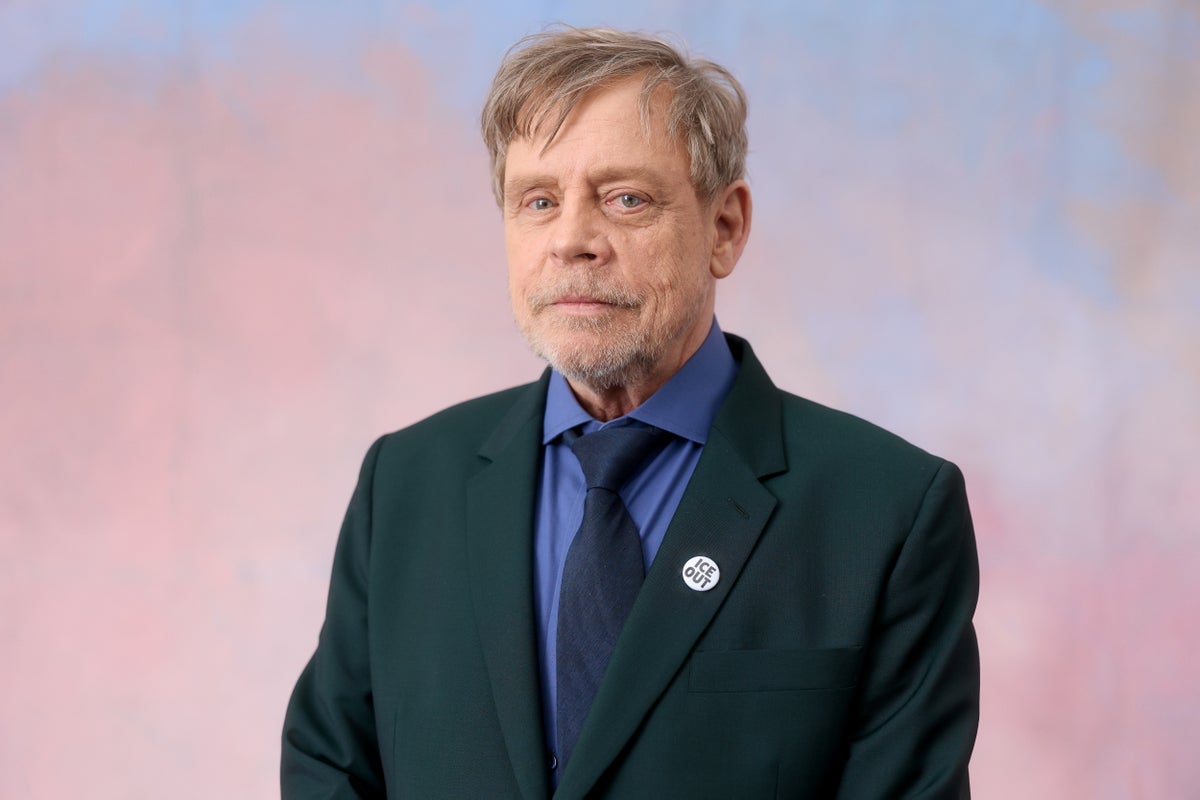
The blue light of a smartphone screen can be a cold thing at three in the morning. For Mark Hamill, a man whose face is etched into the collective childhood of half the planet, that glow often reflects a battle that never ended when the cameras stopped rolling. He isn’t just an actor; he is the custodian of a myth. And in the modern American Colosseum, myths are frequently dragged into the dirt.
The friction began with a digital shrug—a post on X, formerly Twitter, that didn't feature a lightsaber or a space station. Instead, it featured a photo of a grave. Specifically, it was a photo of a tombstone bearing the name of the current president, a visual metaphor for a political career Hamill clearly wished to see buried by the democratic process.
Within hours, the machinery of the White House roared to life. This wasn't a standard press release. It was a broadside. The administration branded the actor’s post "sick" and "disturbing," casting the man who once played the ultimate symbol of hope as a purveyor of ghoulish animosity.
The Weight of the Mask
To understand why a single post from a 70-year-old actor causes a shockwave in the West Wing, you have to look past the partisan bickering. You have to look at the burden of being a hero.
Imagine living your life as a walking Rorschach test. When Mark Hamill walks down the street, people don't see a grandfather or a voice actor with a penchant for dry wit. They see Luke Skywalker. They see the farm boy who looked at twin suns and dreamed of something better. This creates a strange, invisible tether between the performer and the public. We expect our heroes to be static. We want them to remain frozen in the amber of our nostalgia, forever virtuous, forever silent on the messy realities of tax codes and border policies.
But Hamill refused to stay in the amber.
His transition from cinematic icon to digital firebrand has been a slow burn. He uses his platform with the frantic energy of someone who feels the clock ticking. For him, the stakes aren't about "likes" or "engagement metrics." He views the political climate through the binary lens of the stories he helped tell: a struggle between a fragile republic and an encroaching empire.
When the White House hit back, they weren't just attacking a private citizen. They were attempting to dismantle the moral authority of the Jedi. By calling his post "sick," the administration sought to flip the script, turning the hero into the villain and the government into the victim of a "radical Hollywood elite."
A Graveyard of Nuance
The post in question—the image of the grave—is where the story gets murky. In the world of political satire, the "political funeral" is a trope as old as the printing press. It signifies the end of an era, the death of an ideology, or the retirement of a leader.
However, in a country where political violence has moved from the history books to the evening news, metaphors have lost their cushioning. One person's satire is another person's threat. This is the exhaustion of the modern era. We have lost the ability to distinguish between a rhetorical flourish and a literal call to arms.
The administration’s reaction was calculated. It tapped into a very real, very human fear: the idea that our neighbors, and even our idols, have become unrecognizable. By focusing on the "sickness" of the imagery, they bypassed the policy debates and went straight for the jugular of character. They painted Hamill not as a critic, but as a man who had lost his way in the dark.
Consider the irony of the situation. A government with the power of the military, the treasury, and the law at its disposal felt the need to punch down at an actor because his words carried a different kind of power—the power of cultural resonance. You can’t legislatively ban a feeling, but you can certainly try to shame the person provoking it.
The Invisible Stakes
Why does this matter to the person sitting at home, scrolling through their own feed, far removed from the glitz of Malibu or the marble halls of D.C.?
Because it signals the total collapse of the "neutral zone."
There was once a time when entertainment was a sanctuary. You could disagree with your neighbor about the marginal tax rate, but you both agreed that the guy who blew up the Death Star was a hero. That shared cultural vocabulary acted as a social glue. It kept us from drifting too far apart.
When the White House enters a public feud with a legendary actor over a social media post, that glue dissolves. The sanctuary is breached. Now, even your childhood memories are drafted into the culture war. You are forced to choose: do you stand with the administration you voted for, or the hero who shaped your imagination?
This isn't just about a "sick" post or a sharp-tongued press secretary. It is about the commodification of outrage. Every time a public figure speaks out, and every time a government entity strikes back, the divide deepens. We are being trained to see every interaction as a win-loss scenario.
The Man in the Middle
Mark Hamill likely knew what he was doing. He is a man who has spent decades navigating the heights of fame and the depths of industry indifference. He understands the mechanics of a headline. He knows that in the attention economy, subtlety is a death sentence.
But there is a loneliness in that position. To be the target of a White House "slam" is to be isolated from a segment of the very audience that made you a star. It is a sacrifice of the universal for the specific. He has traded the safety of the beloved icon for the scars of the partisan combatant.
The administration, too, operates from a place of perceived necessity. In their view, they are defending the dignity of the office against a tide of celebrity disrespect. They see themselves as the thin line between order and a "sick" culture of nihilism.
Both sides believe they are the ones holding the light.
The tragedy is that while the giants clashing in the clouds—the President’s men and the Galaxy’s hero—exchange blows, the people on the ground are left with the debris. We are left more cynical, more divided, and more certain that the "other side" is not just wrong, but fundamentally broken.
Beyond the Post
If you strip away the names—Hamill, Trump, the White House—what remains is a raw, human struggle over who gets to define the national mood. Is it the people who write the laws, or the people who tell the stories?
History suggests that stories usually win in the long run. Laws change with the seasons, but the narratives we tell ourselves about who we are and what we value tend to stick. This is why the administration’s reaction was so fierce. They aren't afraid of a tweet; they are afraid of the myth.
They are afraid that the farm boy from Tatooine might convince the public that the current administration is the empire they need to rebel against.
As the digital dust settles, Mark Hamill remains. He will likely post again. The White House will likely condemn him again. The cycle will continue, fueled by an endless supply of resentment and a desperate need for validation.
But somewhere, a kid is watching those old movies for the first time. They don't know about the Twitter feuds or the press room denunciations. They only see a young man standing against a sunset, looking for a way to make the world right. That image is more powerful than any political "slam" could ever hope to be.
The real grave in this story isn't the one in the photo. It’s the burial of our ability to see each other as human beings instead of political symbols. We are so busy arguing over the optics of the tombstone that we’ve forgotten how to live together in the light.
The screen goes dark. The blue glow fades. But the conflict remains, a silent war in the heart of a country that has forgotten how to tell a story where everyone gets to come home.