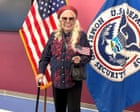
Joni Mitchell is officially an American citizen at age 82. She shared clips from her naturalization ceremony on Instagram in October 2026 with a quiet caption calling it a journey that began 62 years ago.
Honestly, that timing says everything. She didn't spend sixty-plus years in the United States just to finally get around to paperwork on a whim. She wanted a ballot. For years, one of the sharpest political voices in modern songwriting had to watch American elections from the sidelines because she held only a Canadian passport.
Why Joni Mitchell Waited So Long to Naturalize
Plenty of long-term immigrants live in the US for decades on green cards without ever taking the oath. Some figure residency already gives them enough stability. Others just hate bureaucracy.
For Mitchell, though, citizenship wasn't a casual checkbox. In a follow-up post on Instagram, she made her motive plain: she became a citizen so she could vote. At a 2024 show at the Hollywood Bowl after performing "Dog Eat Dog," she had already vented her frustration from the stage, telling the crowd she wished she could vote and calling herself one of those "lousy immigrants" from Canada.
That line stuck with people because it cut straight through polite celebrity diplomacy. When you've spent your whole adult life living, working, and paying taxes in a country—and watching its politics reshape the culture around you—being locked out of the voting booth gets old fast.
Did She Give Up Being Canadian
Not a chance. Mitchell emphasized that she didn't surrender her Canadian citizenship and never would, calling herself a proud "Canerican" alongside fellow Canadian icon Neil Young.
Both Canada and the United States permit dual citizenship, which means she keeps her Canadian roots intact while adding a US passport. Anyone who followed her appearance at the 2026 Juno Awards in Hamilton, Ontario, saw how deeply she still connects with home. There, after accepting a lifetime achievement honor alongside remarks from Prime Minister Mark Carney, she beamed for a sing-along of "Big Yellow Taxi" and spoke warmly about being back in Canada.
Holding both identities isn't a contradiction for artists who built their lives across the border. It's a reflection of how messy and real belonging actually is.
Six Decades From Folk Clubs to California
Mitchell's American story didn't start in a glitzy Los Angeles studio. Born Roberta Joan Anderson in Fort Macleod, Alberta, in 1943, she cut her teeth in folk rooms in Saskatoon, Calgary, and Toronto before heading south in 1965 with her then-husband, folk singer Chuck Mitchell.
Early stops in Detroit and New York led to California, where she became synonymous with Laurel Canyon and later settled in Southern California, making her home in Santa Barbara. Over the decades, her catalog—from the raw confessions of Blue to the jazz-inflected sweep of Court and Spark—became woven into the fabric of American music, earning her 11 Grammys, five Juno Awards, and a spot in the Rock and Roll Hall of Fame.
Health Battles and a Late-Career Second Act
You can't talk about Mitchell's recent milestones without acknowledging what she survived. Following her 2007 studio album Shine, she suffered a brain aneurysm in 2015 that required a long, grueling recovery.
For a while, many fans wondered if we'd ever see her perform publicly again. Then came the surprise live appearances, the emotional return to the stage, and renewed cultural focus—including reports of a Cameron Crowe-directed biopic with Meryl Streep linked to the role. Watching an 82-year-old artist who fought back from a life-threatening medical crisis step up to take the citizenship oath gives the moment a weight pure trivia can't touch.
What People Get Wrong About Dual Citizenship and Late Naturalization
Whenever a high-profile expat naturalizes late in life, a few myths pop up right away. Let's clear them up.
- Myth one: Becoming a US citizen erases your original nationality. False. Neither the US nor Canada forces dual citizens to choose one over the other when naturalizing normally.
- Myth two: Long-term green card holders already have the exact same political rights. Not even close. Only US citizens can vote in federal elections or hold a US passport.
- Myth three: You have to live in the US your entire life to care about its elections. Mitchell lived there for over six decades, yet only crossed the finish line to citizenship when the urge to cast a ballot outweighed everything else.
Why the News Sparked Mixed Reactions
Not everyone cheered at the same volume. While plenty of fans and fellow expats celebrated the milestone online, some critics questioned the optics given tense US-Canada relations and Mitchell's outspoken anti-Trump remarks.
That pushback highlights a simple truth about public figures: even a personal legal step becomes a Rorschach test. For Mitchell, though, the reasoning stayed straightforward—she wanted a say at the polls without giving up who she is.
Practical Next Steps If You're Navigating Dual Citizenship or Expat Roots
If Mitchell's story nudges you to look at your own cross-border status—or helps you make sense of how expat artists bridge two worlds—a few concrete steps actually matter.
- Check eligibility and dual-citizenship rules early. If you're a permanent resident weighing naturalization, review current USCIS residency and civics requirements alongside your home country's rules on holding dual nationality so you know every right and obligation upfront.
- Factor in tax and reporting rules before filing. Cross-border citizenship and long-term residency can affect tax filing and foreign asset reporting, so talking to a qualified cross-border CPA beats guessing from social media threads.
- Explore Mitchell's catalog with the timeline in mind. Revisit early folk tracks alongside Blue and Court and Spark while keeping in mind how her perspective shifted from a young Canadian newcomer in 1965 to a newly minted American voter in 2026.