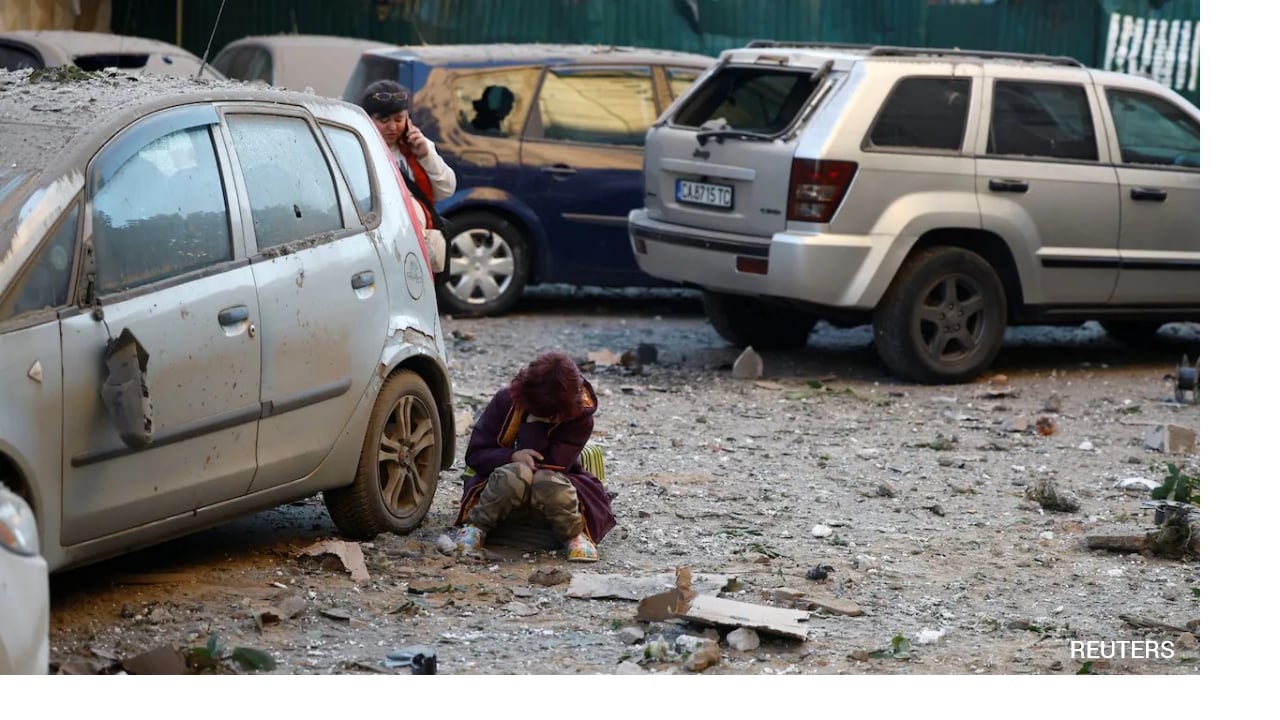
Waking up to the sound of windows shattering and walls buckling isn't something you get used to. On Tuesday morning, June 2, 2026, thousands of families in Kyiv and across Ukraine experienced exactly that during one of the most intense aerial bombardments in months. The sheer scale of the coordinated drone and missile strike left at least 22 people dead nationwide, with 18 initial fatalities reported across the hardest-hit civilian hubs.
For the people living through it, the experience felt less like a modern military operation and more like a localized apocalypse. Smoke blanketed entire city blocks, blinding residents as they tried to flee crumbling apartment buildings in pitch darkness. While headlines often focus on the political fallout or the strategic calculations of the Kremlin, the real story belongs to the civilians trapped in the middle of an intensifying war of attrition.
Inside the Blast Zone
The assault began in the early hours of Tuesday, catching most people in their beds. Russia deployed an unprecedented mix of hardware, forcing Ukraine's air defense networks to scramble. According to reports from the Ukrainian Air Force, the attack included 33 ballistic missiles and eight Zircon hypersonic missiles, alongside over 600 drones tracking across multiple regions.
In Kyiv, the consequences of those launches materialized as massive explosions that shook high-rise buildings to their foundations. Looking out at the twisted steel and burning vehicles, local resident Olha Mudra described the immediate aftermath while standing with her six-year-old daughter, Natalia. Covered in dust and soot, she recalled the total confusion of the strike.
"There was smoke everywhere, you couldn't see anything," Mudra said. "We couldn't understand what was happening—some kind of apocalypse?"
Without electricity, families resorted to using small flashlights to navigate corridors filled with falling plaster and shattered glass. In the capital alone, the strike damaged nine high-rise residential buildings, a clinic, a kindergarten, and corporate offices. Debris rained down across eight separate districts, turning everyday neighborhoods into active recovery zones.
Another resident, 37-year-old Iryna Salikova, spent her night huddled in a bathtub with her three-year-old daughter. It's a standard survival tactic in Ukrainian cities, relying on the "two walls rule" to shield against flying glass. A cobblestone, dislodged by a nearby blast, smashed straight through her child's bedroom window. They survived unharmed, but the psychological toll is cumulative.
The Human Cost in Dnipro and Beyond
While the capital faced intense fire, the highest concentration of casualties occurred in the southeastern city of Dnipro. At least 12 people died in the initial waves there, with the numbers later climbing as rescue crews dug through the wreckage of collapsed residential infrastructure. Emergency workers pulled the bodies of a three-year-old child, a mother, and her eight-year-old son from the rubble of one apartment block.
The strikes also reached into the northeastern Kharkiv region and western Ukraine, knocking out power to roughly 140,000 residents through targeted hits on energy infrastructure. In the aftermath of the explosions, more than 40,000 people crowded into the Kyiv metro system. It was the largest single gathering in the subway shelters in recent years, with platforms packed tight with mattresses, tents, and family pets.
The Reality Behind the New Paradigm Shift
Moscow claimed the massive strike targeted ten military production facilities and defense industry hubs. They framed the operation as a response to a Ukrainian drone attack on a dormitory in Russian-held Luhansk. However, the physical reality on the ground showed a different story, with residential districts bearing the brunt of the kinetic damage.
The timing of this attack isn't accidental. It marks the third major aerial assault on Kyiv in less than a month, signaling an intentional escalation in pressure. By combining slow-moving drones with high-velocity ballistic and hypersonic missiles, the offensive explicitly aims to overwhelm and deplete Ukraine's Western-supplied air defense systems.
President Volodymyr Zelenskyy immediately used the aftermath of the attacks to pressure international allies, specifically targeting policymakers in Washington. He pointed out that Russia fired a total of 73 missiles and hundreds of drones in a single night, warning that without a steady replenishment of Patriot missile interceptors, defensive lines will inevitably break.
The strategy behind these frequent, massive bombardments is transparent. If you exhaust the interceptor stock, the skies open up. For the students, parents, and laborers who have to head underground every single night, the conflict is turning into a race against supply chains.
Moving Forward in a Constant State of Alert
If you're looking at how to support or understand the situation on the ground right now, the immediate focus is on humanitarian relief and structural stabilization. Local emergency crews are currently clearing tons of concrete debris from residential streets, while utility companies work to restore localized power grids.
For observers wanting to monitor the geopolitical and humanitarian impact of these intensifying strikes, keep an eye on these specific developments:
- Track the upcoming NATO and US defense allocation meetings to see if the requested Patriot interceptors are fast-tracked to Kyiv.
- Monitor updates from verified humanitarian organizations like the Ukrainian State Emergency Service and local mutual aid funds providing emergency housing to displaced families.
- Watch the energy sector reports from providers like DTEK to see how quickly grid infrastructure can recover before the seasonal shifts increase energy demands.
- Pay attention to border security posture in neighboring countries like Poland, which scrambled military jets during the strikes to secure its own airspace against stray projectiles.