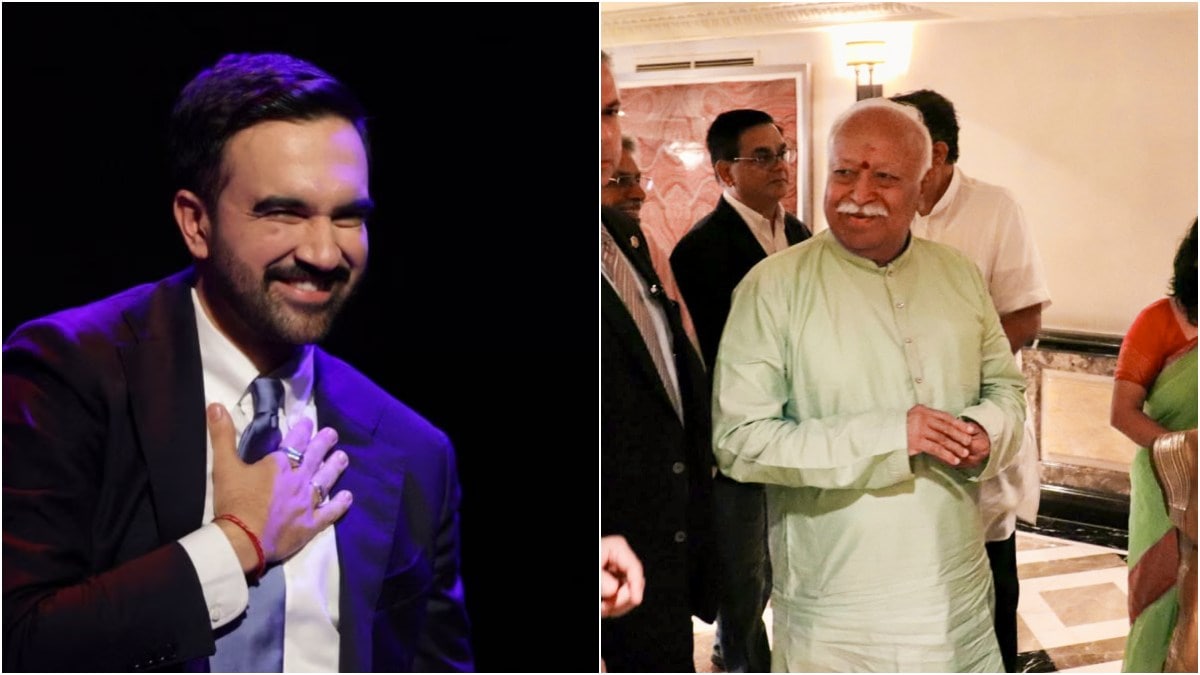
Municipal governance often collides with the hard boundaries of private property rights and constitutional protections, creating a severe operational friction point for executive leadership. When New York City Mayor Zohran Mamdani publicly addressed the planned appearance of Rashtriya Swayamsevak Sangh chief Mohan Bhagwat at Madison Square Garden, his response laid bare the precise limits of municipal jurisdiction over private assembly. Civil rights groups and interfaith coalitions demanding an administrative ban fundamentally misunderstood the legal mechanics governing private venues in the United States. This analysis deconstructs the intersection of municipal power, property ownership, and constitutional law that dictates why executive opposition cannot translate into a cancellation order.
The Dual Architecture of Venue Access
To understand why a mayor cannot unilaterally stop a scheduled gathering at an arena like Madison Square Garden, one must examine the legal bifurcation between public space and private commercial property.
- Public Fora and Municipal Control: Public sidewalks, municipal parks, and city-owned plazas fall under the regulatory purview of local government. For these locations, city agencies issue permits, dictate crowd management parameters, and maintain discretion based on public safety, traffic flow, and infrastructure capacity.
- Private Commercial Enclosures: Madison Square Garden operates as a privately owned commercial entertainment venue. The entity controlling the lease or ownership contracts directly with organizers for space rental.
When an organization rents a private arena, the transaction constitutes a commercial contract between private parties. Municipal executives possess no statutory authority to void private rental agreements based purely on the political ideology, organizational affiliation, or controversial nature of the invited speaker. Attempting to do so triggers immediate constitutional challenges under contract law and due process guarantees.
The Constitutional Ceiling on Executive Power
Even if a municipal administration attempts to invoke emergency powers to block a controversial foreign or domestic figure, it runs squarely into the First Amendment of the United States Constitution. While the First Amendment restrains government censorship, it also protects freedom of assembly and speech within private rented venues from state-sponsored suppression.
- Viewpoint Discrimination: Courts strictly prohibit state actors from engaging in viewpoint discrimination. If a mayor cancels a rental agreement because the speaker represents an ideology the executive opposes, the municipality immediately exposes itself to federal civil rights litigation.
- The State Action Doctrine: Madison Square Garden is not a state actor merely because it operates within city limits or relies on municipal services like police protection. Consequently, the venue's decisions regarding private bookings are shielded from direct municipal command.
The friction arises because civil rights organizations often conflate moral opposition with administrative leverage. Demonstrating outside City Hall to pressure elected officials targets an office with zero legal jurisdiction over the venue's booking calendar. The municipal executive is structurally locked out of the decision-making loop.
The Operational Mechanics of Protest Versus Prohibition
When political leaders face intense pressure from constituent groups—such as the Indian American Muslim Council, Hindus for Human Rights, and the Interfaith Center of New York urging cancellation—their operational choices narrow down to two distinct categories:
- Rhetorical Opposition: Articulating deep moral and political disagreement with an organization's foundational platform while explicitly acknowledging legal constraints. This maintains the executive's alignment with aggrieved communities without violating constitutional bounds.
- Resource Allocation for Public Safety: Shifting focus from venue prohibition to perimeter management. Even though the event occurs inside a private structure, the surrounding public infrastructure requires municipal oversight to manage counter-protests, traffic disruptions, and security threats.
The cost function of attempting an illegal ban involves catastrophic legal liability, millions of dollars in potential settlement payouts, and guaranteed judicial defeat. Conversely, the cost of acknowledging jurisdictional limits lies entirely in managing the political dissatisfaction of advocacy groups who expect executive fiat where none is legally permitted.
Strategic Execution for Municipal Leadership
When municipal authorities confront high-stakes geopolitical or ideological flashpoints hosted on private grounds, standard political playbooks fail. Executive leadership must decouple personal or ideological condemnation from official regulatory action.
- Establish an immediate, transparent boundary between city property and private venue jurisdiction during public briefings.
- Redirect activist pressure away from impossible administrative bans and toward lawful, protected public assemblies or counter-demonstrations outside the venue's perimeter.
- Maintain strict neutrality in municipal service deployment, ensuring that public safety resources protect both the private event attendees and the constitutional right of protesters to voice dissent.
Municipal power is not infinite; it is bounded by statutory limits and constitutional architecture. Recognizing these boundaries prevents costly governance errors and preserves the rule of law even when the underlying events spark profound societal division.