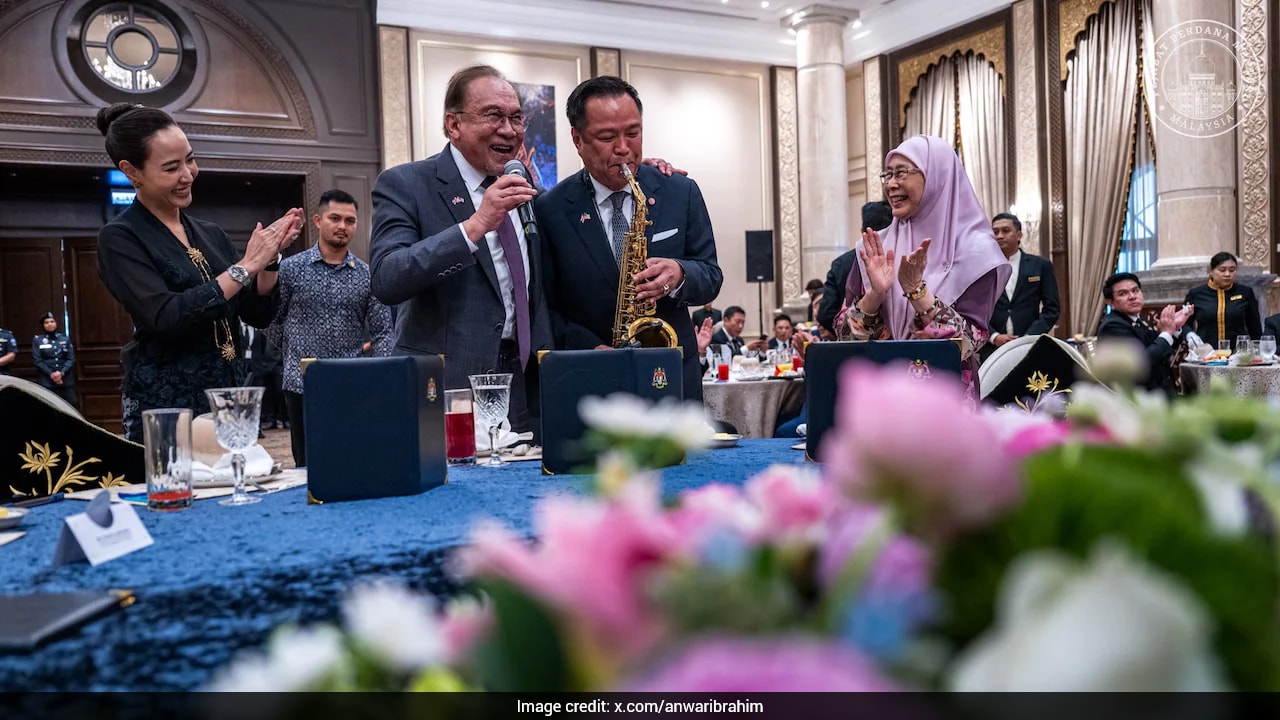
The media wants you to look at a video of two world leaders sharing a casual musical moment and feel warm inside. They want you to believe that when Thai Prime Minister Paetongtarn Shinawatra plays the saxophone and Malaysian Prime Minister Anwar Ibrahim belts out Frank Sinatra's "My Way" over an official lunch, we are witnessing the human side of statecraft.
They are wrong. Dead wrong.
What the mainstream press treats as a charming, viral moment of cross-border camaraderie is actually a calculated, high-stakes exercise in soft-power distraction. In international relations, when the instruments come out, the real policy discussions have usually ground to a halt. It is the ultimate political smoke screen.
The Myth of the Relatable Leader
Every time a politician picks up a guitar, steps up to a karaoke machine, or cooks a traditional dish on camera, the public falls for the exact same trap. We mistake accessibility for competence.
This isn't an accident; it is a deliberate strategy designed to bypass critical media scrutiny.
When you analyze geopolitical negotiations, there is a direct inverse correlation between the amount of public-facing performance art and the substance of the actual bilateral agreements being signed. True diplomatic breakthroughs—the kind that reshape trade tariffs, settle long-standing maritime border disputes, or establish intelligence-sharing frameworks—happen in windowless rooms behind closed doors. They are boring. They involve spreadsheets, legal counsel, and grueling hours of fine-print revision.
Music at a state lunch is the diplomatic equivalent of a magician's misdirection. While the internet is busy debating whether a prime minister hit the high notes on a Sinatra classic, nobody is asking why the joint communique completely omitted updates on regional security or supply chain dependencies.
The Mechanics of Manufactured Authenticity
Let us break down how this specific brand of political theater operates. True authenticity cannot be scheduled between a bilateral meeting and a joint press conference.
- The Curated Vulnerability: Performing a song requires a willingness to look foolish. When a leader does it voluntarily, it creates an illusion of vulnerability. The audience thinks, “They are just like us.” But a truly vulnerable leader does not have a team of advance logistics officers vetting the acoustic setup three days prior.
- The De-escalation Deflection: If two nations have friction over cross-border migration, economic protectionism, or regional hegemony, a public performance serves as an artificial reset button. It signals to markets and voters that everything is fine, even if the underlying systemic issues remain entirely unresolved.
- The Disarming Affect: It forces the opposing diplomatic delegation into a polite corner. You cannot aggressively press an advantage on a trade deficit thirty minutes after you just clapped along to the host's saxophone solo. It is a psychological policing mechanism disguised as hospitality.
I have spent years analyzing how political communications teams structure these events. The goal is never cultural exchange. The goal is asset protection. A viral video of a singing prime minister acts as an insurance policy against the next week's bad economic data.
The High Cost of Soft Power Subsidies
Supporters of these musical displays argue that they build "soft power"—that intangible cultural capital that Joseph Nye defined as the ability to affect others to get the outcomes one wants through attraction rather than coercion.
But soft power is expensive, and its return on investment is notoriously difficult to quantify.
Imagine a scenario where a state spends millions of dollars organizing high-profile cultural summits, complete with musical performances and televised galas, while its core infrastructure crumbles. The soft power gained from a viral TikTok video does not fix a broken supply chain. It does not lower the cost of doing business. It does not provide regulatory certainty for foreign investors.
In fact, over-indexing on soft-power stunts can actively damage a nation's credibility with serious institutional investors. Sovereign wealth funds and multinational corporations do not allocate capital based on how well a head of state can carry a tune. They look at contract enforcement, intellectual property protections, and fiscal policy. When a government relies heavily on cultural optics, it often signals a lack of tangible, structural progress.
Stop Asking if They Played Well
The public always asks the wrong questions after these events. They ask: “Was the Thai PM actually playing that saxophone?” or “Does the Malaysian PM have a good singing voice?”
The question you should be asking is: What specific policy failure is this performance trying to cover up?
If you look closely at the timing of these cultural displays, they almost always coincide with domestic political pressure or stagnant economic indicators. It is the oldest play in the book: when you cannot give the people policy victories, give them a show.
The next time you see a video of world leaders treating a diplomatic summit like an open-mic night at a local pub, do not share it. Do not like it. Treat it with the same skepticism you would reserve for a corporate PR stunt during a product recall.
Statecraft is not a talent show. It is a cold, calculated game of national interest. The moment we start judging our leaders by their stage presence rather than their policy metrics is the moment we concede that governance is nothing more than content creation.
Turn off the music. Read the trade text.