Everyone is arguing about whether Katie Zacharia had the right to call herself a lawyer. They are missing the actual wreck.
A Juris Doctor is a degree, not a license to practice law. Passing the bar exam is what grants admission to practice. In the United States, state bars regulate who can legally hold themselves out as an attorney, and unauthorized practice or misrepresentation of bar admission is a serious regulatory violation rather than a casual résumé embellishment. When watchdogs like the Campaign for Accountability petitioned the State Bar of California over Zacharia’s legal claims after she sat for the California bar in 2011 without passing, pundits pounced. The story became a tidy morality play: credential inflation meets political loyalty.
That framing is lazy. It lets everyone off the hook.
It lets the White House off the hook for hiring someone whose readiness for the James S. Brady Press Briefing Room collapsed in under a week. It lets media critics off the hook for treating a five-day tenure—the shortest stint as White House press secretary in American history, lasting from October 12 to October 16, 2026—as if a bar complaint were the sole reason the trapdoor opened. And it lets communications teams everywhere believe that the real danger in high-stakes media roles is an exaggerated title rather than a mismatch between performer, message discipline, and institutional mechanics.
The Credential Distraction
Watch how fast a credential story hijacks a real operational failure.
When a high-profile appointee gets tangled in a dispute over legal titles, commentary rushes toward courtroom metaphors and bar rules. Did she cross a statutory line? Did a bio overstate her standing? Those are legitimate compliance questions for bar regulators to examine. Yet treating the bar controversy as the central diagnosis mistakes a symptom for the underlying pathology.
A press secretary does not draft appellate briefs in the briefing room. A press secretary manages information flow, policy boundaries, interagency alignment, and hostile or skeptical questioning under live cameras. Having a law degree—Zacharia earned her J.D. from Pepperdine University’s Caruso School of Law after her undergraduate degree there—can sharpen analytical habits, just as prior stints in conservative advocacy, brief public affairs work at the Department of Homeland Security, and communications advisory work with Trump Media & Technology Group might signal ideological alignment.
None of those labels substitute for command of the podium.
In my years watching crisis communications and high-pressure public affairs, I have seen organizations burn millions of dollars and months of credibility on polished bios that fell apart the moment unscripted pressure hit. People fall in love with titles—counsel, strategist, advisor, spokesperson—because titles look like proof of competence on paper. Paper does not talk back when thirty reporters press you on policy contradictions, legal exposure, or shifting executive narratives.
What Actually Broke in Five Days
Look at the sequence rather than the headlines.
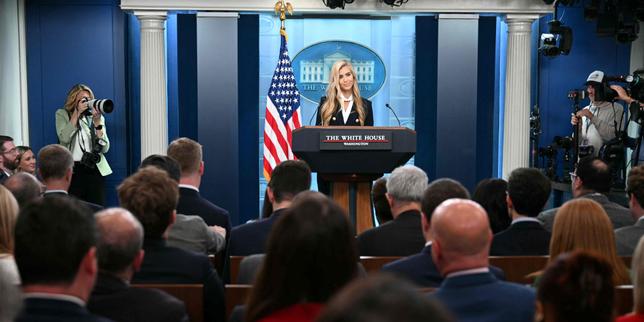
Named in early October 2026, Zacharia stepped into the White House press secretary job amid intense scrutiny and high expectations. Her sole formal briefing on October 13 lasted roughly fifteen minutes, leaning heavily on prepared remarks and expressions of gratitude before drawing sharp pushback across the political spectrum and media commentary. Two days later, the bar complaint put her legal background under a magnifying glass. By October 16, she was out—surpassing even Anthony Scaramucci’s famously brief eleven-day run as White House communications director in 2017.
A press room doesn't punish a spokesperson merely for an imperfect bio; it punishes every gap between rehearsed loyalty and real-time command.
Consider the structural mechanics of the job. As scholars and practitioners of presidential communications—figures like Martha Joynt Kumar, who has spent decades studying the White House press corps and press office operations—have long documented, the press secretary sits at a brutal intersection. The role requires serving the president’s voice while maintaining enough factual precision and institutional footing that reporters, agencies, and the public can parse what is official policy, what is spin, and what is simply false.
When a spokesperson treats the podium primarily as a stage for loyalty or partisan grievance, two things happen almost immediately. First, reporters stop asking routine follow-ups and start testing every premise and every claim. Second, internal allies start distancing themselves the instant external pressure rises.
The Real Question People Should Be Asking
Most coverage frames this episode around one question: Did Katie Zacharia mislead people about being a lawyer?
That is the wrong question if you want to understand how modern political communications actually fails.
The better question is: Why do modern political operations keep putting under-tested loyalists into high-friction institutional seats without basic stress-testing, and then act shocked when the ceiling caves in?
Think about "People Also Ask" style curiosity around a story like this:
- Why was Katie Zacharia fired after five days? Because political survival in a high-visibility communications post depends on instant credibility under fire, not just ideological fervor or proximity to the boss.
- Does a White House press secretary need to be a licensed lawyer? No. Many effective press secretaries were journalists, political operatives, or policy aides rather than practicing attorneys. The issue isn't lacking a bar card; it is claiming or implying credentials you do not hold while simultaneously struggling at the podium.
- Why does a credential controversy hurt so fast in Washington? Because credibility is compound interest in reverse. Once one factual or credential claim looks shaky, every subsequent word from that podium faces a steeper discount.
Imagine a scenario where a communications director hires a charismatic partisan commentator with zero sustained briefing-room reps to face daily adversarial questioning on complex legal and policy matters. Even without a bar complaint, the first week exposes every blind spot: thin command of interagency details, defensive framing, and zero margin for error. Add a public dispute over legal credentials mid-week, and what could have been a rough learning curve turns into an immediate exit.
Why Loyalty Alone Is a Terrible Hedge
There is a persistent myth in political media—and in corporate crisis management, too—that fierce loyalty can outmuscle institutional preparation.
It rarely does under sustained scrutiny. Loyalty gets you hired, especially in movements or executives that prize personal alignment and media combativeness. Loyalty does not give you rapid recall of statutory authority, regulatory timelines, or policy nuances when a correspondent corners you at the microphones.
Even worse, over-indexing on loyalty creates a blind spot for the principal as well. If an inner circle rewards applause and television toughness over candid red-teaming, nobody tells a nominee before day one that fifteen minutes of thanking the boss and reading talking points will not satisfy a room built to probe every seam.
The Downside of Being Contrarian Here
Let’s be honest about the risk of arguing that the bar dispute is a distraction.
Downplaying a legal-title controversy can sound like excusing carelessness or misrepresentation. In regulated professions like law, words carry specific legal weight. Calling yourself a lawyer without passing a state bar exam is not a harmless quirk; state bars exist precisely to protect the public from unqualified legal representation, and regulators have every reason to enforce clear boundaries.
There is also a second risk: over-correcting toward credentialism. Treating an elite law degree or a bar number as a guarantee of communications brilliance is just as flawed as ignoring bar rules. Plenty of licensed lawyers freeze in front of a camera, and plenty of sharp communicators never set foot in law school.
The contrarian position isn't "credentials don't matter." It's "credentials are table stakes for accuracy, not a substitute for operational readiness."
What High-Stakes Teams Should Do Instead
If you run communications for an executive, a brand, or a campaign, stop building your bench around résumés that sound impressive on a press release. Build around pressure tests that mimic reality.
- Audit every bio line before the announcement goes out. Strip out ambiguous phrasing like "legal background" or "attorney" if someone holds a J.D. without bar admission. Never let an avoidable compliance headache hand critics a free sledgehammer during week one.
- Run adversarial, unscripted mock briefings. Put candidates in front of people who actually know the policy pitfalls and will interrupt, pivot, and press for specifics. If a surrogate relies on prepared remarks and partisan slogans in practice, they will do the exact same thing on camera.
- Separate television cheerleading from institutional briefing. Being great on friendly cable segments or social media feeds trains different muscles than holding a room of skeptical reporters. Treat them as distinct skill sets.
- Build a deep policy bench behind the microphone. No spokesperson knows everything on day one. What saves them is disciplined coordination with legal, agency, and policy leads so they know what to confirm, what to defer, and what never to invent.
The bar complaint gave commentators an easy headline to chew on. The five-day implosion showed what happens when a press operation confuses loyalty and a law degree with being ready for the hardest room in politics.


