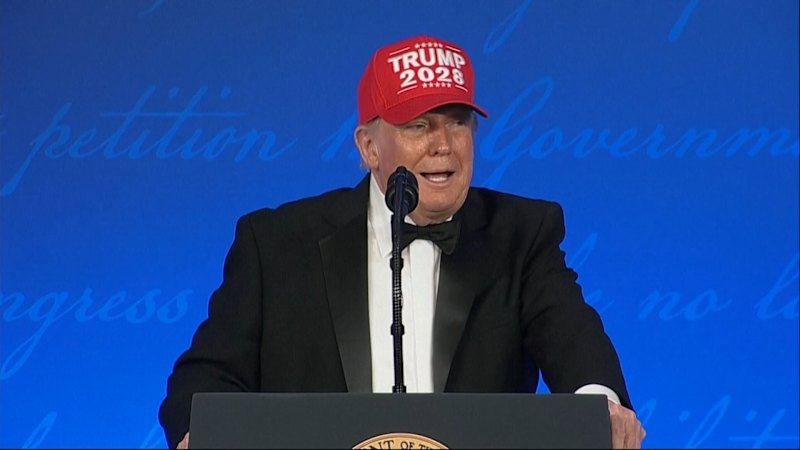
If you’ve been paying attention to the news lately, you’ve probably heard Donald Trump mentioning a run for 2028. It’s become a recurring bit, a punchline at rallies, and a source of genuine confusion for some observers. Let's be clear about what’s actually happening: Donald Trump is not eligible to run for a third term in 2028.
The Constitution is pretty straightforward here. The 22nd Amendment limits a president to two terms. Since Trump won his non-consecutive second term in 2024, his time in the White House legally ends at noon on January 20, 2029. When he jokes about running again or "would love" to do it, he’s not launching a legitimate campaign. He’s leaning into his classic rhetorical style—using inflammatory remarks to drive headlines and keep his base energized.
Why the 2028 Talk Won't Go Away
You might wonder why he keeps bringing it up if it's legally impossible. It’s about control and attention. By floating the idea of a third term, Trump occupies the center of the political conversation. It forces every reporter, pundit, and rival to respond to his hypothetical future instead of focusing on his current legislative agenda.
Honestly, it’s a brilliant distraction technique. When the news cycle is dominated by his latest "would love to do it" comment, it effectively pushes other stories—like rising health care costs or the 2026 midterm stakes—to the back burner. He’s managed to keep the "Trump 2028" narrative alive through merchandise, offhand remarks on Air Force One, and stage banter that gets the crowd chanting.
The Legal Reality
Legal scholars don't see a "loophole" here. The 22nd Amendment is about as firm as constitutional law gets. To actually serve a third term, the entire amendment would need to be repealed. That process requires a two-thirds vote in both the House and the Senate, followed by ratification by three-fourths of the states, or a constitutional convention called by two-thirds of state legislatures.
Basically, the political lift required to make that happen is non-existent. Even with a Republican majority in both chambers, the internal party friction and the sheer scale of such a constitutional overhaul make it a fantasy. Anyone telling you there’s a secret pathway to a third term is either trying to sell you something or fundamentally misunderstands the American political system.
What Actually Matters in 2026
While the internet obsesses over hypothetical 2028 scenarios, the real political battleground is right now. We’re in the middle of a 2026 cycle that will define the rest of Trump’s second term. If Republicans lose their narrow hold on either the House or the Senate, the legislative engine of the current administration will grind to a halt.
Pay attention to these factors instead of the third-term noise:
- Midterm Vulnerabilities: The GOP’s control of the Senate is thin. The upcoming elections in states like Georgia and Michigan are going to determine whether the administration can continue to push its agenda or if it gets bogged down in endless oversight hearings.
- Economic Pressure: Rising costs and the Supreme Court’s stance on tariff policies are the variables that will actually impact voters in 2028.
- Succession Planning: Trump has repeatedly said he wants to see a "great Republican" carry his legacy forward. Watch who he endorses or brings into his inner circle. That tells you more about the future of the party than any joke about a third term ever could.
Don't fall for the theater. The next time you see a headline about a "Trump 2028 bid," remember that it’s political performance art, not a policy platform. The real story isn't who is running in 2028; it’s how the party is positioning itself to win without him on the ballot for the first time in over a decade.
If you want to stay informed, track the legislative performance of the current administration and the shifting dynamics in the Senate races. Ignore the hats and the chants. Watch the floor votes and the state-level organizing. That’s where the actual power resides.