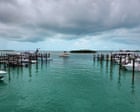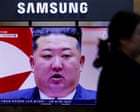
Kim Jong Un walked across the New Yalu River Bridge into Dandong on October 24, 2026, just nine days after the four-lane crossing officially opened to traffic. On paper, it looked like a polite diplomatic milestone. A ribbon cut, a senior Chinese official offering a send-off, a factory tour, and state media on both sides praising decades of neighborly friendship.
Don't fall for the photo op.
For more than a decade, this nearly two-mile span sat like a punchline over the Yalu River. China finished its side in 2014. North Korea dragged its feet for years while relations chilled over Beijing's backing of United Nations sanctions. Watching Kim finally roll across in late October isn't just a story about a highway opening between Dandong and Sinuiju. It's a story about leverage, rival alliances, and why concrete alone doesn't fix a broken trade model.
Why This Bridge Took Over a Decade to Open
When people hear about a major border bridge taking twelve years to put into real service, they usually assume a budget fight or a flood damaged the pilings. Neither was the main holdup here. Politics stalled the concrete long before engineering ever did.
Construction began back in 2011, designed to link China's Dandong New Zone with Sinuiju across the Yalu River. Beijing finished its stretch around 2014, betting on smoother cross-border commerce and stronger regional influence. Then Pyongyang's nuclear tests escalated, UN sanctions tightened, and diplomatic friction turned a promised corridor into a half-finished monument. By 2021, much of the North Korean side was structurally in place, yet customs and border operations lingered before formal opening arrived on October 15, 2026.
That delay tells you everything you need to know about how Pyongyang treats infrastructure. A bridge isn't neutral to North Korea's leadership. Opening a direct road link means inviting scrutiny, signaling political warmth, and managing dependence on a giant neighbor that has historically used trade as both lifeline and leash.
The Gap Between Roadway and Reality
Looking at the specs, the New Yalu River Bridge sounds impressive on paper: roughly 3 kilometers (1.9 miles) long, four lanes wide, built to carry heavier road freight than the aging Sino-Korean Friendship Bridge nearby. During the opening and late-September trial runs, trucks bearing national flags rolled across, and Chinese Premier Li Qiang spoke by video link about entering a new stage of ties.
Still, a wider road doesn't magically erase sanctions or North Korea's internal bottlenecks. Even after international passenger trains and flights between China and North Korea resumed in March 2026, Chinese group tourism had not yet normalized. Tourists can stand near Dandong taking photos of the span, wondering when things will truly open up, while customs rules and geopolitical calculations keep the crossing tightly controlled.
Why Kim Crossed Right Now
Timing in Pyongyang is rarely accidental. Kim Jong Un made his trip to Dandong on October 24, 2026—his first reported visit to China in over a year—accompanied on the Chinese side by Wang Huning, chairman of the Chinese People's Political Consultative Conference National Committee. Together, they toured a local car factory before Wang saw Kim off at the bridge.
To understand why that moment mattered, look at what had been happening just weeks earlier. North Korea had just opened a road bridge to Russia—the Yakov Novichenko Bridge—following deep military and economic alignment with Moscow tied to thousands of North Korean troops and weapons sent to support Vladimir Putin's war in Ukraine. That tilt toward Russia reportedly made Beijing uneasy, raising questions about whether Moscow was encroaching on China's traditional sphere of influence.
By crossing the New Yalu River Bridge and meeting Wang Huning, Kim reminded everyone that Pyongyang refuses to put all its eggs in one basket. Playing China and Russia off one another gives North Korea room to maneuver. At the same time, Beijing wants to reassert its weight as North Korea's top economic partner, since civilian goods and everyday supply chains still lean heavily on China in ways Russia cannot easily replicate.
What Analysts Get Right—and What Remains Debatable
Whenever a high-profile border crossing opens in East Asia, coverage splits fast between breathless hype and total dismissal. Neither extreme captures the whole picture.
Analysts such as Leif-Eric Easley have pointed out that China remains economically indispensable to North Korea in ways Russia cannot match, while cautioning that initial trade gains across the new bridge are likely to be modest. There's also a sharper risk: a four-lane crossing near Dandong could make moving sanctioned or dual-use goods harder to monitor if international oversight stays weak.
Where experts debate is the longer-term political effect. Some observers see the crossing as a practical valve for civilian trade and a useful diplomatic signal—even a visible gauge of bilateral warmth if traffic ever slows down again. Others worry that easier external lifelines reduce pressure on Pyongyang to pursue real domestic economic reform. Honestly, both arguments can be true at once. A regime can take practical supplies across a bridge while still doubling down on weapons programs and hardline rhetoric elsewhere.
- Trade capacity vs. trade volume: Four lanes expand potential throughput over older river links, yet actual cargo flows still depend on tariffs, customs enforcement, and sanctions compliance.
- Russia vs. China: Moscow has mattered hugely for military exchange, while Beijing anchors broader neighborhood trade and diplomatic leverage.
- Symbolism vs. openness: Crossing a bridge for cameras doesn't equal broad economic liberalization or full cross-border travel.
How to Track What Happens Next
If you're following North Korea, China, or regional trade, don't judge this story by celebratory speeches or single-day headlines. Watch the patterns over the coming months.
First, track practical border indicators rather than rhetoric alone. Look for reporting from outlets like Al Jazeera, The Guardian, and CBS News on truck queues, customs activity, and whether Chinese tour groups eventually return to North Korea. Second, pay attention to high-level visitors and diplomatic signals between Beijing, Pyongyang, and Moscow—because in Northeast Asia, a quiet shift in border traffic often tells you more than a grand press release.
A bridge finally connects two banks of a river. Whether it builds lasting trust or just a better-paved bargaining chip is up to the governments on either side.