Remember when learning to ride a bike meant scraping your knees on the driveway while a parent let go of the saddle? That childhood rite of passage is shifting. Instead of happening exclusively in suburban cul-de-sacs on weekends, the bicycle is rolling right through school gym double doors.
Kindergartners across the country are trading playground balls for balance bikes during the regular school day. Honestly, it's about time. For an alternative look, consider: this related article.
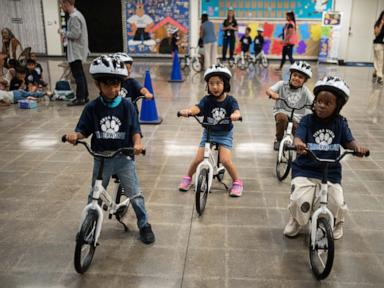
Schools are waking up to a simple reality. Waiting until kids are older to teach them basic physical coordination leaves too many behind. Gym class used to mean dodgeball and kickball. Now, forward-thinking physical education teachers are rolling out fleets of pedal-free bikes inside basketball courts and multipurpose rooms.
You might wonder why five-year-olds need bike training during math and reading week. The answer goes way beyond recess fun. Related reporting on this matter has been shared by Cosmopolitan.
The Shift From Playground Chaos to Controlled Balance
Most people think bike riding is just about pedaling. It isn't. Pedaling is actually the last and easiest part of the puzzle. The real battle is balance and spatial awareness.
When schools bring in programs like All Kids Bike, they throw out traditional training wheels. Training wheels are basically a crutch. They teach kids to lean the wrong way on turns and give a false sense of security. Balance bikes fix this instantly.
Kids sit on a low frame and push themselves along with their feet. Within minutes, they lift their feet up and coast. They figure out gravity and momentum on their own terms.
I watched a five-year-old named Leo transition from terrified wobbles to gliding across a gym floor in twenty minutes flat. He didn't need a lecture on physics. He just needed a safe, flat surface and a bike that fit his frame.
Doing this indoors changes the variables. There are no curbs, no traffic, no steep hills, and no angry neighbors yelling about stray tires. It creates a sterile, low-stakes laboratory for motor skill development.
Why Early Physical Literacy Matters More Than Ever
Kids today move differently than previous generations. Screen time claims hours that used to belong to street games and tree climbing. As a result, basic vestibular systems—the inner ear mechanisms that control balance—aren't getting the workouts they used to.
Putting kindergarteners on bikes tackles this head-on.
When you watch a child learn to steer and balance simultaneously, you are watching brain wiring happen in real time. The corpus callosum—the bridge between the left and right hemispheres of the brain—gets a massive workout. Bilateral coordination improves. Hand-eye-foot coordination sharpens up.
Teachers notice the spillover effect immediately. Kids who struggle to sit still at a desk often calm down after a session of gross motor training. Movement isn't a distraction from learning. It's the prerequisite for it.
Communities see long-term benefits too. When every child in a school gets equal access to a bicycle, equity issues disappear. It doesn't matter if a family can afford a high-end bike from a specialty shop or live in a neighborhood with safe sidewalks. Every kid gets a shot at the handlebars.
Overcoming the Logistics and Skepticism
Principal pushback usually sounds like this. "Where are we going to store thirty bikes?" Or "Won't someone crack their head open on the hardwood floor?"
Valid concerns. But modern school programs arrive in a neat, self-contained trailer or storage pod. They include fleet bikes, helmets, and a structured curriculum designed for certified physical education instructors.
Helmets go on every single kid. Bikes stay indoors on high-friction gym floors where speeds stay low and falls result in nothing worse than a bruised ego.
Administrators who initially balk at the cost or the potential liability soon change their tune. They see attendance tick up on gym days. They watch kids who usually sit on the sidelines get actively engaged.
Schools aren't just teaching a recreational skill here. They are building lifelong habits. A child who masters a bike at age five views transportation and outdoor exercise entirely differently than one who doesn't touch a two-wheeler until middle school.
Check your local school district's wellness grants. Many programs receive funding through non-profit partnerships or corporate sponsorships specifically designed to promote youth health. If your neighborhood school hasn't adopted an indoor cycling module yet, ask the PTA why.
Get involved. Push for physical education budgets that prioritize functional movement over traditional sports drills. The investment pays off the moment you see a kid realize they can keep themselves upright on two wheels without any help at all.