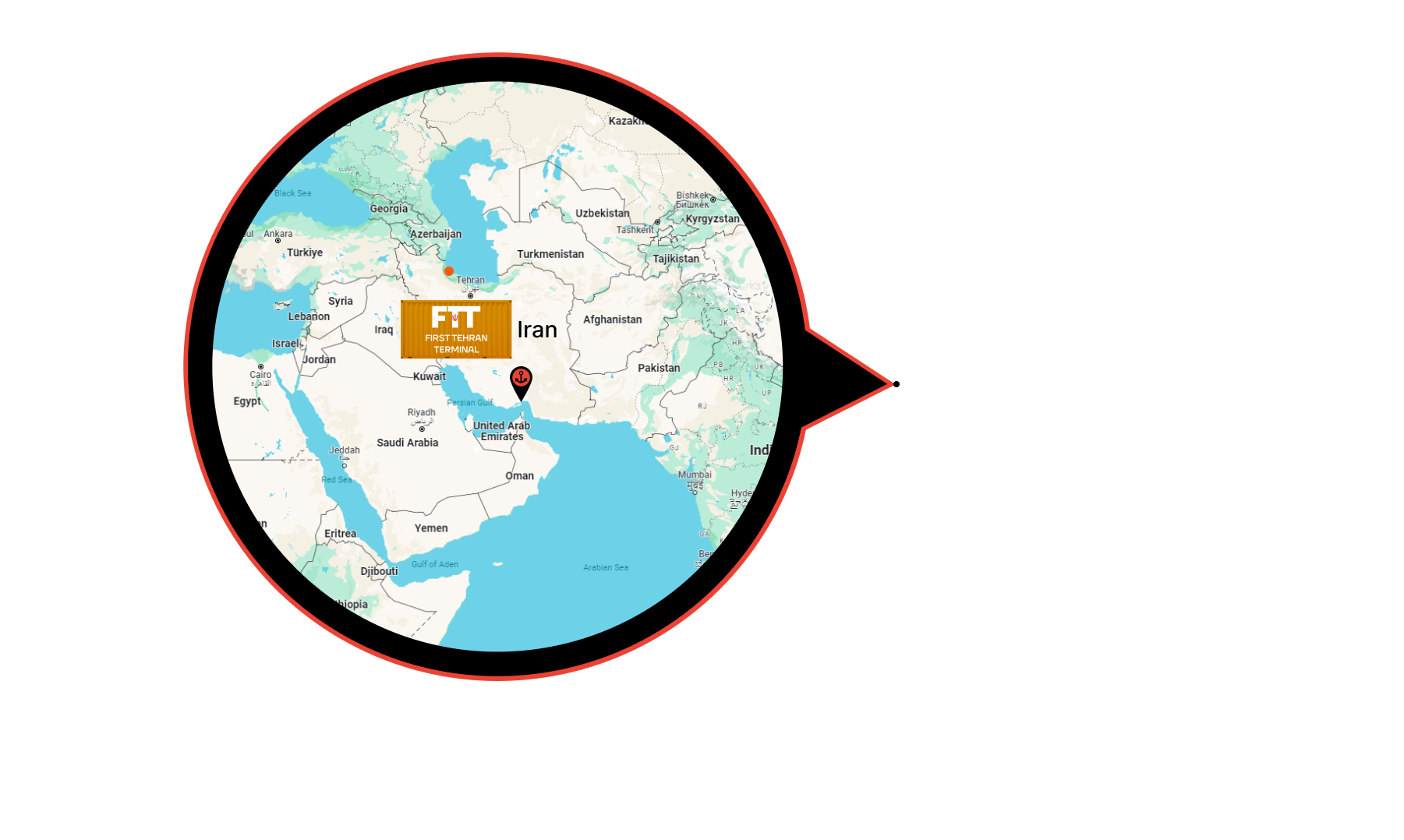
The recent escalation involving precision strikes across Tehran’s administrative and industrial periphery signals a fundamental shift from symbolic posturing to high-utility kinetic attrition. While initial reports focus on the acoustic impact and local disruption, the strategic significance lies in the degradation of specific integrated defense networks and the psychological decoupling of the state's security apparatus from its urban core. The operation demonstrates a calculated application of "offset strategy," where the attacker utilizes superior sensing and long-range precision to nullify the defender's geographic advantages.
The Mechanics of Urban Penetration
Urban centers like Tehran present a unique challenge for aerial operations due to high-density civilian populations and nested surface-to-air missile (SAM) batteries. Analyzing the strike patterns reveals a logic of Functional Suppression. Rather than attempting total destruction of facilities, the strikes targeted the "nodes" that enable operational continuity:
- Sensor Blindness: Early-warning radar installations located on the city's outskirts were prioritized. By removing the eyes of the air defense network, subsequent waves of projectiles face a significantly reduced probability of interception.
- Command Disruption: Communication hubs and data-relay stations serve as the connective tissue for a centralized military response. Severing these links forces local commanders into a "fog of war" scenario where they must operate without synchronized intelligence.
- Logistical Bottlenecks: Precision hits on specialized maintenance facilities for drone and missile programs create a compounding delay in the defender’s ability to conduct retaliatory launches.
This sequence follows the OODA Loop (Observe-Orient-Decide-Act) compression theory. By striking the "Orient" and "Decide" capabilities of the Iranian defense forces, the attacker forces the defender into a reactive, fragmented posture that is unsustainable over a multi-day engagement.
The Cost-Exchange Ratio in Integrated Air Defense
A critical metric in modern conflict is the cost-exchange ratio between an incoming projectile and the interceptor used to stop it. Tehran’s defense relies heavily on a mixture of domestically produced systems (such as the Bavar-373) and aging Soviet-era platforms.
The financial and material burden of defending a massive metropolitan area is asymmetric. A single precision-guided munition (PGM) costing roughly $100,000 to $500,000 can force the deployment of interceptors costing $1 million to $3 million each. When an attacker utilizes a "saturation mix"—low-cost decoys combined with high-cost stealth assets—the defender’s magazine depth becomes the primary point of failure.
The damage to Tehran’s districts suggests a failure in the Point Defense layer. While the Area Defense (long-range) may have intercepted some threats at high altitudes, the "leakers" that reached the city floor indicate that the short-range, terminal defense systems were either overwhelmed or electronically jammed. This reveals a gap in the Electronic Counter-Measures (ECM) capability of the Iranian military, suggesting that their digital shielding is generations behind the offensive cyber-electronic suites currently in use by top-tier air forces.
Psychological Decoupling and the Sovereignty Tax
Beyond the physical wreckage, the strikes impose a "Sovereignty Tax" on the Iranian leadership. In a high-control state, the primary social contract is the provision of security in exchange for absolute authority. When explosions rattle the capital city, this contract is visibly breached.
The Three Pillars of Domestic Stability affected by these strikes are:
- Elite Confidence: The security of the "Hereditary and Ideological Guard" is predicated on the invulnerability of their command bunkers. Strikes that penetrate the capital's airspace suggest that no location is hardened enough to guarantee survival.
- Economic Friction: Large-scale urban strikes trigger immediate capital flight and the devaluation of the local currency. The "risk premium" for doing business in Tehran rises exponentially, further straining a sanctioned economy.
- Information Monopolization: In the immediate aftermath of the explosions, the state’s inability to control the narrative—due to the ubiquity of smartphone footage and satellite imagery—erodes the effectiveness of state media.
The causal link here is clear: Kinetic success leads to psychological vulnerability, which in turn leads to internal political friction. The strikes are not just about metal hitting concrete; they are about demonstrating the inability of the state to maintain a "sanctified space" in its own capital.
Tactical Innovations: The Role of Loitering Munitions
The nature of the damage in Tehran indicates the likely use of loitering munitions, often referred to as "suicide drones." Unlike traditional cruise missiles that follow a predictable ballistic or terrain-hugging path, loitering munitions can stay airborne over a target area for hours, waiting for a radar signature to activate before diving.
This creates a Deadlock Scenario for air defense operators:
- If they turn on their radar to find the drones, the drones immediately home in on the radar source.
- If they keep their radar off, the drones can wander the skies and strike high-value stationary targets at will.
This technical checkmate effectively neuters traditional SAM batteries. The tactical shift toward small-signature, high-endurance assets represents the "democratization of precision," where even a technologically superior power can be challenged, or in this case, where a technologically superior attacker can systematically dismantle a large military infrastructure with minimal risk to manned aircraft.
Structural Limitations of the Iranian Response
Iran’s military doctrine has historically focused on Forward Defense—using proxies in Lebanon, Iraq, and Yemen to keep conflict away from its borders. The Tehran strikes prove that this doctrine has a ceiling. When the "Strategic Depth" provided by proxies is bypassed by long-range strike capabilities, the Iranian heartland is exposed as being structurally under-defended.
The core bottleneck for the Iranian military is the lack of a modern, multi-role fighter fleet. Without the ability to contest the "High Ground" of the upper atmosphere, they are forced into a purely ground-based defensive posture. In the history of modern warfare, no nation has successfully defended its territory from a sustained aerial campaign using only ground-based systems. The lack of air parity creates an Atrophy Loop:
- Air defenses are targeted and destroyed.
- The remaining defenses are spread thin to cover too many targets.
- The attacker gains total air "omniscience," allowing for even more precise targeting of the industrial base.
Strategic Recommendation for Regional Stability Assessment
Analysts must look past the immediate casualty counts or building damage. The true indicator of the next phase is the reconstitution rate of the targeted sites. If Iran cannot repair its radar and communication nodes within a 72-hour window, it signals a total loss of industrial resilience in the face of modern kinetic warfare.
The operational play for observers is to monitor the movement of mobile air defense units from the Persian Gulf coast toward the interior. Such a movement would indicate a desperate "stripping" of coastal defenses to protect the capital, leaving oil infrastructure and maritime lanes vulnerable. This redistribution of assets is the ultimate goal of a diversionary strike campaign: forcing the opponent to choose between protecting their seat of power or their economic lifelines.
The conflict has moved from a "Shadow War" to a "War of Position." The side that can maintain the highest density of precision strikes while minimizing their own electronic signature will dictate the terms of the eventual diplomatic or military climax. Expect the next 48 hours to define whether this is a singular punitive action or the opening gambit of a systematic dismantling of the Iranian Integrated Air Defense System (IADS).
The strategic play now is to evaluate the "depth of the bench" regarding Iranian spare parts and technical expertise. If the strikes hit the specialized tooling required for their domestic missile production, the "Forward Defense" doctrine will collapse as proxies find their supply lines severed at the source. The target was not Tehran; the target was the credibility of the entire Iranian regional architecture.