The military confrontation between the United States and Iran in the Strait of Hormuz exposes the structural breakdown of the April 8 ceasefire agreement, demonstrating that "proportionality" in modern asymmetric warfare is an unstable strategic fiction. When an Iranian one-way attack drone—suspected to be a Shahed-type loitering munition—brought down a US Army AH-64 Apache helicopter gunship over the maritime choke point, the event was treated by political leadership as an isolated tactical friction point. In reality, the incident triggered a pre-programmed, multi-tiered escalation matrix that neither side can fully contain through calibrated kinetic action.
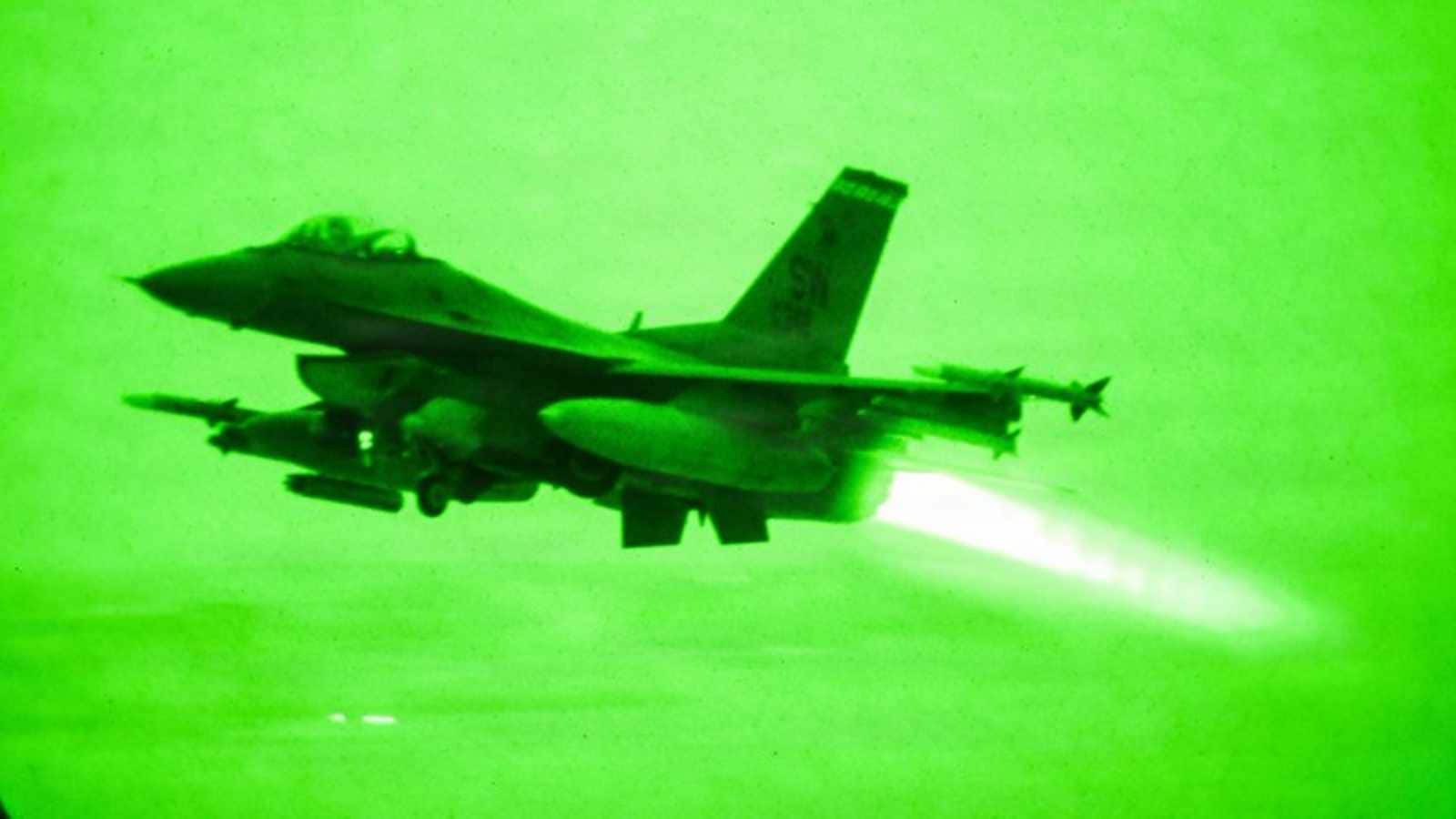
The subsequent US retaliatory operation, executed by Air Force and Navy fighter jets under the umbrella of Operation Epic Fury, applied a conventional punitive framework to an unconventional theater. By targeting Iranian air defense networks, ground control stations, and surveillance radar systems across southern Hormozgan province—specifically around Bandar Abbas, Sirik, Qeshm Island, and Jask—Washington attempted to enforce a strict cost-imposition strategy. However, evaluating this exchange through a clinical strategic lens reveals a profound misalignment between tactical execution and strategic intent. The kinetic calculus relies on a flawed assumption: that targeted, asset-specific destruction can re-establish a stable deterrent equilibrium without triggering a regional escalatory spiral.
The Operational Mechanics of the Friction Event
The technical specifics of the AH-64 downing illustrate the changing nature of littoral airspace contestation. The Apache gunship, operating on a maritime patrol vector near the coast of Oman, was intercepted by a slow-moving, low-radar-cross-section (RCS) one-way attack drone. This asset asymmetry highlights the fundamental cost-imposition imbalance governing the theater.
[Iranian One-Way Attack Drone (Low RCS/Cost)] ---> Intercepts ---> [US Army AH-64 Apache (High Value/Crewed)]
                                                                               |
                                                                        Kinetically Downed
                                                                               |
                                                   [Autonomous Search & Rescue via Saronic Corsair Surface Drone]
The physical destruction of a high-value crewed asset by a low-cost, expendable unmanned aerial vehicle (UAV) represents an unsustainable attrition ratio for forward-deployed US forces. This vulnerability is quantified by a growing loss column; the Apache marks the 42nd US aircraft lost or damaged over the course of the wider campaign, alongside an F-15 fighter jet lost in April.
The recovery phase of the incident introduced a critical operational precedent: the deployment of autonomous systems for combat search and rescue (CSAR). The two downed aviators were extracted within a two-hour window by a Saronic Corsair uncrewed surface vessel (USV), operated by CENTCOM’s Task Force 59. This 24-foot, 1,000-pound capacity autonomous craft executed the extraction in highly contested waters, minimizing the human footprint required for the recovery operation. While this limits the immediate political fallout of a hostage or casualty scenario, it simultaneously lowers the threshold for immediate kinetic retaliation by stripping away the friction of ongoing human rescue operations.
The Structural Anatomy of Retaliation
Washington’s response followed a well-defined doctrinal playbook: the degrading of the adversary’s situational awareness and localized anti-access/area-denial (A2/AD) capabilities. The US strike package concentrated precision-guided munitions on approximately 20 targets grouped into three distinct functional categories:
- Surveillance Radars: Early-warning installations designed to track maritime aviation vectors and feed target-acquisition data to coastal defense cruise missile (CDCM) batteries.
- Ground Control Stations (GCS): The localized command-and-control infrastructure responsible for piloting loitering munitions and transmitting mid-course guidance corrections to one-way UAV swarms.
- Integrated Air Defense Systems (IADS): Surface-to-air missile units tasked with denying regional airspace to US carrier-borne strike groups and land-based tactical aviation.
The geographical distribution of these strikes reveals a systematic attempt to blind Iranian monitoring of the Strait of Hormuz. By striking nodes from Qeshm Island to the logistical hubs of Bandar Abbas and Jask, the US military temporarily degraded Iran’s capability to enforce its self-proclaimed maritime blockade.
The primary strategic limitation of this architecture is its linear design. A punitive strike on fixed radar assets assumes the adversary evaluates cost purely through physical infrastructure replacement values. For a decentralized command structure like the Islamic Revolutionary Guard Corps (IRGC), the degradation of legacy radar nodes is an acceptable cost for demonstrating the capability to successfully target and down a premier US frontline attack helicopter. The material destruction does not alter the underlying strategic calculus of the Iranian regime; instead, it provides a powerful domestic and regional narrative of direct resistance.
The Asymmetric Counter-Escalation Loop
The systemic flaw in the US "proportionality" model became obvious within hours of the initial airstrikes. The IRGC did not absorb the cost and reset to the status quo; instead, it initiated a multi-axis counter-escalation designed to test the depth and readiness of the US regional defense architecture. This counter-stroke utilized regional proxies and direct state-level assets to distribute risk across three separate sovereign states.
| Target Location | Aggressor Asset Type | Operational Outcome | Strategic Intent |
|---|---|---|---|
| US Fifth Fleet HQ (Bahrain) | Shahed-136 Loitering Munition | Direct target profiling; localized alerts activated | Challenge command-and-control hubs directly |
| Ali Al Salem Air Base (Kuwait) | One-Way Attack Drones | Intercepted / Local air defenses engaged | Threaten forward deployment logistics and rotary assets |
| Muwaffaq Salti Air Base (Jordan) | Ballistic Missiles (7 units launched) | 6 intercepted by Jordanian IADS; 1 launch failure | Test multi-layered regional integrated air defense networks |
This distributed response demonstrates the limits of localized deterrence. By expanding the kinetic theater from the narrow confines of the Hormozgan province to the airspace of Jordan, Kuwait, and Bahrain, Tehran effectively decoupled the conflict from the immediate geography of the Strait of Hormuz. The utilization of seven ballistic missiles directed toward installations hosting US fifth-generation assets (such as F-35 detachments in Jordan) signals that Iran views the entire US regional footprint as a singular, interconnected target set.
The strategic friction is further compounded by the geopolitical pressure placed on regional partners. Jordan's active interception of five incoming Iranian projectiles highlights the operational strain placed on intermediary states. These nations must balance their security agreements with Washington against the acute political risks of being perceived as active combatants in a direct US-Iranian war.
The Illusion of the Diplomatic Backchannel
The escalation occurred against a backdrop of diplomatic paralysis. While executive messaging from the White House oscillated between dismissive framing—labeling the downing of a highly sophisticated attack helicopter as "not a big deal" due to the survival of the pilots—and calls for a "very strong, very powerful" response, the underlying diplomatic track suffered catastrophic structural damage.
Prior to the shoot-down, negotiations aimed at finalizing a comprehensive regional peace agreement were described as being in their final stages. This diplomatic track relied on the preservation of the highly unstable April 8 ceasefire. The introduction of kinetic friction via the downing of the Apache reveals a fundamental disconnect between political expectations and theater realities.
Iranian Foreign Minister Abbas Araghchi formulated a clear sovereignty argument designed to challenge the international legal framework of the US presence. By asserting that the Strait of Hormuz is not international water but a shared territorial waterway between Iran and Oman, Tehran constructs a legal pretext for defensive actions against foreign aviation. The core diplomatic bottleneck can be summarized as follows:
- The Sovereignty Clashing Point: The United States enforces freedom of navigation operations (FONOPS) and air transits based on international maritime law; Iran asserts localized, joint-sovereign jurisdiction to alter the rules of engagement.
- The Proxy Escalation Decoupling: Even if the political leadership in Tehran sought to preserve a diplomatic off-ramp by messaging via international mediators that the downing was an un-orchestrated mid-air collision or an isolated accident, the operational reality of the IRGC's rapid missile and drone response indicates a pre-delegated authority to strike back.
- The Economic Lever: The war has already produced a 6.5% contraction in regional fuel utilization, alongside a sharp 1.4% upward spike in West Texas Intermediate (WTI) benchmarks to $89.40 per barrel immediately following the strikes. The economic cost function of the conflict is a potent weapon for Iran; it can inflict significant global inflationary pressure without ever needing to completely close the Strait of Hormuz through conventional surface warfare.
The Strategic Path Forward
The United States cannot break this escalatory loop through an iterative cycle of proportional responses. Each localized strike package provides the adversary with valuable intelligence regarding US ammunition consumption rates, radar frequencies, and the reaction times of regional integrated air and missile defense networks.
The optimal strategic play requires moving past the binary choice of passive absorption or predictable, localized retaliation. Washington must shift from tactical proportionality to systemic resilience. This entails the rapid hardening of regional distribution hubs, the total automation of littoral surface and air surveillance to completely eliminate the risk of crewed asset losses, and the deployment of offensive cyber and electronic warfare suites designed to systematically degrade the guidance arrays of loitering munitions before they ever leave their launch rails in southern Iran.
If political objectives dictate the maintenance of a maritime presence in the Strait of Hormuz, that presence must be decoupled from prestige assets like crewed helicopters and carrier strike groups, which offer high-value, low-cost target opportunities for asymmetric forces. Until the material cost of deploying an autonomous drone outweighs the strategic return of disrupting global energy supply lines and damaging Western military prestige, the dynamic will remain firmly in Tehran's favor. Strategic stability in the theater will not be achieved via the destruction of a few isolated radar towers in Bandar Abbas; it requires a structural overhaul of how the United States projects power in contested littoral spaces.