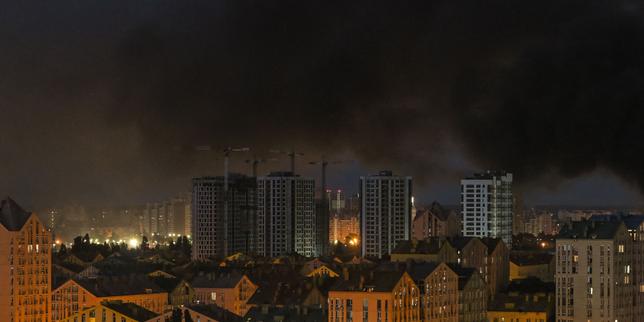
Kyiv woke up to the sound of sirens again. Air defense systems roared to life in the early hours, shaking windows across the capital. When the smoke cleared, local authorities confirmed at least six civilians were injured in the latest wave of Russian missile attacks on Kyiv. Debris rained down on residential districts, damaging homes and setting vehicles ablaze.
This happens constantly. Yet every time a new barrage hits, the international community reacts with a strange mix of shock and routine acceptance. People look at the high interception rates reported by the Ukrainian military and assume the danger is mostly gone.
They are wrong. A 90% interception rate sounds brilliant on paper. In reality, it means thousands of pounds of burning metal, unexploded fuel, and supersonic warheads still fall directly onto a densely populated city. The threat hasn't vanished. It has just changed form.
The Real Cause of Civilian Casualties in Kyiv
Most people assume that when a missile hits a civilian building, it was always aimed there. Sometimes that's true. Russia has repeatedly targeted critical infrastructure and residential areas throughout this war. But a significant portion of the destruction in the capital comes from a different mechanism entirely.
Interception isn't magic. When a Patriot or an IRIS-T missile smashes into a Russian Kh-101 cruise missile or a ballistic Iskander, both objects don't simply evaporate. They shatter.
You get a rain of supersonic shrapnel. A falling rocket motor weighs hundreds of kilograms. If it lands on a nine-story apartment block, it cuts through concrete like butter. This is exactly what caused the injuries in the most recent strike. Air defenses did their job perfectly, yet people still ended up in the hospital.
The type of missile matters immensely. Cruise missiles fly low, following the terrain, which gives air defense teams a bit more time to track them. Ballistic and hypersonic missiles are a different beast. They fly into the upper atmosphere and come screaming down at vertical angles at incredible speeds. You have minutes to react. The alarm goes off, and almost immediately, the explosions start. If you aren't already in a shelter, you're exposed.
What Mainstream Reports Miss About Ukrainian Air Defense
The media loves to focus on the flashy hardware. Everyone knows the names of Western defense systems by now. But focusing only on the launchers misses the entire logistical bottleneck that dictates whether Kyiv survives the next night.
It is a war of attrition fought with inventory lists. Russia knows Ukraine has limited interceptors. Each Patriot missile costs millions of dollars and takes months to manufacture. Russia, meanwhile, can churn out cheaper cruise missiles and supplement them with Iranian-designed Shahed drones.
The strategy is simple. Send waves of cheap drones first. Force Ukraine to turn on its radars and fire its expensive missiles. Once the defense grid is distracted and slightly depleted, launch the fast ballistic missiles.
This creates a terrifying math problem for Ukrainian commanders. Do you fire a million-dollar missile at a drone that might hit a power substation? Or do you save it and risk the drone getting through? Every single raid forces these split-second decisions. When Western aid stalls, even for a few weeks, those inventory lists run dangerously low. That's when we see intercept rates drop and casualty numbers climb.
The Logistics Behind Changing Russian Attack Tactics
Russia doesn't use the same flight paths twice in a row. Their engineers constantly reprogram missile guidance systems to exploit gaps in Ukraine's radar coverage. They fly missiles along river beds to stay below radar horizons. They program them to make sharp 90-degree turns right before reaching their targets, confusing the automated tracking systems.
The production angle is even more concerning. Despite Western sanctions, Russia has managed to maintain and even increase its missile production lines. They bypass electronic blockades by sourcing civilian-grade microchips through third-party countries. An inspected Kh-101 missile recovered in Kyiv recently contained components manufactured just months prior.
This means Russia isn't running out of weapons. They are building them in real-time. The gaps between major strikes aren't necessarily caused by a shortage of missiles. They are caused by the time it takes to plan complex, multi-axis routes to overwhelm Kyiv's defenses. They wait for specific weather conditions, or they cluster attacks to coincide with political events in the West to maximize psychological impact.
How to Accurately Interpret War Updates
If you want to understand what's actually happening during these air raids, you have to look past the initial headlines. A generic notification about explosions in Kyiv tells you almost nothing.
First, check the specific districts mentioned by local officials. If damage occurs in central districts like Shevchenkivskyi, it usually indicates a targeting of government or symbolic infrastructure. If it's in outer residential districts like Darnytskyi or Desnianskyi, it's often falling debris from missiles intercepted along the city's approach corridors.
Second, pay attention to the weapon types. If the Ukrainian Air Force reports Kh-47M2 Kinzhal missiles were used, the danger level was extreme. These are hypersonic weapons that require specific Western systems to shoot down. If they report mostly drones, it's an attempt to scout positions and deplete ammunition.
To get the ground truth immediately after a strike, bypass general news aggregators. Look directly at verified Telegram channels of local authorities, such as the Kyiv City Military Administration or the Mayor of Kyiv. They provide rapid, unvarnished data on casualties, structural damage, and ongoing rescue operations. For deeper technical analysis of the weapons used, open-source intelligence (OSINT) accounts on platforms like X (formerly Twitter) routinely analyze missile wreckage photos within hours of an attack to verify what specific variants Russia is deploying.
The reality on the ground is stark. Kyiv remains one of the most heavily defended cities in the world, yet it is still vulnerable. Air defense buys time and saves lives, but it cannot create a perfect bubble. Every siren requires immediate action, because the difference between a successful interception and a tragedy is often just a few meters of falling metal.



