In a quiet, climate-controlled room in Hefei, a young researcher named Chen sits before a monitor. He isn't watching a stock ticker or a social media feed. He is watching the behavior of subatomic particles trapped in a magnetic web. If he succeeds, the encryption that protects every bank account on Earth becomes obsolete. If he fails, he simply tries again tomorrow, backed by a state budget that has decided that the future of the human race will be written in Mandarin.
We used to think of "Made in China" as a label for plastic toys and cheap electronics. That world is dead. It has been replaced by a reality where the most prestigious scientific journals—Nature, Science, Cell—are increasingly dominated by names from Tsinghua, Peking, and Zhejiang Universities. This isn't just a shift in the global economy. It is a fundamental rewiring of how humanity discovers truth.
The Great Acceleration
For decades, the West held a comfortable monopoly on the "Big Science" that defined the 20th century. We built the Large Hadron Collider. We put a man on the moon. We mapped the human genome. But while we were debating budget cuts and short-term quarterly gains, China was building a cathedral of knowledge, brick by digital brick.
They didn't just copy. They iterated. Then they innovated. Now, they lead.
Consider the sheer scale of the momentum. China now spends over $400 billion annually on research and development. In terms of high-impact scientific papers—the kind that other scientists actually cite because they change the field—China has overtaken the United States in areas like physics, chemistry, and material science. This isn't a fluke of statistics. It’s the result of a thirty-year plan executed with the precision of a clockmaker.
The Human Cost of the New Frontier
To understand this, you have to look past the gleaming glass of the new laboratories in Shenzhen. You have to see the people.
Imagine a hypothetical student, let's call her Wei. Wei was born in a rural village where the most advanced technology was a diesel tractor. By the time she was twenty, she was operating a CRISPR gene-editing suite in Shanghai. Her life trajectory is the story of a nation that has tied its national identity to the mastery of the physical world.
But this pressure is immense. The "996" culture—working 9 a.m. to 9 p.m., six days a week—isn't just for tech startups. It’s the heartbeat of the lab. There is a desperate, driving hunger to catch up and surpass, a feeling that the window of opportunity is narrow. When we talk about China becoming a scientific superpower, we are talking about millions of "Weis" who have sacrificed hobbies, sleep, and sometimes family to ensure their country sits at the head of the table.
The Materials of Tomorrow
One of the most invisible yet vital battles is being fought over things we cannot see. Rare earth elements. Graphene. Quantum dots.
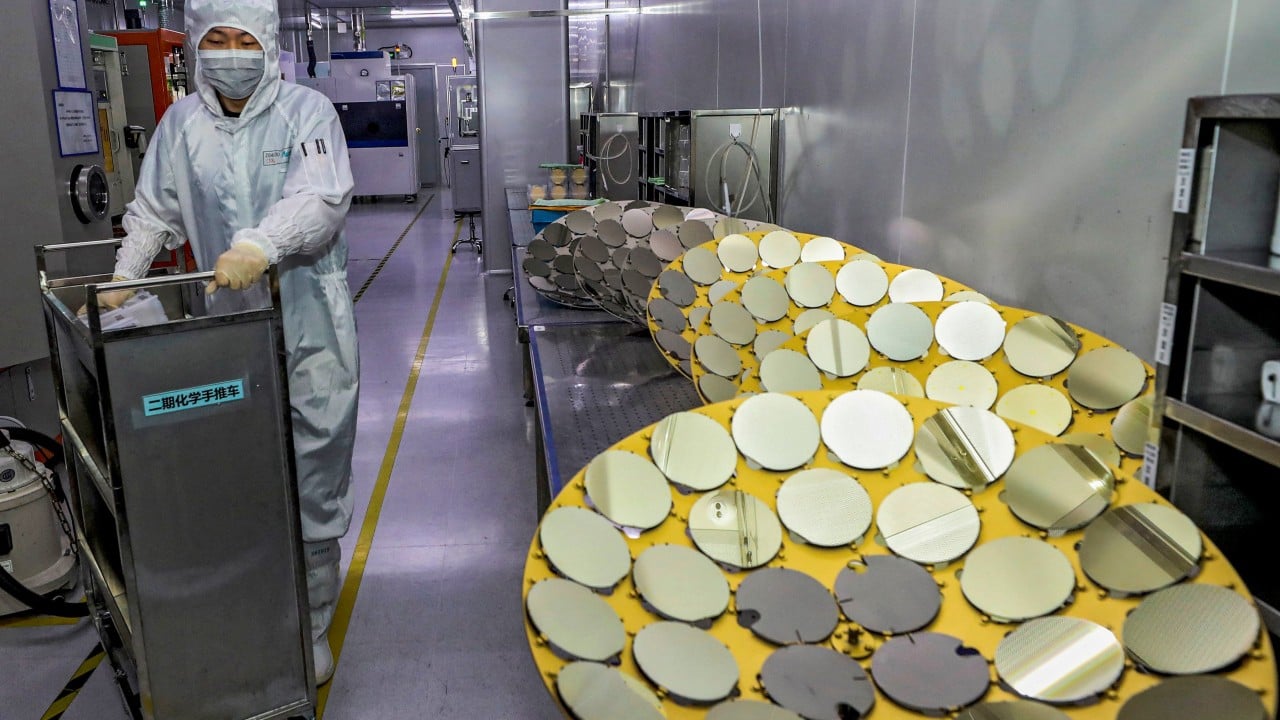
While the rest of the world focused on software and "the cloud," China realized that the cloud runs on hardware, and hardware requires materials. They have cornered the market on the stuff that makes green energy possible. If you want to build an electric vehicle or a high-efficiency wind turbine, the road almost certainly leads through Chinese patents.
It’s a strategic masterstroke. By controlling the ingredients of the future, they don't just participate in the market; they define its boundaries. We often mistake this for simple manufacturing dominance, but the reality is much deeper. It is a mastery of material science that allows them to innovate at a chemical level that others are only beginning to study.
The Quantum Gamble
The most terrifying and exhilarating frontier is quantum computing. This is where the narrative shifts from "better smartphones" to "redefining reality."
In 2016, China launched Micius, the world's first quantum communications satellite. It was a shot across the bow of global security. Quantum communication uses the laws of physics to ensure that a message cannot be intercepted without the sender knowing. It is, for all intents and purposes, unhackable.
While Western labs are making incredible strides, China has the advantage of a unified national strategy. They don't have to convince a board of directors that a project will be profitable in three years. They only have to convince the state that it is necessary for the next fifty. This allows them to take massive, expensive risks on "moonshot" technologies that private capital usually avoids.
The Ethics of the New Era
This rise brings us to a bridge we aren't quite ready to cross: the ethics of rapid discovery.
In the West, we have layers of oversight, institutional review boards, and public debates that move at a glacial pace. China moves faster. This speed is a competitive advantage, but it creates a profound sense of unease. When the world learned of the first gene-edited babies in 2018, it happened in a Chinese lab. The global scientific community recoiled, yet the door had been kicked open.
We are entering a period where the "rules" of science are being rewritten by a power that doesn't necessarily share the same philosophical heritage as the Enlightenment-era thinkers who founded Western academies. This creates a friction that isn't just political—it’s existential. How do we collaborate with a peer whose fundamental approach to privacy, data, and the sanctity of the genome is different from our own?
A World With Two Suns
The old world order was a solar system with one sun: the United States and its allies. Every other nation orbited that center of gravity, drawing warmth from its research and its standards.
Today, a second sun has ignited.
This isn't necessarily a tragedy. Science is not a zero-sum game. A cure for cancer discovered in a lab in Wuhan saves a life in Lyon or Chicago just as effectively. The expansion of the global brain—doubling the number of geniuses working on the world's hardest problems—could be the greatest thing to happen to our species.
But it requires a different kind of ego. It requires the West to accept that it is no longer the sole arbiter of what is true or what is possible. It requires us to look at the work coming out of the East not with suspicion or condescension, but with the respect due to an equal.
The silence in that lab in Hefei is deceptive. It isn't the silence of emptiness. It’s the silence of a massive engine beginning to turn, a force that will dictate whether we solve climate change, whether we colonize Mars, and whether we finally understand the code that makes us human.
Chen looks at his screen. The particles have moved. He makes a note, hits save, and prepares for the next twelve hours of his shift. Outside the window, the skyline of a city that didn't exist forty years ago glows with the light of a million LED screens, all powered by a grid that is becoming smarter, faster, and more autonomous every single day.
The future didn't arrive with a bang. It arrived with a steady, unrelenting hum of a laboratory fan in the middle of the night.
Would you like me to analyze the specific sectors where Chinese patent filings have seen the most explosive growth over the last five years?