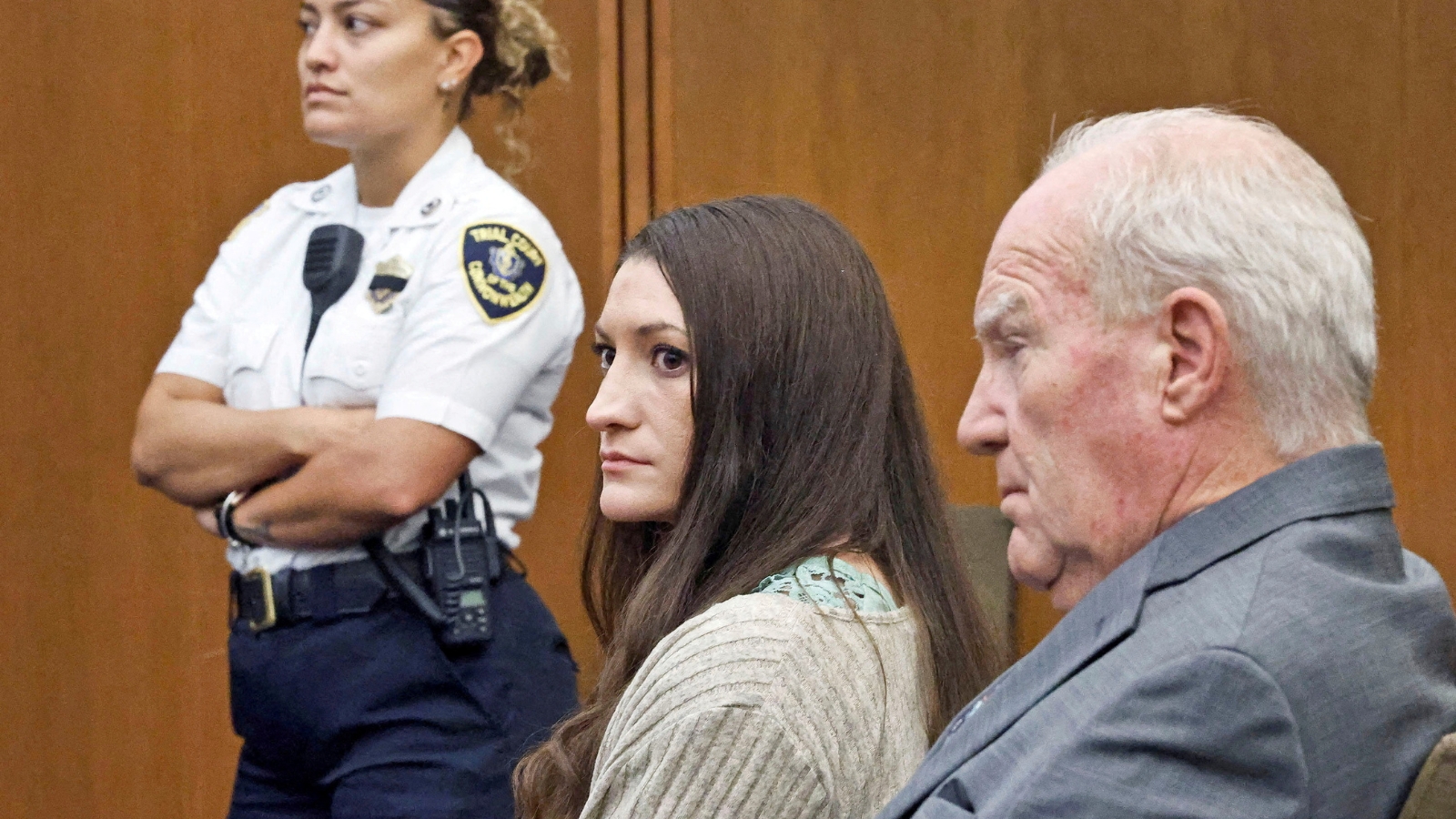
The trial collapsed because twelve people could not agree on what happens when a mind breaks completely. A Massachusetts judge declared a mistrial in the prosecution of Lindsay Clancy after jurors remained deadlocked at eleven to one following nearly forty hours of deliberation. Clancy does not deny strangling her three young children—Cora, Dawson, and Callan—in their Duxbury home in January 2023. Her defense rested entirely on the catastrophic failure of her mental health, arguing that severe postpartum psychosis obliterated her capacity to understand the nature of her actions. The state argued it was calculated murder. The resulting stalemate leaves a fractured public, a grieving family, and a legal system grappling with an unanswerable question.
What happens next is a cold procedural pivot. The Plymouth County District Attorney must now decide whether to commit the state's resources to a complete retrial, negotiate a plea, or drop the matter entirely, though a dismissal remains statistically remote. Clancy remains held under psychiatric care at a state hospital, returned precisely to her pre-trial legal status. Yet the procedural future of the case matters far less than the structural breakdown exposed inside Plymouth Superior Court. This trial revealed that juries are fundamentally unequipped to adjudicate complex psychiatric emergencies under antiquated legal frameworks. If you liked this post, you might want to look at: this related article.
For six weeks, the courtroom transformed into a theater of competing psychiatric interpretations. Experts clashed over whether a mother experiencing auditory hallucinations and severe delusions can retain a shred of criminal responsibility. This is the core trap of the modern insanity defense. It forces a medical catastrophe into binary moral categories of good and evil, sane and insane. Human neurology rarely operates with such clean boundaries. When a brain undergoes the severe neurochemical crash of postpartum psychosis—a rare condition affecting a fraction of post-delivery women—the architecture of reality distorts.
The defense pointed to Clancy’s frantic efforts to seek help in the weeks preceding the tragedy, detailing an overmedicated spiral through the modern healthcare maze. Prosecutors countered with the chilling mechanics of the acts themselves, framing them as deliberate choices executed by a woman who knew how to shield her actions. Both narratives can simultaneously occupy the realm of truth. She performed the acts, and her mind was simultaneously detached from reality. Juries hate nuance. They want a villain or a victim. When forced to choose between condemning a severely ill mother and excusing the horrific loss of three innocent lives, the collective cognitive load fractures. An eleven-to-one deadlock is the mathematical embodiment of that institutional paralysis. For another angle on this event, refer to the latest update from TIME.
Legal analysts immediately began speculating about a second bite at the apple. Prosecutors could theoretically downgrade the indictment from first-degree murder to second-degree murder or manslaughter, lowering the bar for conviction and potentially bypassing the rigid all-or-nothing trap that doomed the first verdict. Defense attorneys, conversely, will likely argue that an eleven-to-one split in favor of acquittal or an insanity finding signals community exhaustion and reasonable doubt that the state cannot overcome a second time.
Yet every day this case drags through the docket, it underscores a deeper systemic failure. The American legal system treats severe mental illness as an afterthought defense rather than a foundational reality. We build vast criminal tribunals to judge acts of profound desperation, using rules written centuries before the advent of modern psychiatric medicine. The jurors left the courthouse exhausted, burdened by an assignment no citizen should be handed. The public remains divided along bitter ideological lines, viewing the tragedy either as an unmitigated evil or a systemic medical abandonment.
The retrial, if it comes, will rehearse the exact same arguments before a fresh panel of twelve citizens. They will listen to the same grim medical histories. They will look at the same photographs. They will struggle with the same impossible definitions of right and wrong. Nothing about the underlying mechanics of justice will have changed. The system will simply reset the board and hope for a different roll of the dice.