The heavy steel door clangs shut, and with that metallic echo, the outside world drops away. For anyone inside a state or federal prison, time behaves differently. Minutes stretch like warm taffy. Seasons are measured not by shifting leaves, but by fluorescent bulbs buzzing overhead and the predictable clatter of meal carts rolling down concrete corridors.
Now imagine being someone whose very sense of self has been at war with the body housing it.
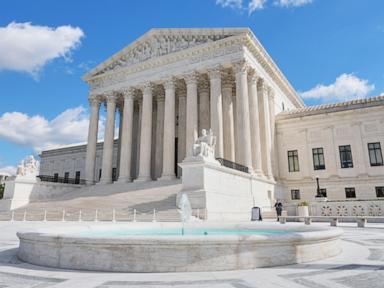
In the quiet hours before dawn, when the cellblock is still and a guard’s flashlight sweeps briefly across the bars, a person behind that steel door is carrying an invisible burden. When the Supreme Court rebuffs Trump administration restrictions on medical care for transgender inmates, headline writers reach for brisk, legalistic shorthand. Words like rebuffs, restrictions, and inmates stack neatly onto news feeds. They look tidy. Clinical. Distant.
Yet legal rulings do not live on crisp pages inside marble courthouses. They land inside small rooms with linoleum floors, plastic cups of morning pills, and clinical charts stamped with bureaucratic codes.
I have spent enough time walking through correctional facilities—talking with wardens, medical directors, chaplains, and people serving sentences—to know what happens when policy collides with human physiology. The smell inside a prison clinic is a distinct mixture of floor wax, antiseptic soap, and stale air. You sit on a vinyl exam table that crinkles loudly every time you shift your weight. Through a small window, you might catch a sliver of razor wire against a pale sky. In that space, medical care is not an abstract debate over culture or budget lines. It is the difference between steady ground and a freefall.
Let’s pause and be honest right here. Many readers feel uneasy when constitutional law, taxpayer money, and transgender health care intersect inside prisons. Some wonder why people convicted of crimes should receive specialized care that law-abiding citizens sometimes struggle to afford or access. Others worry about political whiplash—rules shifting every four years depending on who holds power in Washington. Confusion is natural. This territory is tangled, emotional, and often shrouded in heated rhetoric rather than clear facts.
To make sense of why the Supreme Court’s refusal to let executive restrictions block care matters so deeply, we have to step back from the shouting and look at how constitutional law actually works behind bars.
Why the Constitution Follows People Through the Gate
Prison strips away freedom of movement, privacy, and choice. What it does not strip away, under settled American law, is basic human dignity and protection against cruel and unusual punishment.
Decades ago, the Supreme Court established a foundational standard in Estelle v. Gamble: deliberate indifference to a prisoner’s serious medical needs violates the Eighth Amendment. Notice the wording. It does not promise luxury care, spa treatments, or elective comfort. It requires attention to serious medical needs and forbids deliberate indifference—ignoring pain or illness that a reasonable medical professional knows requires treatment.
Think of it like this. Suppose a house catches fire, and the occupants are locked inside by someone holding the key. You cannot lock people in a burning room and then refuse to call the fire department. Because the state takes total control over a person’s liberty and removes their ability to see their own doctor, buy their own prescriptions, or walk to a pharmacy, the state assumes the duty to provide necessary medical care.
When executive branch officials move to curtail or ban gender-affirming medical care in prisons, they run straight into that constitutional wall. A policy memo written in a distant office can declare a class of treatments off-limits. A doctor standing in front of a patient with severe depression, acute anxiety, or a long-standing hormone regimen faces a different reality: withholding established, medically indicated care can trigger severe psychological distress, self-harm, or physical withdrawal symptoms.
Consider what happens next: when the Supreme Court declines to endorse or enforce broad restrictions on care for transgender prisoners, it signals reluctance to let executive directives override established constitutional boundaries without clear, compelling legal justification. Even when high-profile appeals reach the justices on emergency dockets or petitions for review, the underlying tension remains sharp: can an administration draw a categorical line banning a form of medical treatment across an entire prison population, or must medical necessity and constitutional standards govern on the ground?
A Hypothetical Day Inside the Clinic
To see how a legal ruling ripples through real lives, let’s walk through a hypothetical scenario—not a specific pending case, but a composite drawn from documented realities inside correctional health systems.
Call the person Marcus (a hypothetical name used for illustration). Marcus is thirty-four, serving a sentence in a mid-sized state facility, and has lived as a transgender man for over a decade. Before incarceration, he took prescribed testosterone under a physician’s supervision, a treatment that stabilized his mood, eased chronic dysphoria, and helped him function day to day.
On his intake day, a nurse checks his blood pressure, asks a series of rapid-fire questions, and logs his prior prescriptions. For a few weeks, uncertainty hangs over every pill call. Rumors race down the tier faster than official notices. Word spreads that new federal or state restrictions might freeze hormone therapy for transgender inmates across the board, or halt counseling tied to gender identity.
For Marcus, that rumor isn’t abstract politics. It feels like a knot tightening in his chest every time the medication window slides open. Without steady care, sleep frays. Concentration slips. Simple tasks—standing in line for chow, answering a guard’s instruction, writing a letter home—take twice the energy.
Now imagine a prison physician—let’s call her Dr. Patel in this same hypothetical scenario. Dr. Patel is not an activist or a pundit. She is a salaried clinician trying to manage hypertension, diabetes, infections, and mental health crises across hundreds of patients with limited staff and tight budgets. When political directives threaten to ban a specific category of care outright, doctors get caught in a vise. If they follow a blanket ban, they risk harming a patient whose clinical chart shows clear medical need. If they treat based on clinical judgment, they worry about clashing with agency leadership or political appointees.
When the Supreme Court rebuffs efforts to impose sweeping restrictions, Dr. Patel’s medical judgment is not automatically turned into a blank check, nor are all disputes magically solved. Every facility still has protocols, evaluations, and oversight. Yet the door stays open for individualized medical assessment rather than a flat, one-size-fits-all prohibition driven by politics.
That distinction matters enormously. Law at its best refuses to turn human beings into identical widgets stamped out by a political slogan.
The Invisible Stakes Beyond the Cellblock
Why does a court fight over medical care for a relatively small group of prisoners draw such fierce attention?
Part of the answer lies in symbolism. Prisons sit at the edge of public view, yet they mirror the deepest questions a society asks about itself. Who counts as fully human when they have broken the law? Where does executive power end, and where does judicial review begin? When politicians promise tough restrictions on transgender inmates, they are often speaking to broader cultural anxieties about gender, authority, and public spending.
Another part of the answer is practical, even if people rarely talk about it at the dinner table. Correctional facilities do not exist in a sealed vacuum. Roughly ninety-five percent of people sent to state and federal prisons eventually return to local communities. Prisons employ thousands of officers, nurses, counselors, and administrators who go home to their own families every evening.
Instability inside a facility affects everyone inside it. Untreated severe mental distress or medical crises do not stay neatly quarantined inside one cell. They strain medical units, heighten tension on housing blocks, and increase demands on correctional staff already stretched thin by recruitment and retention challenges. Sound, evidence-based healthcare inside prisons is not a favor handed out on a silver platter; it is an essential piece of running safe, lawful, orderly institutions.
History shows us how often rights battles play out this way. Throughout the twentieth century, major shifts in American civil and constitutional rights frequently arrived through cases involving unpopular or marginalized people—defendants without money, students in unpopular protests, prisoners in neglected cells. Courts rarely build sweeping new doctrines out of thin air. More often, they apply longstanding principles—due process, equal protection, protection against cruel and unusual punishment—to new disputes brought before them.
Still, let’s be candid about what a Supreme Court rebuff does not do.
It does not end every lawsuit. Lower courts continue to wrestle with specific facts, evidentiary records, and procedural questions. State legislatures and executive agencies often look for new angles, revised rules, or narrower arguments. And for individuals behind bars, justice rarely moves at headline speed. A ruling on a legal motion or petition might take months to translate into a clear policy memo on a warden’s desk or a routine refill at the clinic window.
Doubt is healthy here. Anyone who claims a single court order solves every problem in correctional healthcare is oversimplifying a messy, multi-layered system.
Untangling the Questions Everyone Asks
When news breaks that the Supreme Court has turned back executive restrictions on medical care for transgender inmates, certain questions immediately surface in people’s minds. We can trace them right through the story without losing the human thread.
First, people ask whether this means prisons must provide every conceivable treatment on demand. No. Constitutional standards require addressing serious medical needs through qualified evaluation; they do not erase clinical judgment, security considerations, or standard medical review processes. Just as a doctor treats chest pain or severe depression according to medical protocols rather than whim, care decisions in custody involve assessment and clinical standards.
Second, readers often wonder why the executive branch’s push matters if courts step in. Because executive power shapes daily operations across federal agencies and influences state policy nationwide. When the White House or federal justice officials seek to tighten restrictions or scale back care, that posture sends ripples through agency guidelines, legal briefs, and public debate. A Supreme Court rebuff acts as a constitutional check—a reminder that executive preferences cannot simply erase established legal standards with the stroke of a pen.
Third, some ask whether this issue is purely about gender identity or something broader. It is both. On one level, it directly affects transgender people in custody who face high rates of mental health challenges, discrimination, and vulnerability behind bars. On another level, it tests a vital structural question: can government officials single out a disfavored group for a blanket medical ban while bypassing standard constitutional protections?
Think of a padlock on a gate. A padlock can be used to keep out real danger, or it can be snapped shut to lock someone away from help they legally have a right to receive. Constitutional law is the set of rules deciding who holds the key and when they are allowed to turn it.
What Lingers After the Headlines Fade
News cycles move fast. By next week, a new controversy will crowd the front page, and the phrase transgender inmates will slip back into the background noise of cable panels and social feeds.
Yet inside a dimly lit clinic somewhere in America, a nurse will still call a name over an intercom. A patient will still walk down a narrow corridor, hearing the jingle of keys and the hum of fluorescent lights, hoping that basic medical care will not become a political bargaining chip.
Steel doors close with a sound you never forget. Behind them, the law is tested not by how loudly politicians argue in Washington, but by whether human beings are treated with basic decency when no cameras are watching.