The contention that delayed election outcomes imply systematic fraud mistakes structural latency for institutional failure. In election administration, speed and franchise maximization exist in a state of permanent tension. California has engineered an electoral system that systematically optimizes for voter access over computational velocity.
The resulting delay is not an arbitrary bureaucratic malfunction, nor is it evidence of a corrupted process. It is the predictable outcome of a high-volume, multi-channel processing pipeline with strict verification constraints. To understand why California requires up to 30 days to certify election results, one must analyze the system not as a political theater, but as a complex supply chain subject to legislative mandates and processing bottlenecks.
The Three Pillars of Latency
The operational timeline of California’s vote tabulation is governed by three structural design choices that maximize the voting window and ensure ballot security. These pillars fundamentally alter the inflow rate and processing complexity of ballots compared to states with rapid reporting times.
1. Inflow Elasticity: The Postmark Rule
Unlike jurisdictions that mandate all ballots reside within the precinct by the close of polls on Election Day, California law allows ballots to be counted if they are postmarked by Election Day and arrive at county election offices up to seven days later. This extends the temporal boundary of the intake system. It introduces a rolling inventory of new inputs for a full week after voting concludes, rendering an instant final tally mathematically impossible.
2. Universal Mail-In Architecture
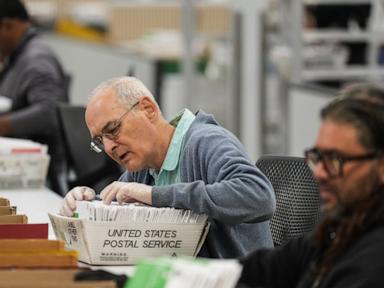
Since the permanent implementation of universal vote-by-mail, every active registered voter—exceeding 23 million individuals—automatically receives a ballot. In statewide elections, mail-in ballots routinely constitute 80% to 90% of the total volume. While an in-person precinct ballot is verified at the point of entry by poll workers and instantly scanned into a localized tabulator, a mail-in ballot arrives sealed inside an envelope. This introduces a massive, centralized processing overhead before a single vote can be tabulated.
3. Sequential Verification and Duplication Prevention
To maintain electoral integrity without requiring voter identification at the poll, the system relies on a strict sequential workflow.
- Step 1: The physical envelope is received and scanned for chain-of-custody tracking.
- Step 2: The signature on the envelope is cross-referenced with the digitized signature on the voter's registration file.
- Step 3: If the signature matches, the ballot is extracted, flattened, inspected for physical damage, and prepared for batch scanning.
- Step 4: If a voter utilizes Same-Day Voter Registration or casts a provisional ballot, these inputs are held in a separate queue. They cannot be processed until the mail-in ballot database is completely reconciled. This sequence ensures a voter cannot cast a mail-in ballot and subsequently vote in person on Election Day.
The Processing Cost Function
The throughput of California’s system can be modeled as a strict queueing system where the processing time per unit escalates based on the delivery mechanism.
An in-person electronic or optical-scan ballot carries a processing cost near zero seconds for county election staff during the post-election phase. Conversely, a mail-in ballot requires multiple touches of manual and automated labor.
[Received Mail Ballot] ➔ [Automated Sorting & Tracking] ➔ [Signature Verification]
                                                                  │
             ┌────────────────────────────────────────────────────┴──────────┐
             ▼ (Match)                                                       ▼ (Mismatch/Missing)
[Manual/Machine Extraction]                                          [Ballot Curing Queue]
             │                                                               │
             ▼                                                               ▼
[Physical Inspection & Flattening]                                   [Voter Notification]
             │                                                               │
             ▼                                                               ▼
[High-Speed Batch Scanning]                                          [Signature Form Return]
             │                                                               │
             ▼                                                               └───────► (Re-enters Match Pipeline)
[Final Tabulation]
When automated signature verification engines flag a mismatch, or if a voter fails to sign the envelope, the ballot enters the "curing" pipeline. State law requires counties to contact these voters and provide them an opportunity to verify their identity, a process that remains open until two days before the final county certification deadline. This statutory grace period acts as a hard operational brake on the final tabulation speed.
The sheer scale of the electorate compounds this structural latency. Tabulating 15 million ballots across 58 counties requires processing an electorate larger than the total population of dozens of individual states combined. In highly populated, geographically diverse counties like Los Angeles, San Diego, and Orange County, the absolute volume of physical paper moving through extraction machines and verification desks creates an unavoidable physical bottleneck.
The Bottleneck of Competitive Fractional Margins
The public perception of a "slow count" is exacerbated by the state’s political geography and electoral mechanics. Under the top-two primary system, and across highly competitive congressional districts, victory margins are frequently determined by fractions of a percentage point.
When a race features a margin of less than 1%, news organizations and statistical models cannot statistically project a winner based on early, semi-official election night returns. The race remains "uncalled" not because the counting is slower than usual, but because the mathematical variance of the uncounted inventory exceeds the margin separating the candidates.
This variance is further complicated by asymmetric voting behavior. Data shows distinct demographic and partisan splits regarding when and how ballots are returned. Voters who drop their mail-in ballots into the postal system on Monday or Tuesday, or who utilize same-day registration, often lean toward different political lines than those who submit their ballots weeks early. Consequently, as the rolling inventory of late-arriving and provisional ballots is processed, the leading candidate's margin can shift dynamically. This phenomenon is a predictable outcome of batch-processing distinct voter segments, not an indicator of subversion.
Systemic Trade-offs and Operational Limits
Optimizing an election system requires balancing distinct variables: accessibility, security, cost, and speed. California has deliberately deprioritized speed to maximize accessibility and maintain auditability.
- The Limitation of Speed: Accelerating the count under the current legislative framework would require an exponential increase in capital expenditure. Counties would need to acquire millions of dollars in additional high-speed sorting machinery and hire massive, temporary labor forces that remain idle for 11 months of the year.
- The Limitation of Decentralization: Because election administration is decentralized across 58 distinct counties, operational throughput varies based on local funding and infrastructure. A small, rural county with low volume may finish its count within days, while an urban center with millions of mail-in envelopes faces an extended operational timeline.
Tactical Standardization for Enhanced Throughput
To mitigate the friction caused by extended timelines without restricting the voter franchise, the state must transition from fragmented county procedures toward standardized automation. Relying on piecemeal equipment acquisition across individual jurisdictions creates unnecessary operational disparities.
Implementing mandatory statewide procurement of uniform, high-speed automated signature verification and ballot extraction hardware would establish a baseline processing capability. Furthermore, integrating real-time, digital signature-curing platforms—where voters can resolve envelope discrepancies via secure mobile validation rather than relying on paper mail notifications—would eliminate days of idle queue time from the verification pipeline.
Compounding this infrastructure upgrade requires shifting the behavioral profile of the electorate. State and county outreach strategies must pivot from broad participation reminders to targeted logistical messaging. Implementing behavioral nudges that incentivize voters to submit mail ballots at least seven days prior to Election Day would re-engineer the inflow curve, shifting the bulk of processing labor into the pre-election window and flattening the post-election ballot surge.